The Easiest Ways to Get Rid of Crabgrass
Eliminate crabgrass from your lawn with proven natural and chemical methods. Learn identification, removal techniques, and prevention strategies for a weed-free yard.
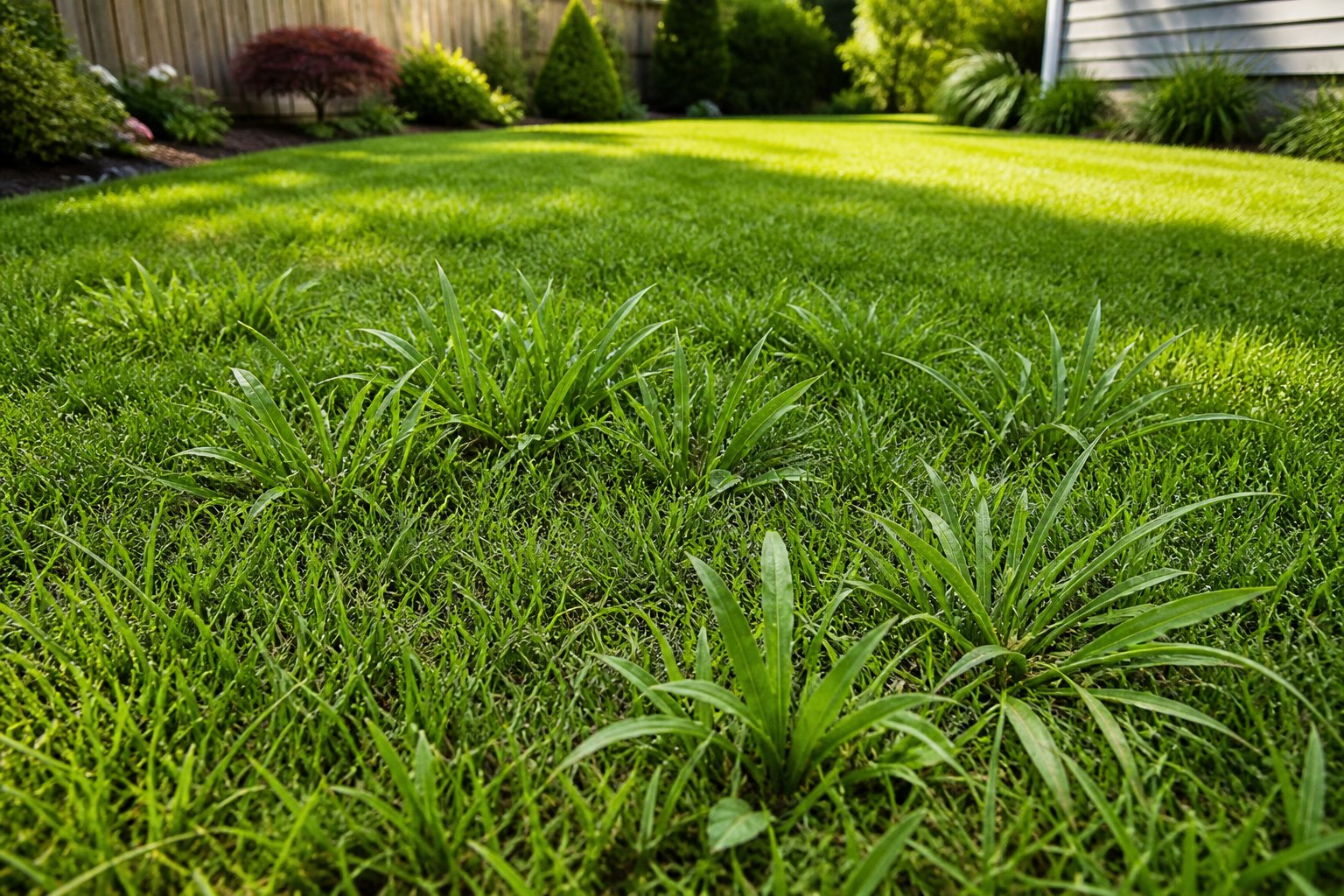
Crabgrass — the thick, light-green weed that spreads across your perfect lawn in ugly clumps. It germinates early, grows fast, and produces thousands of seeds before you realize it’s taken over. Here’s how to eliminate existing crabgrass and prevent it from returning next season.
What Is Crabgrass?
Crabgrass (Digitaria) is an annual warm-season grass that germinates in spring, grows aggressively all summer, and dies with the first frost — but not before dropping thousands of seeds for next year.
Identifying crabgrass:
- Light green to yellow-green color (lighter than lawn grass)
- Wide, coarse leaf blades with prominent center vein
- Grows in low, spreading clumps with stems radiating outward (crab-like)
- Thrives in hot weather when cool-season lawn grass struggles
- Seed heads have 3-10 finger-like spikes
- Dies and turns brown after frost
Why crabgrass is a problem:
- Outcompetes desirable lawn grass for water, nutrients, and space
- Creates unsightly patches of different color and texture
- Grows faster than regular grass, quickly dominates weak areas
- One plant produces 50,000-150,000 seeds (perpetual problem)
- Turns brown and dead in fall, leaving bare spots
Where crabgrass thrives:
- Thin, weak lawns
- Bare soil or patchy areas
- Compacted soil
- Over-watered lawns
- Lawns cut too short
- High-nitrogen fertilizer areas
Why Crabgrass Is So Difficult
Annual with perennial behavior:
Most annual weeds grow, produce seeds, and die. Crabgrass has “indeterminate growth” — it continuously grows AND produces seeds from early summer through fall.
The challenge:
- Mowing doesn’t kill it (grows horizontally)
- Produces seeds even when mowed short
- Seeds remain viable in soil for 3-5 years
- Germinates in waves throughout spring/summer
- Aggressive root system steals resources
Breaking the cycle requires killing existing plants AND preventing seed germination.
Method 1: Hand-Pulling (Best for Small Areas)
The most satisfying and chemical-free approach.
When to pull crabgrass:
- Early in season (before it produces seeds)
- After rain or watering (soil is loose)
- When plants are young (easier to remove entire root)
How to hand-pull effectively:
- Water first: Soak area thoroughly day before pulling
- Grasp at base: Get as close to soil as possible
- Pull steadily: Remove entire plant including roots
- Check for roots: Ensure you got complete root system
- Dispose properly: Bag and trash (don’t compost if seeds present)
- Fill bare spots: Reseed immediately with grass seed
Tools that help:
- Weeding fork or dandelion digger (for deeper roots)
- Crabgrass weeder tool (V-shaped to catch multiple stems)
- Garden gloves
- Kneeling pad
Best for: Small lawns, isolated clumps, organic approach, before seed production
Limitation: Impractical for large infestations; time-consuming
Method 2: Natural Homemade Solutions
Kill crabgrass without synthetic chemicals.
Vinegar treatment:
What you need:
- Horticultural vinegar (20% acetic acid) OR household vinegar (5%)
- Spray bottle
- Dish soap (1 tsp per quart — helps vinegar stick)
How to apply:
- Choose sunny, dry day (no rain forecasted for 24 hours)
- Spray directly on crabgrass leaves until dripping
- Avoid desired grass (vinegar kills all plants)
- Apply in morning for best results
- Repeat in 2-3 days if needed
Results: Kills foliage quickly (1-2 days), but may not kill deep roots. Reapplication often needed.
Caution: Can lower soil pH temporarily; avoid overuse
Boiling water:
How to use:
- Boil large pot of water
- Carefully pour directly onto crabgrass clumps
- Saturate thoroughly
- Let cool, then remove dead plant
- Reseed bare spot
Best for: Isolated clumps, cracks in pavement, driveway edges
Limitation: Kills surrounding grass too; use carefully
Baking soda treatment:
Application:
- Sprinkle baking soda directly on crabgrass
- Water lightly to dissolve
- Raises pH, making environment less hospitable
- Repeat weekly for 3-4 weeks
Results: Slower but safer for nearby grass
Best for: Spot treatments, organic lawns, gentle control
Method 3: Selective Herbicides (Chemical Control)
Post-emergent herbicides target actively growing crabgrass.
Selective crabgrass killers:
Active ingredients to look for:
- Quinclorac (most effective, kills mature crabgrass)
- Fenoxaprop
- MSMA (restricted in some areas)
How they work: Absorbed by crabgrass leaves, kill plant systemically while leaving lawn grass unharmed
Application timing:
- When crabgrass is young (2-3 leaf stage)
- Before plants produce seeds
- Actively growing (not stressed by drought/heat)
- Temperatures below 85°F (30°C)
Application instructions:
- Read label carefully: Follow all safety precautions
- Mow lawn: 1-2 days before application
- Choose calm day: No wind, no rain forecasted for 24 hours
- Mix properly: Follow label dilution rates exactly
- Spray evenly: Use pump sprayer, cover crabgrass thoroughly
- Wait to mow: Don’t mow for 2-3 days after application
- Don’t irrigate: Wait 24 hours before watering
- Repeat if needed: Second application in 7-14 days (check label)
Best for: Moderate to severe infestations, fast results, established lawns
Caution:
- Can damage some grass types (read label for compatibility)
- Keep pets/children off treated areas until dry
- May need 2-3 applications for mature crabgrass
Non-selective herbicides:
Glyphosate (Roundup, etc.):
- Kills ALL plants (crabgrass AND lawn grass)
- Use only if renovating entire lawn
- Apply to isolated clumps carefully (use shield to protect lawn)
- Plan to reseed after crabgrass dies
Method 4: Soil Solarization (For Large Areas)
Use solar heat to kill crabgrass seeds in soil.
When to do it: Late spring/early summer (hottest part of year)
How to solarize:
- Mow area very short: Remove all grass clippings
- Water thoroughly: Soak soil deeply
- Cover with clear plastic: Use 2-4 mil thick plastic sheeting
- Seal edges: Bury edges with soil or weight with boards
- Leave 4-6 weeks: During hottest summer weather
- Remove plastic: After heat has killed seeds
- Reseed area: Plant grass seed immediately
How it works: Clear plastic traps solar heat, raising soil temperature to 120-140°F (49-60°C), which kills weed seeds, insects, and some diseases
Best for: Severe infestations, lawn renovation, chemical-free control of large areas
Limitation: Takes time, only works in hot climates, kills everything (must reseed)
Method 5: Improve Lawn Health (Crowd Out Crabgrass)
The best long-term solution — make your lawn so thick that crabgrass can’t compete.
Thicken your lawn:
Overseeding:
- Spread grass seed over existing lawn (early fall is best)
- Use 50% more seed than bare-soil rate
- Keep moist until germination
- Creates dense turf that crowds out weeds
Aeration:
- Core aerate compacted soil (fall is ideal)
- Improves water/nutrient penetration
- Helps grass roots grow deeper
- Reduces crabgrass-friendly conditions
Proper mowing:
- Mow high: Set blade to 3-4 inches (7-10 cm)
- Never remove more than 1/3 of grass height at once
- Keep blade sharp: Clean cuts prevent disease
- Taller grass shades soil, prevents crabgrass germination
Deep, infrequent watering:
- Water 1-1.5 inches per week (including rain)
- Water deeply, less often (encourages deep grass roots)
- Water in early morning (reduces disease)
- Avoid daily shallow watering (favors crabgrass)
Proper fertilization:
- Fertilize cool-season grass in early fall and late spring
- Avoid high nitrogen in summer (stimulates crabgrass)
- Use slow-release fertilizer
- Soil test every 2-3 years (apply only needed nutrients)
Fix bare spots immediately:
- Crabgrass germinates in bare soil
- Reseed thin areas in fall
- Repair damage promptly
- Topdress with compost to improve soil
Method 6: Pre-Emergent Herbicides (Prevention)
Stop crabgrass before it germinates.
How pre-emergents work: Create chemical barrier in top layer of soil that kills crabgrass seedlings as they germinate
Timing is critical:
- Apply when soil temperature reaches 55°F (13°C) for 3-5 consecutive days
- Generally early to mid-spring (varies by region)
- Before forsythia blooms (nature’s calendar)
- Before crabgrass germinates (once visible, too late)
Common pre-emergent ingredients:
- Prodiamine (longest lasting, 4-6 months)
- Dithiopyr (also has some early post-emergent activity)
- Pendimethalin
- Corn gluten meal (organic option, 50-60% effective)
Application steps:
- Apply at right time: Early spring, before germination
- Follow label rates: More isn’t better
- Apply evenly: Use spreader for uniform coverage
- Water in lightly: 0.25-0.5 inches activates herbicide
- Avoid seeding: Pre-emergent prevents ALL seed germination (wait 8-12 weeks to overseed, or use dithiopyr which allows earlier seeding)
Best for: Preventing next year’s crabgrass, maintenance after elimination, large lawns
Important notes:
- Doesn’t kill existing crabgrass (only prevents germination)
- Prevents desirable grass seed from germinating too
- May need second application mid-summer (for long crabgrass germination period)
- Requires annual reapplication
The Complete Elimination & Prevention Plan
This year (eliminate existing crabgrass):
Late spring/summer:
- Hand-pull small clumps immediately
- Treat established crabgrass with selective herbicide (quinclorac)
- Repeat treatment in 2 weeks if needed
- Remove dead crabgrass and reseed bare spots
- Mow high (3-4 inches), water deeply
Fall:
- Continue removing any crabgrass before seed production
- Overseed entire lawn (early fall)
- Core aerate compacted areas
- Fertilize for strong fall growth
- Continue mowing high until dormancy
Next year (prevent crabgrass return):
Early spring:
- Apply pre-emergent herbicide (soil temp 55°F)
- Mow high starting with first mowing
- Fertilize lightly (late spring)
Summer:
- Spot-treat any breakthrough crabgrass immediately
- Water deeply, less frequently
- Maintain 3-4 inch mowing height
- Consider second pre-emergent if crabgrass pressure is high
Fall:
- Overseed thin areas
- Aerate if needed
- Fertilize for strong root growth
Common Mistakes
Mowing too short: Allows sunlight to reach soil, triggers crabgrass germination
Over-watering: Creates perfect conditions for crabgrass
Applying pre-emergent too late: Once crabgrass germinates, pre-emergent is useless
Seeding after pre-emergent: Grass seed won’t germinate either (wait 8-12 weeks)
Letting crabgrass go to seed: Guarantees problem next year (one plant = 150,000 seeds)
Not reseeding bare spots: Leaves openings for crabgrass to colonize
Treating stressed grass: Wait until lawn is healthy and actively growing
Organic vs. Chemical Approach
Choose organic if:
- Small infestation
- You can hand-pull regularly
- You’re patient (takes longer)
- Chemical sensitivity concerns
- Pets/children play on lawn frequently
Choose chemical if:
- Large infestation
- Fast results needed
- Organic methods have failed
- You’ll follow label safety precautions
- Willing to wait for lawn to be safe again
Best approach: Combine methods. Use selective herbicide for heavy infestation, then maintain with cultural practices and pre-emergent.
For comprehensive lawn maintenance guidance, see our lawn care basics guide.
The Bottom Line
Crabgrass thrives in weak lawns. The most effective long-term solution isn’t killing crabgrass — it’s building a thick, healthy lawn that crowds it out.
This season, eliminate visible crabgrass with hand-pulling or selective herbicides before it produces seeds. Next spring, apply pre-emergent herbicide when soil reaches 55°F. Year-round, mow high (3-4 inches), water deeply but infrequently, and overseed thin areas every fall.
A dense, vigorous lawn is the best crabgrass prevention. Invest in lawn health now, and crabgrass won’t find space to grow. Combine immediate removal with prevention and cultural practices, and you’ll enjoy a crabgrass-free lawn for years to come.