Boron Uses To Get Fertile Soil For Nutritious Veggies
Learn safe boron application for vegetable gardens. Correct deficiencies to improve yields and nutrition, but avoid toxicity with proper soil testing and dosing.
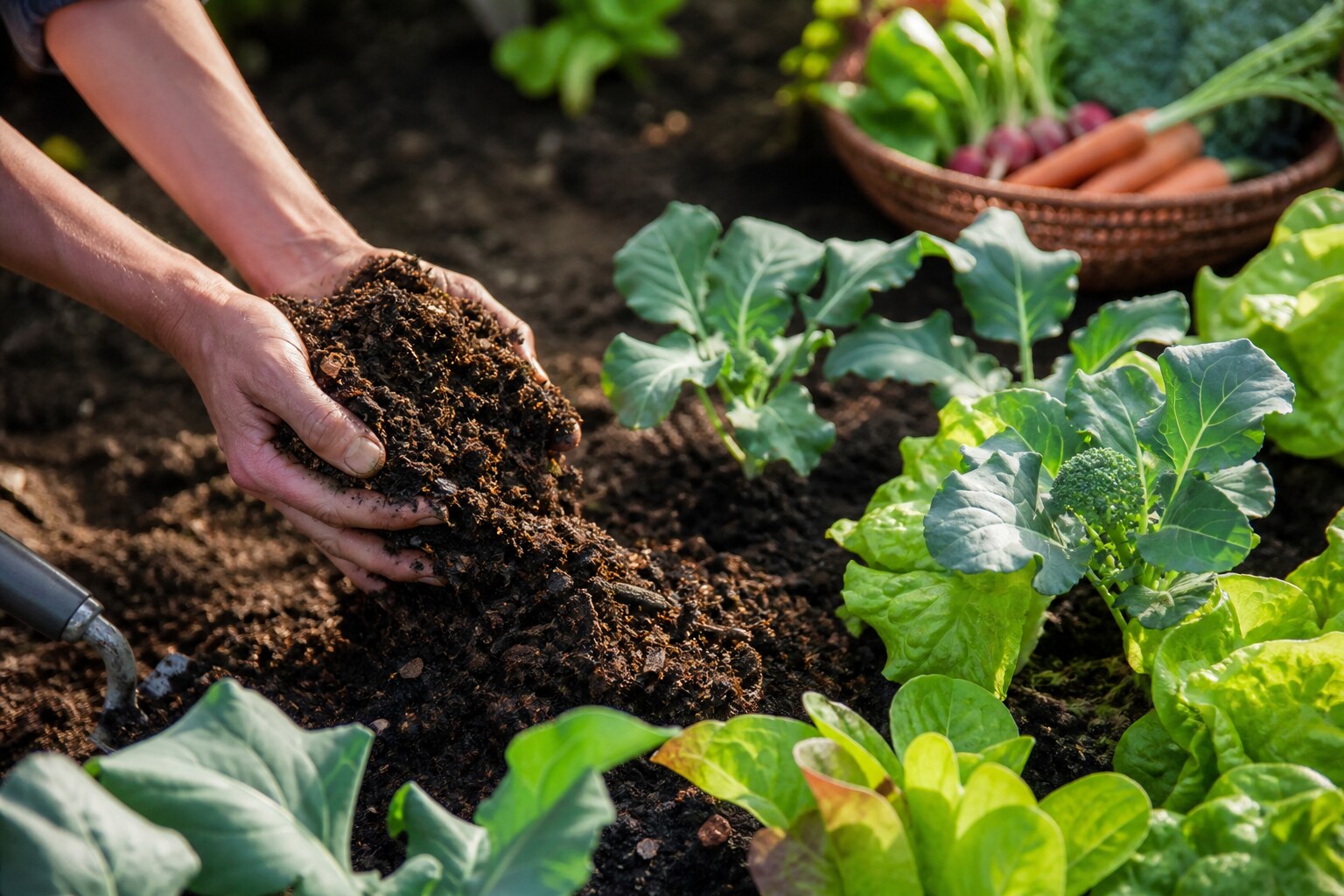
Boron is an essential micronutrient that vegetable plants need in tiny amounts for proper growth, fruit development, and nutritional quality. Deficiency reduces yields and produces malformed, less nutritious vegetables. But there’s a narrow margin between deficiency and toxicity — too much boron kills plants. Here’s how to use boron safely and effectively.
What Is Boron and Why Vegetables Need It
Boron (B) is a micronutrient required in very small quantities but absolutely essential for plant health.
Critical roles of boron in plants:
- Cell wall formation: Boron cross-links cell wall components (plants can’t form new cells without it)
- Reproductive development: Essential for pollen tube growth and seed development
- Calcium uptake: Helps plants absorb and use calcium properly
- Carbohydrate metabolism: Involved in sugar transport through plant
- Protein synthesis: Required for nitrogen metabolism
- Hormone regulation: Affects auxin (growth hormone) levels
- Water uptake: Influences plant water relations
What happens when boron is deficient:
- Growing points die: Terminal buds and root tips stop growing (death of meristematic tissue)
- Hollow or cracked stems: In broccoli, cauliflower, celery
- Deformed fruit: Cracking, corking, internal breakdown
- Poor seed set: Flowers don’t develop into fruit properly
- Brittle leaves: Leaves become thick, brittle, and misshapen
- Root problems: Stunted root systems, blackened root tips
- Reduced yields: Significant crop losses
- Lower nutritional value: Vegetables less nutritious even if they grow
Why boron deficiency is common:
- Sandy soils (boron leaches easily)
- High rainfall areas (washes boron away)
- High pH soils above 7.0 (boron becomes unavailable)
- Low organic matter (organic matter releases boron slowly)
- Drought conditions (plants can’t take up available boron)
- Over-liming (raises pH, locks up boron)
Vegetables Most Affected by Boron Deficiency
Some crops are extremely sensitive to boron levels.
High boron requirement (most sensitive to deficiency):
Cruciferous vegetables (Brassicas):
- Broccoli (hollow stem disease)
- Cauliflower (brown curd, hollow stems)
- Cabbage (internal browning, hollow stem)
- Brussels sprouts
- Turnips (brown heart)
- Rutabagas
Root vegetables:
- Beets (internal black spot, heart rot)
- Turnips
- Radishes (blackened interiors)
- Carrots (cavity spot)
- Parsnips
Other high-need crops:
- Celery (cracked stem)
- Apples (cork spot, internal cork)
- Pears
- Alfalfa
- Sugar beets
Moderate boron requirement:
- Tomatoes (poor fruit set, blossom end rot worsens)
- Peppers
- Squash and cucumbers (poor pollination)
- Sunflowers
- Lettuce
Low boron requirement (rarely deficient):
- Beans and peas
- Corn
- Onions
- Potatoes (though yields improve with adequate boron)
- Asparagus
Recognizing Boron Deficiency Symptoms
Different vegetables show different deficiency signs.
General symptoms across many plants:
- Death of growing tips (terminal bud dies)
- Multiple side shoots form (bushy, stunted appearance)
- Thick, brittle, curled leaves
- Shortened internodes (compressed growth)
- Reduced flowering and fruit set
Specific crop symptoms:
Broccoli and cauliflower:
- Hollow or brown stems
- Brown spots in florets
- Bitter taste
- Rough, bumpy head surface
- Stems crack lengthwise
Beets:
- Internal black spot or rings
- Heart rot (center tissue dies and rots)
- Stunted tops
- Yellow, twisted leaves
- Cracked roots
Celery:
- Horizontal cracks across inner surface of stalks
- Browning of leaf tips
- Brittle, easily broken stalks
Tomatoes:
- Poor fruit set despite good flowering
- Blossom end rot (often worse with combined boron/calcium deficiency)
- Cracked or deformed fruit
- Brown areas inside fruit
Cabbage:
- Water-soaked areas in stem and leaf midribs
- Brown internal tissue
- Stem cracking
- Curled, puckered leaves
Apples and pears (if you grow fruit):
- Cork spots in flesh
- Bumpy, deformed fruit surface
- Bitter pit in apples
Root crops (carrots, turnips, rutabagas):
- Brown internal spots or cavities
- Cracked exteriors
- Blackened centers
- Stunted growth
Testing Soil for Boron
Never guess — testing is essential because the line between deficiency and toxicity is narrow.
When to test:
- Before adding boron (always test first)
- If you see deficiency symptoms
- Every 3-4 years in vegetable gardens
- After liming (high pH locks up boron)
- In sandy soils or high-rainfall areas
How to get soil tested:
- Contact your local Extension office (often provides testing services)
- Send sample to soil testing laboratory
- Request “complete” or “micronutrient” analysis (standard tests may not include boron)
- Specify you’re growing vegetables
Interpreting results:
- Deficient: Below 0.5 ppm (parts per million) hot water extractable boron
- Adequate: 0.5-2.0 ppm
- High: 2.0-5.0 ppm
- Toxic: Above 5.0 ppm
Important note: Some labs use different extraction methods with different ranges — always follow the lab’s interpretation, not just the number.
Safe Boron Application Rates
Boron must be applied precisely — more is NOT better.
General application guideline:
- 1-2 pounds of borax per acre (43,560 square feet)
- Equals 0.5-1 ounce borax per 1,000 square feet
- Equals approximately 1-2 tablespoons borax per 1,000 square feet
For small gardens:
100 square feet (10 x 10 ft bed):
- 1/4 to 1/2 teaspoon borax
- Broadcast evenly and till into soil
500 square feet:
- 1 to 2 teaspoons borax
1,000 square feet:
- 2 to 4 teaspoons (or 1-2 tablespoons) borax
Critical safety rules:
- Start with lower rate (you can always add more next year)
- Never exceed recommended amount (toxicity is permanent and unfixable)
- Distribute evenly (hot spots cause toxicity)
- Retest soil in 1-2 years (boron remains in soil)
Boron Sources and Application Methods
Several products supply boron to soil.
Common boron sources:
Borax (sodium borate):
- 11% boron
- Most common household source
- Available in grocery stores (laundry aisle) or garden centers
- Inexpensive
- Easy to measure and apply
Boric acid:
- 17% boron
- More concentrated than borax
- Reduce application rate accordingly
- Commonly used as ant/roach killer (pesticide section)
Solubor (sodium borate):
- 20% boron
- Agricultural grade
- Highly soluble
- Used for commercial production
Granubor:
- 15% boron
- Granular form
- Good for broadcast application
Organic sources:
- Seaweed/kelp meal (small amounts of boron)
- Compost (if made from boron-adequate plant materials)
- Manure (contains trace amounts)
Application methods:
Method 1: Dry broadcast application (most common for gardens):
- Calculate amount needed: Based on garden size
- Mix with carrier: Blend boron source with dry sand, compost, or soil (10:1 ratio carrier to boron)
- Makes even distribution easier
- Reduces risk of hot spots
- Broadcast evenly: Spread mixture over entire garden area
- Till or rake into soil: Incorporate to 6-inch depth
- Water thoroughly: Helps distribute boron and activate it
When to apply: Before planting (2-4 weeks ahead), or fall for spring gardens
Method 2: Liquid spray application (foliar or soil drench):
Foliar spray recipe:
- 1/4 to 1/2 teaspoon borax per gallon water
- Spray leaves thoroughly (especially undersides)
- Apply when deficiency symptoms appear
- Best for quick correction (plants absorb through leaves within days)
- Repeat every 2-3 weeks if needed
Soil drench recipe:
- 1 to 2 tablespoons borax per gallon water
- Apply to soil around plants
- Helps in areas where foliage spraying isn’t practical
Advantages of foliar application:
- Fast response (corrects deficiency within 1-2 weeks)
- Precise application (only to crops showing symptoms)
- Lower risk of oversupplying soil
- Good for quick fix during growing season
Method 3: Compost amendment:
- Add 1/4 cup borax to one cubic yard of compost
- Mix thoroughly
- Let age 2-4 weeks
- Apply compost normally
- Slow release over time
Application Timing and Frequency
Best time to apply boron:
- Fall: For spring gardens (allows time to distribute evenly)
- Early spring: Before planting (2-4 weeks ahead)
- Pre-planting: Till into soil before sowing or transplanting
How often to apply:
- One application lasts 3-4 years in most soils
- Sandy soils: May need reapplication every 2-3 years
- Heavy soils: May last 5+ years
- Retest soil before reapplying (don’t guess based on time alone)
During growing season (if deficiency appears):
- Foliar spray every 2-3 weeks until symptoms improve
- Soil drench once or twice per season maximum
- Don’t exceed recommended rates
Critical Safety Warnings
Boron toxicity is serious and difficult to correct.
Why boron is dangerous:
- Very narrow range between deficiency and toxicity
- Once excess boron is in soil, it’s nearly impossible to remove
- Toxic levels kill plants
- Effects last years
Boron toxicity symptoms:
- Yellowing of leaf tips and margins (progresses inward)
- Leaves turn brown and die from tips
- Premature leaf drop
- Stunted growth
- Poor root development
- Crop failure
Which plants are most sensitive to boron toxicity:
- Beans (very sensitive)
- Strawberries
- Stone fruits (peaches, plums, cherries)
- Grapes
- Blackberries
If you oversupply boron:
- Stop all boron applications immediately
- Heavy irrigation (leaches boron slowly over time — takes months to years)
- Don’t grow sensitive crops until boron levels normalize
- Add organic matter (may help bind some boron)
- Consider raised beds with new soil in affected areas
- Be patient (no quick fix exists)
Prevention rules:
- Always test soil first (never apply boron without test confirmation of deficiency)
- Measure precisely (use measuring spoons, not estimation)
- Mix thoroughly (prevents concentration spots)
- Start with low end of range
- Keep records (when applied, how much, where)
- Retest before adding more
Boron and Soil pH
pH dramatically affects boron availability.
How pH affects boron:
- Low pH (acidic, below 6.0): Boron more available, easier for plants to absorb
- Medium pH (6.0-7.0): Optimal boron availability
- High pH (alkaline, above 7.5): Boron becomes unavailable even if present in soil
What this means practically:
- Heavily limed gardens may need boron (liming raises pH)
- Acidic soils rarely deficient in boron
- If soil test shows adequate boron but plants still deficient, check pH
- If pH is too high, lower it before adding more boron
Managing pH and boron together:
- Test both pH and boron levels
- If pH above 7.5 and boron adequate, lower pH with sulfur rather than adding boron
- If pH is correct (6.0-7.0) and boron low, add boron
- After liming, wait 2-3 months then retest boron (may now be unavailable)
Boron in Organic Matter and Compost
Organic matter slowly releases boron over time.
Why organic matter matters for boron:
- Compost and manure contain small amounts of boron
- Releases slowly as organic matter decomposes
- Helps prevent both deficiency and toxicity
- Improves overall soil health (helps plants access nutrients)
Building organic matter:
- Add 2-4 inches compost annually
- Use cover crops (till in before planting)
- Mulch vegetable beds
- Don’t remove all plant residues (some return nutrients)
Compost from boron-adequate plants:
- If your plants were boron-deficient, compost made from them is also deficient
- If plants were well-fed (boron-adequate), compost returns boron to soil
- Long-term compost use can maintain adequate boron without supplementation
Alternative: Foliar Feeding Only
Safer approach for home gardeners concerned about toxicity.
Strategy:
- Don’t add boron to soil at all
- Only use foliar sprays when deficiency symptoms appear
- Apply to specific crops showing problems
- Much lower risk of toxicity (soil doesn’t accumulate excess)
Foliar application schedule (if needed):
- Mix 1/4 teaspoon borax per gallon water
- Spray affected plants (broccoli, cauliflower, beets, etc.)
- Repeat every 10-14 days for 3-4 applications
- Stop when symptoms improve
Advantages:
- Fast results (plants respond in 1-2 weeks)
- No risk of long-term soil contamination
- Precise targeting (only affected crops)
- Easier to control dose
Limitations:
- Requires monitoring crops and recognizing deficiency
- Must reapply each season
- Doesn’t address underlying soil deficiency
- More labor intensive than single soil application
For comprehensive vegetable garden soil management, see our guides on composting basics and organic fertilizers.
Common Mistakes
Applying boron without soil test: Most common and dangerous mistake (may add boron when soil already adequate)
Measuring inaccurately: “A pinch” or “handful” can be 10x too much (use measuring spoons)
Uneven distribution: Piling boron in one area causes toxicity hot spots (mix thoroughly with carrier material)
Repeat applications without retesting: Boron accumulates (adding annually causes toxicity within a few years)
Using too much “just to be safe”: More is NOT better with boron (kills plants)
Applying boron when pH is high: Raises pH first, then retest (boron may already be adequate but unavailable)
Confusing deficiency with other problems: Not all stunted growth or hollow stems are boron deficiency (test before treating)
Adding boron to all vegetables: Only high-need crops benefit (beans and peas don’t need it)
When Boron Application Makes Sense
Not every garden needs boron.
You likely need boron if:
- Soil test confirms deficiency (below 0.5 ppm)
- You see deficiency symptoms in multiple crops
- You grow brassicas, beets, or celery regularly
- You have sandy soil in high-rainfall area
- Soil pH is above 7.0
- You’ve heavily limed soil recently
You probably don’t need boron if:
- No deficiency symptoms ever appeared
- You add compost regularly (2+ inches per year)
- Soil is naturally acidic (pH below 6.5)
- Previous soil test showed adequate boron
- You grow mostly low-boron-need crops (beans, corn, onions)
The conservative approach:
- Test soil first (always)
- If deficient, start with foliar application (safer)
- If deficiency recurs year after year, consider single careful soil application
- Retest every 3 years
- Never apply more than recommended rates
The Bottom Line
Boron is essential for vegetable growth, fruit development, and crop quality, but it must be applied with extreme precision. The difference between deficiency and toxicity is tiny — a few tablespoons per 1,000 square feet is adequate, while double that amount can be toxic.
Always test soil before applying boron. If deficiency is confirmed (below 0.5 ppm), apply 1-2 tablespoons of borax per 1,000 square feet, mixed thoroughly with sand or compost to ensure even distribution, and tilled into the soil. One application lasts 3-4 years in most soils.
For immediate correction of deficiency symptoms during the growing season, foliar spray with 1/4 teaspoon borax per gallon of water every 2-3 weeks is safer than soil application. This approach allows precise targeting without risk of long-term soil contamination.
Brassicas (broccoli, cauliflower, cabbage), beets, turnips, and celery have the highest boron requirements and show the most dramatic deficiency symptoms — hollow stems, internal browning, and cracked roots. If you grow these crops regularly and see these symptoms, boron deficiency is likely.
Most importantly, keep detailed records of any boron applications, retest soil every 3 years before reapplying, and remember that once you oversupply boron, there’s no quick fix. When in doubt, use foliar sprays instead of soil applications, add compost regularly to provide slow-release trace nutrients, and let soil testing guide your decisions rather than guessing.