Easy Ways To Get Rid Of Wasps Naturally
Remove wasps safely with natural methods. Learn traps, deterrents, and nest removal techniques that work without toxic pesticides or provoking aggressive behavior.
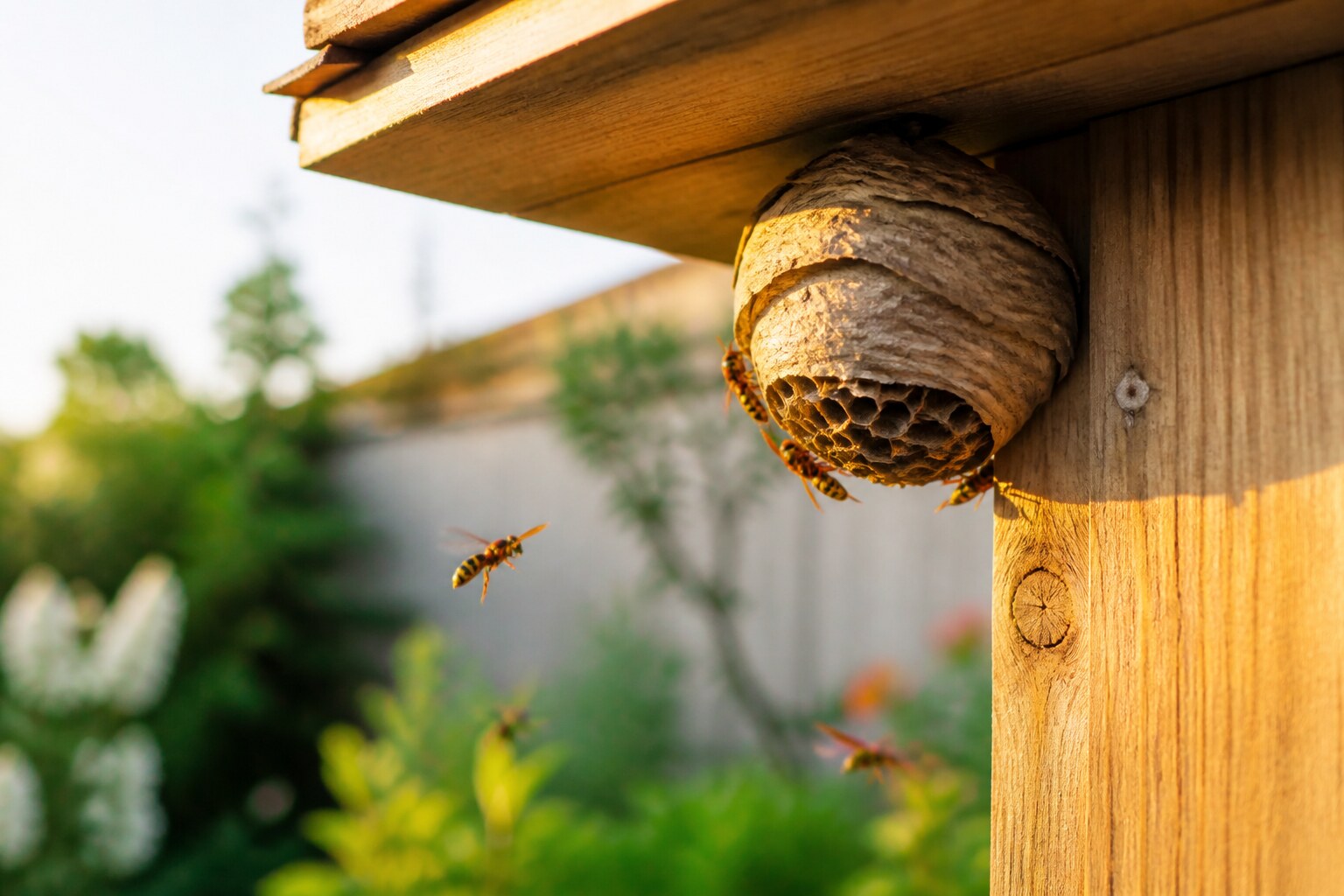
Wasps become unwelcome guests when they build nests near outdoor living spaces, doorways, or children’s play areas. While beneficial predators that eat garden pests, their aggressive defense of nests and painful stings make control necessary in some situations. Here’s how to manage wasps naturally and safely without harsh chemical sprays.
Understanding Wasps vs. Bees
Not all flying, stinging insects are the same — identification matters for safe control.
Paper wasps (Polistes):
- Reddish-brown to black, slender body
- Long legs that dangle in flight
- Umbrella-shaped nests (visible cells, no covering)
- Nests typically 3-8 inches diameter
- Build under eaves, porch ceilings, deck railings, tree branches
- Temperament: Generally docile unless nest is threatened
- Colony size: 15-200 wasps
Yellowjackets (Vespula, Dolichovespula):
- Bright yellow and black bands, smooth body
- Thick waist (compared to paper wasps)
- Build enclosed paper nests (gray, papery covering)
- Nests in wall voids, attics, underground cavities, trees
- Temperament: Aggressive, defend nests aggressively, chase intruders
- Colony size: 1,000-5,000 wasps
Hornets (Dolichovespula maculata - bald-faced hornets):
- Black with white or ivory markings
- Larger than yellowjackets (5/8 to 3/4 inch)
- Build large, gray, football-shaped paper nests
- Nests in trees, shrubs, occasionally buildings
- Temperament: Very aggressive, defend nest vigorously
- Colony size: 400-700 wasps
Bees (for comparison):
- Fuzzy, hairy bodies (wasps are smooth)
- Not aggressive (except Africanized bees)
- Make hives with wax comb, store honey
- Important pollinators (don’t kill unless absolutely necessary)
- Call beekeeper for removal (many will remove colonies free)
Key identification difference:
- Wasps: Smooth, shiny bodies, narrow waist, carnivorous (eat other insects)
- Bees: Fuzzy, hairy, wide body, herbivorous (feed on pollen/nectar)
Why this matters:
- Bees should be preserved and relocated if possible (declining populations, critical pollinators)
- Paper wasps are less aggressive (often can coexist)
- Yellowjackets and hornets require more aggressive control
When Wasp Control Is Necessary
Not all wasps need to be eliminated.
Leave wasps alone if:
- Nest is far from human activity (in woods, back of property)
- You don’t see wasps around house or outdoor spaces
- Children and pets don’t access the area
- No one in household is allergic to stings
- Nest is high in tree or other inaccessible location
Take action when:
- Nest is near doorway, patio, play area, or high-traffic location
- Wasps aggressive or repeatedly sting
- Someone in household is allergic (life-threatening)
- Nest inside home structure (wall void, attic, soffit)
- Ground nest in lawn where people walk or children play
- Multiple nests on property
Important note: Wasps are beneficial predators that eat caterpillars, flies, aphids, and other garden pests. If you can tolerate their presence in less-used areas, they provide pest control services. Focus removal efforts only on nests that pose genuine safety risks.
Safety Precautions Before Attempting Removal
Wasp stings are painful and can be dangerous.
Protective clothing:
- Long pants tucked into socks
- Long-sleeved shirt (thick fabric)
- Gloves (leather or thick rubber)
- Hat with netting or beekeeper’s veil (protects face and neck)
- Light-colored clothing (dark colors can trigger aggression)
- Close-toed shoes or boots
Timing matters:
- Best time: Dawn or dusk when wasps are least active and inside nest
- Early morning (just after sunrise): Wasps cold and sluggish
- Late evening (after dark): Most wasps returned to nest for night
- Never midday: Wasps most active and aggressive
- Cool weather: Below 50°F (10°C) wasps are slow-moving
Location considerations:
- Plan escape route before approaching nest
- Don’t trap yourself (have clear path away)
- Keep children and pets indoors
- Alert family members to stay away
- Keep windows closed (wasps may fly toward light if disturbed)
Warning signs to stop and call professionals:
- Nest larger than a softball (hundreds to thousands of wasps)
- Multiple nests in same area
- Yellowjacket or hornet nest (very aggressive)
- Ground nest size unknown (may be enormous underground)
- Anyone in household severely allergic to stings
- Nest in difficult-to-reach location (high ladder work, inside wall)
- You feel uncomfortable or afraid
Allergic reaction warning:
- If you’ve had severe reaction to stings before, don’t attempt removal (call pros)
- Have Benadryl or antihistamine available
- Keep epinephrine auto-injector (EpiPen) handy if prescribed
- Call 911 if anyone stung develops: difficulty breathing, swelling of face/throat, dizziness, rapid pulse
Natural Method 1: Soapy Water Spray
The simplest and most effective natural wasp killer.
Why soapy water works:
- Soap breaks down wasp’s waxy body coating
- Clogs breathing pores (spiracles)
- Heavy water spray grounds flying wasps
- Drowns wasps quickly
- No toxic residue
Soapy water recipe:
- 2 tablespoons liquid dish soap (any brand)
- 1 quart water
- Mix in spray bottle or garden hose-end sprayer
For larger nests:
- 1/4 cup dish soap
- 1 gallon water
- Use pump sprayer or hose-end sprayer (reaches farther)
Application method for aerial nests (paper wasp nests on eaves, branches):
- Wait for dawn or dusk: Wasps inside nest and sluggish
- Dress protectively: Full coverage clothing
- Approach slowly and quietly: Sudden movements trigger alarm
- Position yourself with escape route clear
- Spray nest directly and heavily:
- Drench entire nest structure
- Soak nest until soap solution drips
- Continue spraying for 30-60 seconds
- Retreat immediately: Back away slowly
- Wait 1-2 hours:
- Wasps die from soap exposure
- Some may fly out but die shortly after
- Check from distance: Ensure no activity
- Knock down nest: Use long pole or stick
- Dispose in sealed plastic bag: Tie tightly and discard
For yellowjacket ground nests:
- Locate entrance hole: Mark during day, treat at night
- At night, pour 1-2 gallons soapy water directly into hole
- Cover hole immediately with large flat stone or board (prevents escape)
- Weight down cover (bricks or rocks)
- Leave covered 24 hours
- Check for activity next evening: May need second treatment
- Fill hole with soil after wasps dead
Why this is the best natural method:
- Ingredients readily available
- Works quickly (wasps die in minutes)
- No toxic chemicals
- Inexpensive
- Safe after residue dries
- Effective on all wasp types
Natural Method 2: Homemade Wasp Traps
Capture foraging wasps away from nest.
DIY bottle trap:
Materials:
- 2-liter plastic soda bottle
- Utility knife or scissors
- String or wire (for hanging)
- Bait (see below)
Construction:
- Cut bottle: Remove top 1/3 of bottle (cut just below shoulder)
- Invert top: Flip cut-off top upside down and place inside bottle (creates funnel)
- Tape or staple edges: Secure inverted top to bottom section
- Punch holes in sides: Make 2 holes near top for hanging string
- Add bait and water:
- Fill bottom with 2 inches water (drowns trapped wasps)
- Add 2-3 tablespoons bait
- Optional: Add drop of dish soap (breaks surface tension, wasps sink faster)
Effective baits:
Early spring and summer (wasps need protein for larvae):
- Raw meat (chicken, fish, hot dog)
- Cat or dog food (wet)
- Tuna fish
Late summer and fall (wasps attracted to sugars):
- Sweet soda or juice (not diet)
- Jam or jelly diluted with water
- Ripe fruit (banana, apple, pear)
- Beer (yeast smell attracts them)
- Sugar water with drop of dish soap
Combination bait (works all season):
- 1/4 cup sugar
- 1/4 cup vinegar
- 1 cup water
- 1 chopped banana or squirt of jam
Trap placement:
- Hang 4-6 feet high
- 20-30 feet from outdoor seating areas (draws wasps away from where people are)
- Near but not directly beside nest (if you can tolerate nest temporarily)
- Multiple traps more effective (3-5 around property)
- In sun (wasps prefer warm areas)
Maintenance:
- Check daily
- Empty drowned wasps when half full
- Refresh bait every 3-4 days (loses attractiveness)
- Clean trap weekly (removes residue)
Why traps help but don’t eliminate:
- Catch dozens of wasps per day
- Reduce foraging wasp population
- Protect specific areas (patios, decks)
- Won’t eliminate nest (colony keeps producing wasps)
- Best used combined with nest removal or as way to manage distant nests you can’t remove
Natural Method 3: Remove Food Sources
Prevention through sanitation.
What attracts wasps to yards:
- Protein foods (meat, pet food, fish)
- Sugary drinks and foods
- Ripe or rotting fruit
- Open garbage cans
- Compost piles
- Hummingbird feeders
- Standing water
Prevention steps:
Outdoor eating areas:
- Keep food covered until eating
- Clean up spills immediately
- Don’t leave drinks open (wasps fall in and sting when you drink)
- Clear table right after meals
- Use covered food containers
- Wipe down picnic tables
Garbage management:
- Use trash cans with tight-fitting lids
- Keep cans closed at all times
- Rinse food containers before discarding
- Take trash out frequently (don’t let accumulate)
- Clean cans regularly
Pet food:
- Don’t leave pet food outside
- Feed pets indoors
- If must feed outside, remove bowls immediately after pet eats
Fruit trees:
- Harvest ripe fruit promptly
- Pick up fallen fruit daily (wasps swarm rotting fruit)
- Dispose in sealed bags or compost far from house
Hummingbird feeders:
- Choose feeders with bee guards
- Move feeder frequently (weekly)
- Don’t fill completely (less spillage)
- Clean up drips and spills
- Consider removing feeders temporarily during peak wasp season (August-September)
Water sources:
- Fix leaky hoses and faucets
- Empty birdbaths daily and refill
- Don’t leave standing water in containers
- Maintain pool (wasps attracted to pool edges for drinking)
Why this works:
- Reduces wasp foraging in your yard
- Wasps go elsewhere for food
- Fewer wasps = fewer encounters
- Especially effective late summer (peak sugar-seeking time)
Natural Method 4: Peppermint Oil Deterrent
Strong scent repels wasps from treated areas.
Why peppermint works:
- Wasps dislike strong mint smell
- Masks food odors that attract wasps
- Creates unpleasant environment (wasps avoid)
- Won’t kill but will deter
Peppermint spray recipe:
- 1 tablespoon pure peppermint essential oil
- 16 oz (2 cups) water
- 1 teaspoon dish soap (helps oil mix and stick)
- Spray bottle
Application:
- Mix ingredients thoroughly
- Shake well before each use (oil separates)
- Spray areas where wasps gather:
- Doorways and entry points
- Patio furniture and umbrellas
- Deck railings
- Play equipment
- Eaves and overhangs (nest prevention)
- Reapply every 2-3 days (scent fades)
- Reapply after rain
Peppermint plants (longer-lasting):
- Plant peppermint in containers near patio or deck
- Brush leaves occasionally to release scent
- Plant near doorways
- Caution: Mint spreads aggressively in ground (use containers)
Other essential oils that help:
- Clove oil
- Lemongrass oil
- Eucalyptus oil
- Can combine: 10 drops each in 2 cups water with soap
Effectiveness:
- Moderate: Reduces wasp activity in treated areas but won’t eliminate them
- Best for prevention (keeping wasps from building nests in specific locations)
- Not effective on established nests (won’t make wasps abandon nest)
- Good supplemental method (combine with other controls)
Natural Method 5: Physical Nest Removal
Remove small paper wasp nests before colony grows.
When physical removal is appropriate:
- Early season (spring/early summer) when nest small (golf ball to tennis ball size)
- Paper wasp nests only (not yellowjackets or hornets)
- Nest accessible without ladder (reachable from ground or low step stool)
- Few wasps present (count wasps during day — if more than 10-15, too risky)
- You have proper protective gear
Physical removal method:
- Wait until after dark: All wasps inside nest, cold and sluggish
- Dress in protective clothing: Full coverage
- Bring supplies:
- Plastic bag (trash bag or large freezer bag)
- Scraper or paint scraper
- Flashlight with red filter or red cellophane (wasps can’t see red light well)
- Approach nest quietly
- Quickly place bag over entire nest
- Scrape nest off surface into bag
- Seal bag immediately
- Options for killing wasps inside bag:
- Freeze overnight (kills wasps)
- Submerge bag in bucket of soapy water
- Leave sealed in sun (heat kills them)
- Dispose once wasps dead
Scraping without bagging (riskier):
- Spray nest heavily with soapy water first
- Wait 30 minutes
- Scrape into bucket of soapy water
- Some wasps may fly (be prepared to retreat)
After nest removal:
- Spray area with peppermint oil (discourages rebuilding)
- Check daily for new nest starting
- Wasps often return to same location
- May need to remove new nest weekly for a month
Success indicators:
- Wasps don’t rebuild in same spot
- No wasps gathering at previous nest site
- Can use area safely again
When to Call Professional Pest Control
Some situations are too dangerous for DIY removal.
Call professionals if:
- Nest is large (bigger than softball)
- Yellowjacket or hornet nest (aggressive species)
- Multiple nests on property
- Nest inside wall, attic, or structural void
- Ground nest of unknown size
- High location requiring tall ladder
- Previous removal attempts failed
- Anyone in household severely allergic
- You’re uncomfortable or afraid
- Nest near children’s play area (too risky if removal fails)
What pros can do that you can’t:
- Use commercial-grade insecticides (fast knockdown)
- Access difficult locations safely
- Treat wall voids and underground nests
- Guarantee results
- Have insurance (if someone gets stung)
- Remove very large colonies safely
Cost: $100-$300 typically (worth it for dangerous situations)
Nest Prevention Strategies
Prevent wasps from building nests in the first place.
Inspect and seal potential nest sites (early spring):
- Check under eaves, soffits, overhangs
- Inspect porch ceilings, deck undersides
- Examine garage, shed interiors
- Look in attic vents, crawl spaces
- Check around windows, doors, utility penetrations
Seal openings:
- Caulk gaps around window frames
- Screen attic vents
- Fill holes in soffits
- Repair damaged siding
- Cover vents with 1/4-inch mesh screen
Knock down new nests immediately:
- Check weekly in spring (April-May when queens start building)
- Knock down tiny new nests (2-3 cells) before wasps present
- Use broom or stick with long handle
- Queens often rebuild 2-3 times then give up
Hang decoy nests (disputed effectiveness):
- Some claim fake wasp nests deter real wasps (territorial)
- Mixed results reported
- Inexpensive to try (available at garden centers)
- Hang in early spring before real nests appear
Remove old nests in winter:
- After first hard freeze, all wasps are dead (nest abandoned)
- Remove old nests to prevent re-use of location
- Wasps don’t reuse old nests but often build nearby
For information on dealing with other garden and yard pests naturally, see our comprehensive pest control guide.
Understanding Wasp Nest Life Cycle
Knowing the cycle helps with timing and prevention.
Spring (April-June):
- Mated queens emerge from winter hibernation
- Each queen starts new nest alone
- Builds first few cells, lays eggs
- Tends larvae herself
Early summer (June-July):
- First workers emerge (sterile females)
- Workers take over nest building and foraging
- Queen only lays eggs
- Colony grows rapidly
- Nest expands
Late summer (August-September):
- Colony at peak size (hundreds to thousands)
- Wasps more aggressive (defending large colony)
- Attracted to sugary foods (larvae production declining)
- Most wasp encounters happen now
Fall (October-November):
- New queens and males produced
- Mate
- Workers and old queen die
- New queens find hibernation sites
- Nest abandoned
Winter:
- All wasps dead except hibernating queens
- Nest empty (never reused)
- Safe to remove old nests
Best time for control:
- Early spring: Destroy tiny new nests before colony grows
- Late fall/winter: Remove old nests after wasps dead
- Avoid late summer: Colony at peak size and aggression
Common Mistakes
Attempting removal during daytime: Wasps are active and aggressive (always work at dawn or dusk)
Blocking nest entrance without killing colony: Wasps chew through walls to escape or find new exit (creates worse problem)
Using gasoline or fire to kill wasps: Extremely dangerous (fire hazard, toxic fumes, property damage) and often ineffective
Standing directly under nest while treating: Wasps fall/fly down when sprayed (position yourself to the side)
Spraying from too close: Wasps attack nearest threat (use long-range sprayer, stay back)
Not wearing protective clothing: “It’s just a small nest” — wrong. Even few wasps can sting multiple times
Treating ground nest during day: Can’t see true colony size, wasps out foraging return and attack
Partial treatment: Half-dead wasps are still aggressive (complete the job or call pros)
Confusing wasps with bees: Bees should be relocated, not killed (declining populations)
The Bottom Line
Natural wasp control focuses on prevention, trapping, and safe nest removal for small colonies. For paper wasp nests smaller than a tennis ball, late evening removal using soapy water spray (2 tablespoons dish soap per quart water) soaks and kills the nest effectively. Approach only at dawn or dusk when wasps are sluggish, wear protective clothing, and have a clear escape route.
For larger nests, aggressive yellowjackets, or hornets, safety demands professional pest control. The risk of multiple stings and allergic reactions isn’t worth DIY removal of dangerous nests. Professionals have proper equipment, effective treatments, and insurance.
Prevention is easier than removal — inspect for new nests weekly in spring and knock down tiny starter nests before colonies establish. Remove fallen fruit daily, keep garbage sealed, don’t leave pet food outside, and seal structural openings where wasps build nests.
Homemade bottle traps baited with protein (early season) or sugar (late season) capture foraging wasps and protect outdoor living areas, though they won’t eliminate established nests. Place traps 20-30 feet from patios to draw wasps away from people.
Most importantly, remember wasps are beneficial predators that eat caterpillars, flies, and garden pests. If a nest isn’t near human activity and poses no safety risk, consider leaving it alone. Focus removal efforts only on nests that threaten safety — those near doorways, play areas, or high-traffic locations. With proper timing, protection, and respect for these insects, natural wasp management keeps your outdoor spaces safe without toxic pesticides.