Homemade Insecticidal Soap For Pest Control
Make effective insecticidal soap at home with simple ingredients. Control aphids, mealybugs, whiteflies, and spider mites naturally without harsh chemicals.
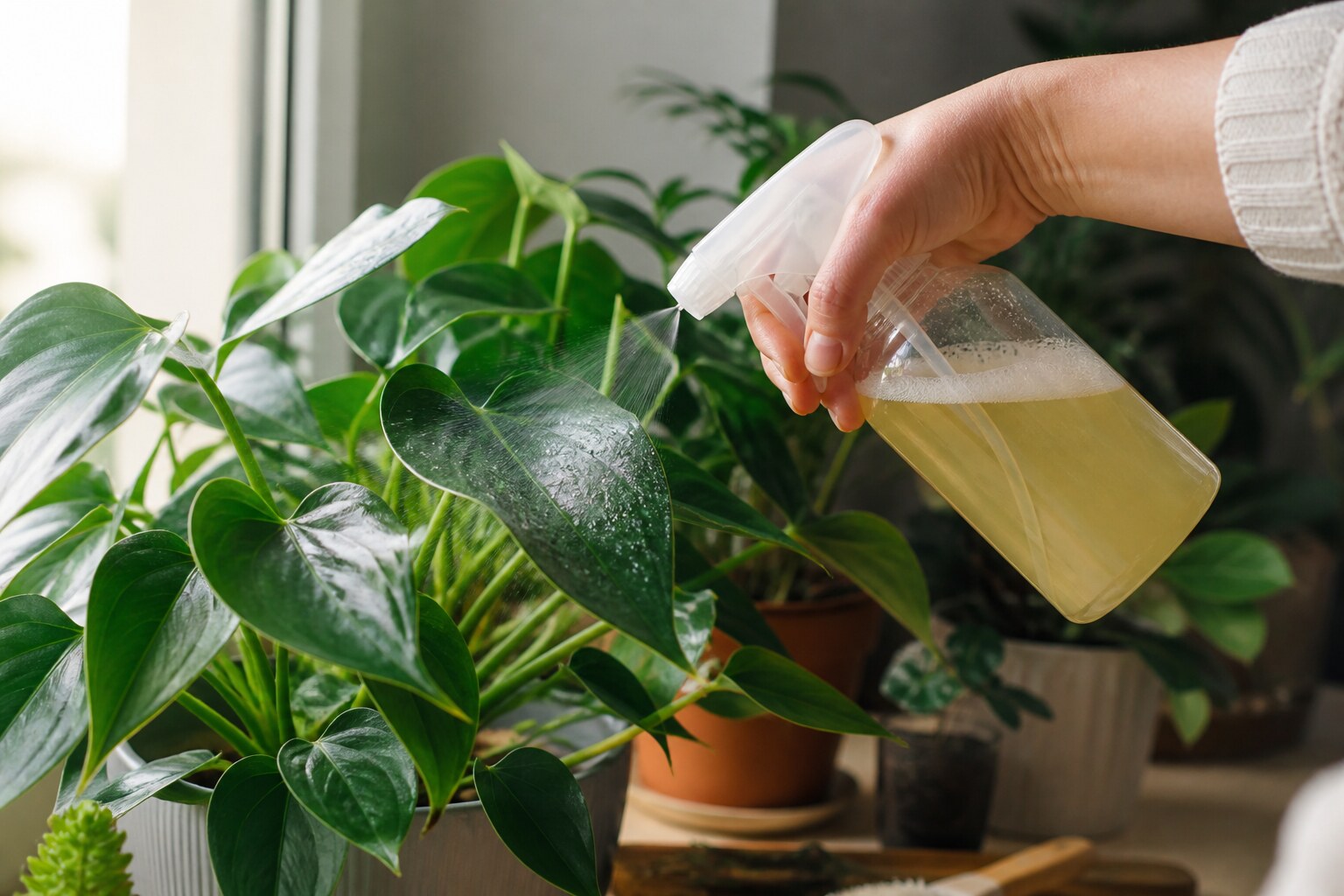
Insecticidal soap is one of the safest, most effective organic pest controls for soft-bodied insects. Made from simple fatty acids that break down insect protective coatings, it kills pests on contact while being gentle on plants and harmless to beneficial insects once dry. Here’s how to make and use it properly.
What Is Insecticidal Soap?
Insecticidal soap is a diluted solution of specific fatty acid salts that kill soft-bodied insects.
How it works:
- Fatty acids penetrate and dissolve the protective waxy coating on insect bodies
- Disrupts cell membranes (causes leakage)
- Dehydrates insects rapidly
- Kills within minutes to hours
- Only works on contact (no residual effect)
- Safe for plants when used correctly
What insects it kills:
- Highly effective: Aphids, whiteflies, mealybugs, spider mites, soft scale, psyllids, thrips (nymphs), leafhoppers
- Moderately effective: Young caterpillars (small larvae), earwigs, sawfly larvae
- Not effective: Hard-bodied beetles, adult butterflies/moths, bees (once dried), ants, most beetles
Why soft-bodied insects are vulnerable:
- Thin exoskeletons
- Waxy coating is their only protection against dehydration
- Soap dissolves this protective layer
- Insect dies from dehydration and cell damage
Important distinction:
- Regular dish soap ≠ insecticidal soap
- Dish soap contains degreasers, fragrances, and antibacterial agents (can harm plants)
- True insecticidal soap uses specific potassium fatty acid salts
- Commercial formulations specifically designed for plant safety
Basic Homemade Insecticidal Soap Recipe
The safest, most effective formula for general use.
Ingredients:
- 1 tablespoon pure liquid castile soap (Dr. Bronner’s unscented is ideal)
- 1 quart (4 cups) water
- Optional: 1 tablespoon vegetable oil or canola oil (helps soap stick to leaves)
Why castile soap works best:
- Made from plant oils (olive, coconut, hemp)
- Contains fatty acids similar to commercial insecticidal soap
- Biodegradable
- No harsh additives
- pH balanced for plants
- Available unscented (fragrance can damage plants)
Mixing instructions:
- Use soft water: Hard water reduces effectiveness (minerals bind with soap)
- If your tap water is hard, use distilled or rainwater
- Or add 1 tablespoon white vinegar to quart of hard water (softens it)
- Mix in spray bottle: Add castile soap to water
- Add oil if using: Improves coverage and extends contact time
- Shake vigorously: Must emulsify (combine) thoroughly
- Label bottle: Write “Insecticidal Soap” and date
- Shake before each use: Soap and oil separate over time
Scaling the recipe:
- 1 gallon: 4 tablespoons castile soap + 1 gallon water
- 2 quarts: 2 tablespoons castile soap + 2 quarts water
- 1 pint: 1.5 teaspoons castile soap + 2 cups water
Storage:
- Keeps 1-2 weeks at room temperature
- 3-4 weeks refrigerated
- Best used fresh (fatty acids degrade over time)
- Discard if it smells rancid or separates completely
Alternative Soap Recipe (Dish Soap Version)
When castile soap isn’t available, use dish soap carefully.
Ingredients:
- 1-2 teaspoons pure liquid dish soap (mild, unscented, no antibacterial agents)
- 1 quart water
Choosing the right dish soap:
- Safe options: Original blue Dawn (not Ultra), Ivory liquid, pure soap brands
- Avoid: Antibacterial, degreaser formulas, moisturizing, fragranced, or bleach-containing soaps
- Why these are risky: Additives can burn plant leaves
Important notes:
- Start with 1 teaspoon per quart (weaker is safer)
- Test on single leaf before full application
- Watch for leaf damage (yellowing, browning, wilting)
- If damage occurs, dilute further or switch to castile soap
Enhanced Recipe with Natural Boosters
Add ingredients that increase effectiveness against specific pests.
Garlic oil addition (for stronger pest repellent):
- Crush 2-3 garlic cloves
- Soak in 2 tablespoons vegetable oil for 24 hours
- Strain out garlic pieces
- Add 1 teaspoon garlic oil to basic soap recipe
- Use for: Aphids, whiteflies, spider mites
- Benefit: Repellent smell deters new pests from landing
Cayenne pepper addition (for chewing insects):
- Add 1/4 teaspoon cayenne pepper powder to basic recipe
- Shake extremely well (pepper doesn’t dissolve)
- Strain through cheesecloth before spraying (prevents nozzle clogging)
- Use for: Caterpillars, beetles, earwigs
- Benefit: Hot taste deters feeding
Neem oil combination:
- 1 tablespoon pure neem oil
- 1 teaspoon castile soap (as emulsifier)
- 1 quart water
- Use for: Whiteflies, aphids, fungal diseases (black spot, powdery mildew)
- Benefit: Longer residual effect (7-14 days), disrupts insect reproduction
Apple cider vinegar addition (for fungal problems):
- Add 1 tablespoon apple cider vinegar to basic recipe
- Use for: Powdery mildew, black spot (in addition to insect control)
- Benefit: Acidic environment inhibits fungal growth
Application Instructions
Proper application is critical for effectiveness and plant safety.
Before you spray:
-
Test first: Spray one leaf or small plant section
- Wait 24-48 hours
- Check for damage (yellowing, spots, wilting, leaf drop)
- If damage occurs, dilute spray 50% and test again
- Don’t spray entire plant until test passes
-
Choose right conditions:
- Best time: Early morning or evening (avoid hot midday sun)
- Temperature: Below 80°F (27°C) — heat increases phytotoxicity risk
- Weather: Dry day with no rain forecast for 6+ hours
- Avoid: Windy conditions (spray drifts away)
-
Check plant stress level:
- Don’t spray drought-stressed plants (water thoroughly day before)
- Don’t spray recently transplanted plants (wait 1 week to settle)
- Don’t spray wilted plants (spray damages them further)
How to spray:
- Shake bottle thoroughly: Ensures even mixture
- Spray to drip point: Leaves should be completely wet
- Target undersides of leaves: Where most pests hide and feed
- Spray tops, stems, and soil surface: Catches all life stages
- Focus on infested areas: But spray entire plant (pests spread)
- Don’t spray blooms: Can damage flowers and harm pollinators
Coverage technique:
- Hold sprayer 6-8 inches from leaves
- Use fine mist setting (not stream)
- Spray from multiple angles
- Lift leaves to spray undersides
- Work systematically from top to bottom
After spraying:
- Let sit for contact time: 10-15 minutes minimum (some sources say up to 2 hours)
- Rinse if desired: Gentle water spray 2-3 hours after application reduces leaf damage risk
- Optional for hardy plants
- Recommended for sensitive plants
- Keep pets away until dry: Soap can cause mild stomach upset if licked
- Clean sprayer: Rinse thoroughly to prevent soap residue buildup
Treatment Schedule
One application won’t eliminate an infestation.
Week 1 (knockdown phase):
- Spray every 2-3 days
- Targets adult insects
- Reduces population dramatically
Week 2-3 (follow-up phase):
- Spray every 4-5 days
- Kills newly hatched nymphs
- Breaks reproduction cycle
Week 4+ (maintenance phase):
- Spray once per week
- Monitors for re-infestation
- Continue until no pests seen for 2 weeks
Why repeated applications are necessary:
- Soap only kills insects it touches (no residual effect)
- Eggs survive treatment (hatch days later)
- Pupae may be protected
- Must catch each generation as it emerges
- Complete life cycle takes 2-4 weeks for most pests
Sensitive Plants (Test Before Spraying)
Some plants are damaged by soap sprays.
High-risk plants:
- Ferns (especially maidenhair and asparagus fern)
- Succulents (jade plant, echeveria, etc.)
- Hairy-leaved plants (African violets, some begonias)
- Bleeding heart
- Sweet peas
- Cherries (ornamental and fruiting)
- Plum trees
- Some roses (test first)
- Portulaca
- Gardenias (sensitive to soap)
- Palms (especially indoor varieties)
Why these plants are sensitive:
- Waxy leaf coatings are thin (soap damages them)
- Hairy leaves trap soap (causes burn spots)
- Tender new growth more vulnerable
- Some species have delicate cell walls
Extra precautions for sensitive plants:
- Dilute spray to 50% strength (1.5 teaspoons soap per quart)
- Test on oldest, mature leaf first
- Spray in evening only (reduces heat stress)
- Rinse leaves 1-2 hours after application
- Consider alternative pest controls (neem oil, insecticidal oils)
Insecticidal Soap for Specific Pests
Adjust formula and application for different insects.
Aphids:
- Standard recipe works perfectly
- Spray every 3-4 days for 2 weeks
- Target new growth and undersides of leaves (where aphids cluster)
- Single application kills 90%+ of aphids present
Spider mites:
- Add 1 tablespoon vegetable oil to standard recipe (helps penetrate webbing)
- Spray forcefully to break up webs
- Every 3 days for 3 weeks minimum (fast reproduction)
- Rinse plant with water first (removes webbing, exposes mites)
Whiteflies:
- Add garlic oil (repels adults)
- Spray early morning when whiteflies less active
- Shake plant first to disturb adults, then spray
- Focus on undersides where eggs and nymphs are
- Every 4-5 days for 4-6 weeks (multiple generations)
Mealybugs:
- Add 1 tablespoon rubbing alcohol to standard recipe (breaks down waxy coating)
- For small infestations: dab individual mealybugs with alcohol-soaked cotton swab first
- Then spray entire plant
- Every 5 days for 3-4 weeks
- Check all plant crevices and leaf axils
Scale insects:
- Soap works on soft scale (young stages) only
- Scrape off adult scale with fingernail or soft toothbrush first
- Then spray thoroughly
- Every 7 days for 6 weeks
- For hard scale, consider horticultural oil instead
Thrips:
- Spray aggressively (forceful spray knocks them off)
- Target flower buds and new growth
- Every 3-4 days for 2-3 weeks
- Consider adding neem oil (disrupts thrips reproduction)
For more comprehensive pest identification and control methods, see our common garden pests guide.
Commercial Insecticidal Soap Products
When homemade versions aren’t practical.
Advantages of commercial products:
- Formulated specifically for plant safety
- Tested pH and concentration
- Longer shelf life
- Includes spreader-stickers (better coverage)
- Standardized effectiveness
Popular brands:
- Safer Brand Insect Killing Soap
- Garden Safe Insecticidal Soap
- Natria Insecticidal Soap
- Bonide Insecticidal Soap
When to choose commercial over homemade:
- Large gardens (pre-mixed is more convenient)
- Treating valuable or sensitive plants (standardized formula safer)
- Commercial greenhouse use (consistency matters)
- When water hardness is extreme (commercial formulas compensate)
Cost comparison:
- Homemade: ~$0.25-0.50 per quart
- Commercial concentrate: ~$1-2 per quart (when diluted)
- Commercial ready-to-use: ~$3-5 per quart
Troubleshooting Common Problems
Problem: Soap damaged plant leaves (yellowing, browning, leaf drop)
Solutions:
- Stop spraying immediately
- Rinse leaves with clean water
- Dilute spray to 50% strength
- Switch to castile soap if using dish soap
- Spray in cooler temperatures (evening)
- Ensure plant is well-watered before spraying
Problem: Soap isn’t killing insects
Solutions:
- Increase concentration slightly (1.5-2 tablespoons per quart)
- Ensure complete coverage (especially undersides)
- Spray to drip point (leaves should be soaking wet)
- Let soap sit longer before rinsing (if rinsing)
- Check water hardness (use distilled water)
- Ensure you’re spraying correct pest (soap only works on soft-bodied insects)
Problem: Spray clogs nozzle
Solutions:
- Strain mixture through cheesecloth
- Use finer-mesh spray setting
- Clean sprayer nozzle after each use
- Don’t add dry ingredients that don’t dissolve (like cayenne)
Problem: Pests keep coming back
Solutions:
- Increase spray frequency (every 2-3 days)
- Check ALL plants nearby (pests migrate)
- Treat for longer period (4-6 weeks minimum)
- Combine with other methods (yellow sticky traps, pruning infested leaves)
- Address underlying plant stress (pests attack weak plants)
Safety and Environmental Impact
Insecticidal soap is among the safest pest controls.
Human safety:
- Non-toxic to humans
- Biodegradable (breaks down within days)
- Safe around children and pets once dry
- Mild skin irritant (wear gloves if sensitive)
- Can cause mild stomach upset if ingested (keep pets away until dry)
Plant safety:
- Environmentally friendly
- No soil contamination
- Doesn’t harm roots
- Breaks down quickly (no buildup)
Beneficial insect safety:
- Only kills insects it directly contacts while wet
- Once dry, harmless to bees, ladybugs, lacewings, and other beneficials
- Doesn’t harm earthworms
- Minimal impact on predator insects
Best practices for minimizing harm:
- Spray in evening (after bees have returned to hives)
- Avoid spraying open flowers
- Spot-treat infestations rather than whole-garden applications
- Stop spraying once pest population is controlled
Comparison to synthetic pesticides:
- No toxic residue
- Won’t contaminate groundwater
- Insects can’t develop resistance
- Safe for edible crops (no waiting period)
- Can be used up to day of harvest
When to Choose Alternative Controls
Insecticidal soap isn’t always the best option.
Use horticultural oil instead when:
- Treating hard scale (soap doesn’t penetrate shell)
- Pest population very heavy
- Treating woody plants (oils safer for bark)
- Winter dormant-oil spraying needed
Use neem oil instead when:
- Want longer residual protection (7-14 days)
- Treating whiteflies (neem disrupts reproduction)
- Combination insect/fungal problem (neem treats both)
- Don’t want to spray as frequently
Use biological controls instead when:
- Greenhouse environment (release beneficial insects)
- Outdoor garden with high beneficial populations
- Caterpillar problems (Bt more effective)
- Want long-term prevention (beneficials stay in garden)
Use manual controls instead when:
- Very small infestation (hand-pick)
- Large insects (beetles, caterpillars)
- Want to avoid any spray (water blast, pruning)
The Bottom Line
Homemade insecticidal soap is an effective, safe, inexpensive solution for soft-bodied garden pests. Mix 1 tablespoon pure castile soap per quart of water, spray plants thoroughly until dripping, and repeat every 2-5 days for 2-4 weeks. The fatty acids penetrate insect protective coatings and cause rapid dehydration.
Test on a single leaf before treating the entire plant — some plants are sensitive to soap. Spray in cool morning or evening hours below 80°F. Focus coverage on undersides of leaves where pests hide. The spray only kills insects it touches while wet, so complete coverage and repeated applications are essential.
Once dry, insecticidal soap is harmless to beneficial insects, pets, and humans. It breaks down within days and leaves no toxic residue. For aphids, whiteflies, mealybugs, and spider mites, homemade insecticidal soap offers effective control at a fraction of the cost of commercial pesticides — naturally and safely.