Baking Soda Spray For Powdery Mildew: Does It Really Work?
Learn the truth about using baking soda to treat powdery mildew. Discover effective application methods, limitations, and when other fungicides work better.
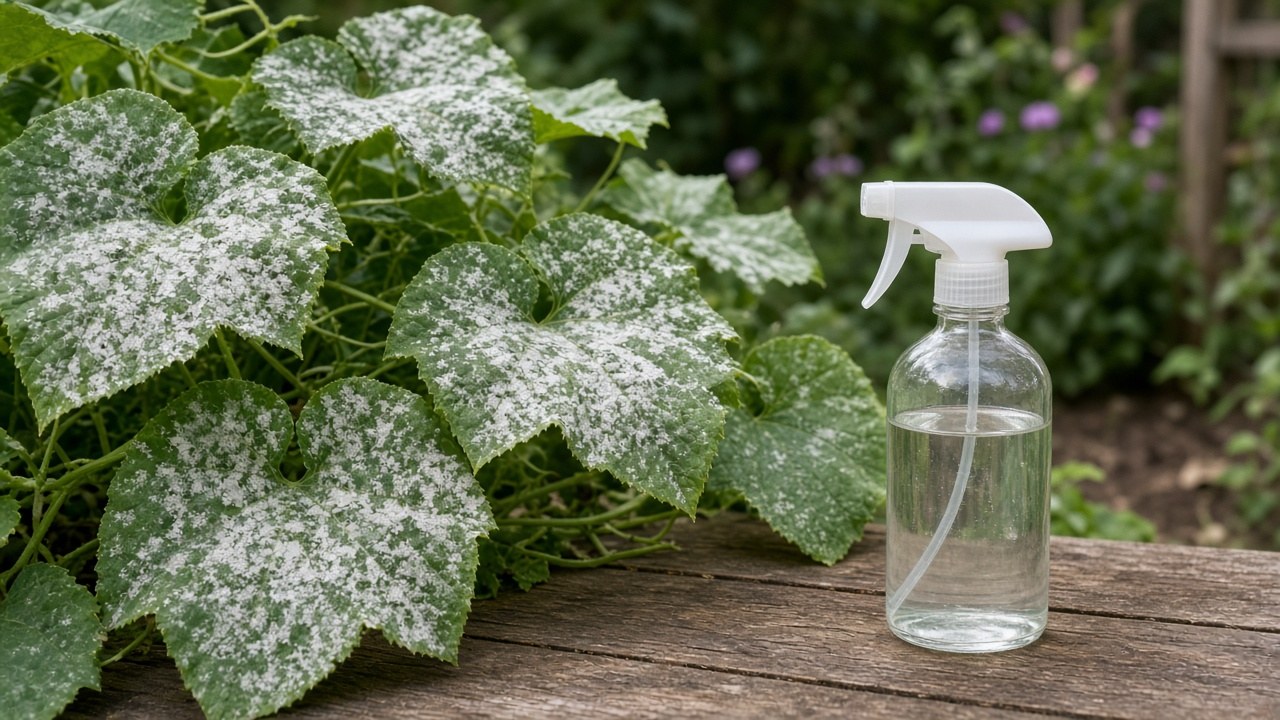
Baking soda spray is one of the most popular home remedies for powdery mildew, touted across gardening forums and websites as a miracle cure. But does it actually work? The answer is nuanced: baking soda provides modest preventive protection and can slow existing infections, but it won’t cure severe infestations and has important limitations. Here’s an honest assessment of baking soda’s effectiveness, how to use it correctly, and when you need stronger treatments.
What Is Powdery Mildew?
Powdery mildew is a fungal disease that creates characteristic white, powdery growth on plant surfaces.
What causes it:
- Multiple fungal species in the order Erysiphales
- Species-specific (rose mildew differs from zucchini mildew)
- Common genera: Erysiphe, Podosphaera, Oidium, Sphaerotheca
- Each fungus attacks specific plant families
How it spreads:
- Spores carried by wind, water splash, insects, and tools
- Doesn’t need moisture to germinate (unlike most fungi)
- Thrives in warm days (70-80°F) and cool nights (50-60°F)
- High humidity (40-70%) with good air circulation
- Shaded, crowded conditions
Symptoms:
- Early stage: White spots on leaf surfaces (upper or lower)
- Progressive: Spots enlarge, merge; entire leaf covered
- Advanced: Leaves yellow, curl, drop; distorted new growth
- Fruiting bodies: Tiny black dots (cleistothecia) appear on white growth
- Stems and buds: Mildew spreads to stems, flowers, and fruit
Plants commonly affected:
- Highly susceptible: Roses, zinnias, bee balm, phlox, cucurbits (squash, cucumber, melon), lilacs, crape myrtle
- Moderately susceptible: Tomatoes, grapes, apples, strawberries, cucumbers
- Resistant: Most conifers, marigolds, salvia, lantana
Why it’s a problem:
- Reduces photosynthesis (blocks light from reaching leaf surface)
- Weakens plants over time
- Reduces yield and quality in vegetables and fruit
- Cosmetically unappealing
- Can overwinter on plant debris and buds (reinfects next season)
How Baking Soda Works Against Powdery Mildew
Baking soda (sodium bicarbonate) doesn’t kill powdery mildew directly — it changes leaf surface pH and disrupts fungal growth.
Mechanism of action:
- Alkaline pH: Baking soda raises leaf surface pH to 8-8.5 (fungus prefers slightly acidic pH 6.0-7.0)
- Osmotic stress: High sodium concentration dehydrates fungal hyphae
- Spore germination inhibition: Prevents new spores from germinating on treated surfaces
- Contact fungistatic: Stops growth but doesn’t kill established fungal colonies
What baking soda does NOT do:
- Doesn’t cure existing heavy infections
- Doesn’t kill fungal spores already germinated
- Doesn’t work systemically (must contact fungus directly)
- Doesn’t provide long-lasting protection (washes off with rain)
Scientific evidence:
- Cornell University studies: Baking soda sprays reduced mildew spread by 50-60% when applied preventively
- USDA research: Sodium bicarbonate “moderately effective” for prevention; “poor” for curing established infections
- Real-world effectiveness: Best used as preventive measure or very early treatment; disappointing results on heavy infections
Important limitation: Baking soda itself is only marginally effective. The addition of horticultural oil or soap (as emulsifier and spreader) significantly improves efficacy — these ingredients smother spores and help baking soda stick to leaves.
Basic Baking Soda Spray Recipe
The standard formula used in university trials.
Ingredients:
- 1 tablespoon baking soda (sodium bicarbonate)
- 1 gallon water
- 1 tablespoon horticultural oil, vegetable oil, or liquid castile soap
- Optional: 1 tablespoon insecticidal soap (improves coverage)
Why each ingredient matters:
- Baking soda: Raises pH; creates inhospitable environment for fungus
- Oil or soap: Helps spray stick to leaves; spreads baking soda evenly; smothers some spores
- Water: Dilutes baking soda to safe concentration (too strong burns leaves)
Mixing instructions:
- Fill spray bottle or garden sprayer with water
- Add baking soda; shake or stir until dissolved
- Add oil or soap
- Shake vigorously to emulsify (combine oil and water)
- Shake before each use (mixture separates over time)
Storage:
- Use immediately for best results
- Lasts 1-2 weeks at room temperature
- Shake well before each application
- Discard if mixture smells rancid or looks separated beyond shaking
Cost:
- Extremely inexpensive: ~$0.10-0.25 per gallon
- Much cheaper than commercial fungicides
- Ingredients readily available
Enhanced Baking Soda Formulas
Variations that may improve effectiveness.
Cornell University Formula (most tested):
Ingredients:
- 1 tablespoon baking soda
- 1 tablespoon horticultural oil
- 1 gallon water
Notes:
- Most studied formulation
- Oil critical for effectiveness (not optional)
- Performed best in university trials
- Reduced mildew by 60% compared to untreated controls
Potassium Bicarbonate Formula (stronger):
Ingredients:
- 1 tablespoon potassium bicarbonate (substitute for baking soda)
- 1 tablespoon horticultural oil
- 1 gallon water
Why potassium is better:
- More effective than sodium bicarbonate
- Potassium is plant nutrient (sodium is not)
- Doesn’t build up salt in soil
- Used in commercial organic fungicides (GreenCure, MilStop)
Where to buy:
- GreenCure brand (potassium bicarbonate)
- Wine-making supply stores (for fermenting)
- Online retailers
Cost:
- More expensive than baking soda
- $15-25 per pound (makes many gallons of spray)
Milk Spray (alternative to baking soda):
Ingredients:
- 1 part milk (any fat content)
- 9 parts water
- Example: 1 cup milk + 9 cups water
How milk works:
- Proteins and enzymes inhibit fungal growth
- Fermentation produces natural antifungal compounds
- Some studies show equal or better results than baking soda
- No pH issues or salt buildup
Application:
- Spray weekly during mildew season
- Use fresh mixture each time
- Slightly sticky residue (rinse with water if objectionable)
Application Instructions
Proper technique critical for any level of success.
When to spray:
Best timing:
- Preventive application: Before mildew appears; start when conditions favor it (spring, early summer)
- Very early treatment: As soon as you see first white spots
- NOT for heavy infections: Baking soda disappointing once mildew established
Time of day:
- Early morning: Spray dries before heat of day
- Late afternoon/evening: Avoid — wet leaves overnight can worsen fungal problems
- Never spray in hot midday sun (increases leaf burn risk)
Weather conditions:
- Dry day with no rain forecast for 24 hours
- Overcast or partly cloudy ideal
- Avoid windy days (spray drifts)
- Temperature below 85°F (high heat + baking soda = leaf burn)
How to spray:
-
Test spray first:
- Spray a few leaves on single plant
- Wait 24-48 hours
- Check for leaf damage (yellowing, brown spots, wilting)
- If damage occurs, dilute mixture 50% and test again
-
Mix fresh spray:
- Make only what you’ll use that day
- Shake thoroughly before filling sprayer
-
Apply to all leaf surfaces:
- Spray until leaves are wet but not dripping
- Cover tops and undersides of leaves (mildew often starts on undersides)
- Spray stems and nearby soil
- Don’t forget new growth (highly susceptible)
-
Ensure thorough coverage:
- Mildew can only be prevented/treated where spray contacts it
- Missed spots will continue spreading
- Work systematically from top to bottom
-
Let dry completely:
- Don’t rinse off
- Spray must dry on leaf surface to work
- Takes 30-60 minutes to dry
Treatment schedule:
Preventive program:
- Spray every 7-10 days throughout growing season
- Start before mildew appears
- Continue until cool fall weather arrives
Active treatment (early-stage mildew):
- Spray every 3-5 days for 2-3 weeks
- Then switch to weekly maintenance
- Remove heavily infected leaves before spraying
After rain:
- Reapply within 24 hours (rain washes off spray)
- No residual protection once washed away
Sensitive Plants (Use With Caution)
Baking soda can damage certain plants.
Plants prone to damage from baking soda:
- Ferns
- Japanese maples
- Some roses (test first)
- Azaleas and rhododendrons
- Young seedlings
- Drought-stressed plants
Why damage occurs:
- Sodium accumulation on leaves
- pH disruption of leaf surface
- Sodium absorption can cause leaf burn
- Oil in mixture can clog pores on sensitive leaves
Precautions for sensitive plants:
- Always test on single leaf first
- Reduce baking soda to 1 teaspoon per gallon (instead of 1 tablespoon)
- Use potassium bicarbonate instead of sodium bicarbonate
- Spray only in cool, cloudy conditions
- Consider milk spray instead
Signs of phytotoxicity (plant damage):
- Yellowing leaves
- Brown spots or tips
- Leaf drop
- Wilting despite adequate water
If damage occurs:
- Stop spraying immediately
- Rinse leaves with clean water
- Move plant to shade temporarily
- Switch to different treatment method
Limitations and When Baking Soda Isn’t Enough
Be realistic about what baking soda can achieve.
Situations where baking soda fails:
Heavy existing infections:
- If more than 30% of plant is covered in mildew, baking soda won’t cure it
- Established fungal colonies too extensive
- Requires stronger fungicide (neem oil, sulfur, or synthetic)
Recurring severe infections:
- Yearly mildew problems on same plants
- May indicate susceptible variety or poor growing conditions
- Prevention requires plant replacement or cultural changes, not just spraying
High-value crops:
- Grapes, roses, and fruiting trees with chronic mildew issues
- Economic or aesthetic value justifies more effective treatment
- Use proven commercial fungicides for reliability
Large-scale applications:
- Too labor-intensive to spray large gardens weekly
- Commercial fungicides more practical
- Better residual protection with fewer applications
When baking soda is appropriate:
- Preventive program on mildew-prone plants
- Very early-stage infections (first spots)
- Organic gardening situations (no synthetic chemicals desired)
- Low-stakes situations (ornamentals, not food crops or valuable plants)
- Budget constraints (free/cheap option to try before buying fungicides)
More Effective Alternatives
When you need stronger mildew control.
Neem oil (organic, more effective):
Advantages over baking soda:
- Actually kills fungal spores (not just preventive)
- Provides 7-14 day residual protection
- Also controls insects
- Widely available
Application:
- 2 tablespoons neem oil + 1 teaspoon soap + 1 gallon water
- Spray weekly; more effective than baking soda
- Don’t apply in hot sun
Sulfur fungicides (organic, very effective):
Advantages:
- Highly effective preventive and curative treatment
- Long history of use (oldest fungicide)
- Organic-approved
- Inexpensive
Application:
- Dust formulation or wettable powder
- Apply per label directions
- Don’t use within 2 weeks of oil sprays (causes plant burn)
- Don’t apply when temperature exceeds 85°F
Caution:
- Some plants sensitive to sulfur (test first)
- Can burn leaves in hot weather
Copper fungicides (organic, broad-spectrum):
Advantages:
- Treats powdery mildew plus many other fungal diseases
- Long-lasting protection
- Rain-resistant once dried
Disadvantages:
- Can accumulate in soil over time
- More toxic to aquatic life than other organic options
- Requires careful application (avoid spray drift)
Synthetic fungicides (most effective):
Active ingredients:
- Myclobutanil (Spectracide Immunox): Systemic; moves through plant
- Propiconazole (Banner Maxx): Professional-grade; excellent control
- Triforine (Funginex): Systemic; long residual
When to use:
- Severe infections unresponsive to organic treatments
- Valuable plants (roses, fruit trees)
- Preventive program where mildew is chronic problem
Disadvantages:
- Not organic
- Environmental concerns
- More expensive
- Fungi can develop resistance if overused
Cultural Controls (Most Important)
Preventing mildew is far more effective than treating it.
Improve air circulation:
Why this matters:
- Powdery mildew thrives in stagnant air
- Good air flow dries leaves quickly (reduces fungal growth)
- Probably the single most important preventive measure
How to improve air flow:
- Space plants farther apart (don’t crowd)
- Prune dense growth to open up plant canopy
- Remove lower leaves on tall plants (improves air flow at base)
- Thin overcrowded perennial beds
- Avoid planting in enclosed, windless corners
Water correctly:
Watering practices:
- Water at soil level (drip irrigation or soaker hose)
- Avoid overhead watering (wets foliage unnecessarily)
- Water in morning (leaves dry quickly during day)
- Never water in evening (leaves stay wet overnight)
Mulch:
- Mulch prevents soil splash (spores spread from soil to leaves)
- 2-3 inches organic mulch around plants
Choose resistant varieties:
Plant breeding progress:
- Many modern plant varieties bred for mildew resistance
- Roses: Look for “disease-resistant” or “powdery mildew resistant” on tags
- Vegetables: Choose resistant cucurbit varieties (Cucumbers: ‘Marketmore 76’, ‘County Fair’; Squash: ‘Dunja’, ‘Sunburst’)
- Perennials: Select resistant phlox, bee balm, lilac varieties
Replace chronic problems:
- If a plant gets mildew every year despite treatment, consider replacing it
- Native alternatives often more resistant than exotic ornamentals
Avoid high-nitrogen fertilizers:
Why nitrogen matters:
- Excess nitrogen produces soft, succulent growth
- Tender new growth very susceptible to mildew
- Slow, steady growth more resistant
Fertilizing tips:
- Use balanced fertilizers
- Don’t over-fertilize
- Avoid high-nitrogen formulas (like 20-10-10) on mildew-prone plants
- Switch to slow-release organic fertilizers
Site selection:
Choose the right location:
- Plant mildew-prone species in full sun (mildew worse in shade)
- Avoid damp, shaded, crowded areas
- Ensure good drainage
Sanitation:
Remove infected material:
- Prune off heavily infected leaves and stems
- Don’t compost diseased plant material (spores survive)
- Dispose in trash
- Rake up fallen leaves in fall (reduces overwintering spores)
- Disinfect tools after working with infected plants (10% bleach solution)
Monitor regularly:
Catch mildew early:
- Inspect susceptible plants weekly
- Look for first white spots on leaf undersides
- Treat immediately when detected (easier to control when small)
- Don’t wait until entire plant is covered
Integrated Mildew Management
Combine methods for best results.
Sustainable approach:
- Start with resistant varieties: Choose plants less susceptible to mildew
- Cultural controls: Space plants, improve air circulation, water correctly
- Monitor weekly: Catch infections early
- Preventive baking soda sprays: Weekly applications during mildew season (modest protection)
- Switch to stronger treatment if needed: Neem oil or sulfur if baking soda insufficient
- Remove severely infected plants: Replace with resistant varieties
Seasonal schedule (temperate climates):
Spring:
- Prune to improve air circulation
- Begin preventive sprays when new growth emerges
- Spray weekly through May-June
Summer:
- Continue weekly monitoring
- Spray every 7-10 days (more often if mildew appears)
- Water in morning only
- Prune off infected leaves
Fall:
- Clean up fallen leaves and plant debris
- Cut back heavily infected perennials to ground
- Dispose of infected material (don’t compost)
Winter:
- Plan to replace chronic problem plants
- Order resistant varieties for next season
The Bottom Line
Baking soda spray provides modest protection against powdery mildew when applied preventively, reducing infections by 50-60% compared to no treatment, but it won’t cure heavy existing infections. The most effective formula combines 1 tablespoon baking soda plus 1 tablespoon horticultural oil per gallon of water — the oil is critical and significantly improves efficacy beyond baking soda alone. Apply weekly before mildew appears or every 3-5 days for very early infections, ensuring complete coverage of all leaf surfaces.
However, baking soda’s limitations are significant: it provides no residual protection once washed off by rain, doesn’t kill established fungal colonies, and requires labor-intensive repeated applications throughout the growing season. If more than 30% of a plant is already covered in mildew, baking soda won’t save it — switch to more effective treatments like neem oil, sulfur fungicides, or synthetic options. For plants that develop severe mildew every year despite preventive spraying, the problem isn’t the treatment but the plant’s susceptibility or growing conditions.
The most effective powdery mildew strategy isn’t spraying — it’s prevention through cultural practices. Improving air circulation by spacing plants properly and pruning dense growth, watering at soil level in the morning, and choosing resistant varieties will prevent more mildew than any spray. Use baking soda as one tool in an integrated approach, not as a miracle cure. For comprehensive pest and disease management, see our common garden pests guide.