How To Get Rid Of Mole Crickets On Your Lawn
Eliminate mole crickets damaging your lawn with proven control methods. Learn to identify tunneling damage, apply effective treatments, and prevent future infestations.
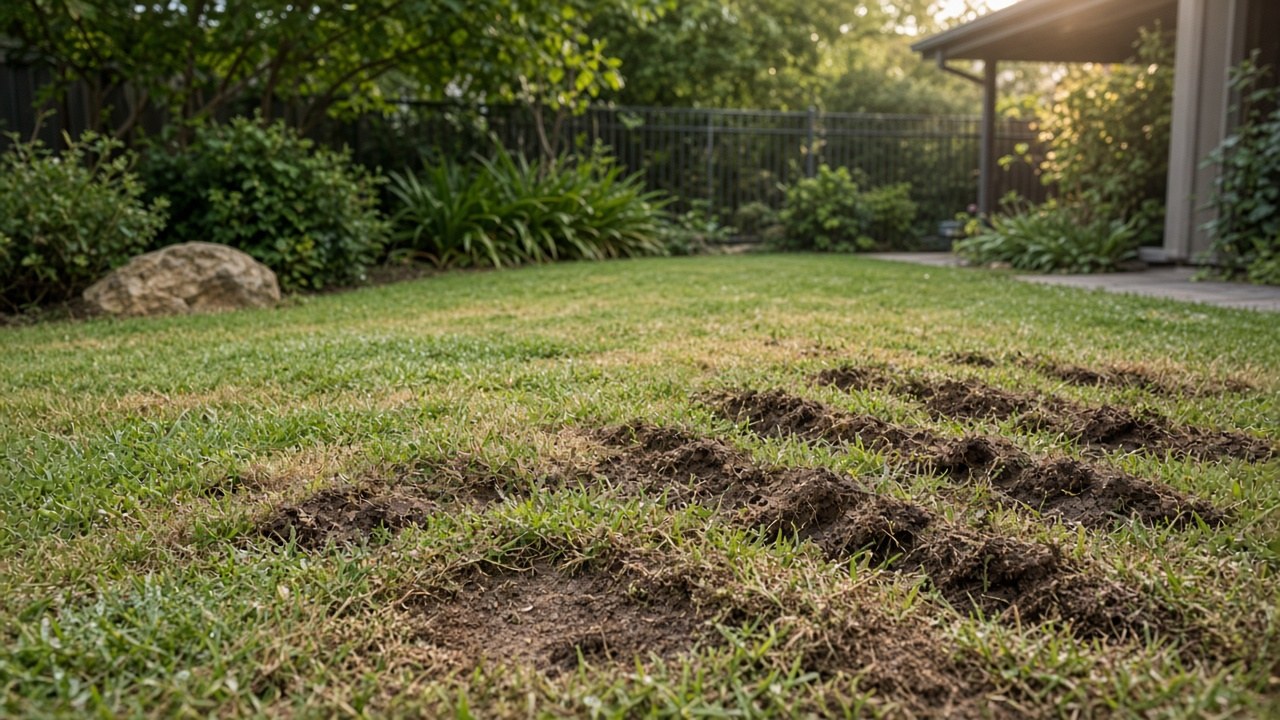
Mole crickets are among the most destructive lawn pests in warm-season turf, creating extensive tunnel systems that uproot grass seedlings and damage roots. These nocturnal burrowing insects feed on grass roots and shoots, leaving raised tunnels, brown patches, and loose, spongy turf. In severe infestations, mole crickets can destroy entire lawns in a single season. Here’s how to identify, control, and prevent mole cricket damage.
What Are Mole Crickets?
Mole crickets are fossorial (burrowing) insects that spend most of their lives underground, tunneling through soil and feeding on grass roots.
Species in North America:
- Tawny mole cricket (Neoscapteriscus vicinus): Most damaging; feeds heavily on grass roots
- Southern mole cricket (Neoscapteriscus borellii): Feeds on roots and insects; less damaging
- Shortwinged mole cricket (Neoscapteriscus abbreviatus): Primarily carnivorous; minimal plant damage
- Northern mole cricket (Neocurtilla hexadactyla): Native species; rarely causes significant damage
Physical characteristics:
- Size: 1 to 1.5 inches long
- Color: Golden brown to grayish-brown
- Front legs: Shovel-like, adapted for digging
- Wings: Adults have functional wings; capable fliers
- Body: Cylindrical, covered with fine velvety hairs
- Eyes: Small (poor vision; rely on touch and vibration)
Life cycle (Southern US):
- Spring (March-April): Adults emerge from winter dormancy; begin feeding
- Late spring (May-June): Adults fly to find mates; females lay eggs in underground chambers
- Summer (June-August): Eggs hatch; nymphs tunnel and feed aggressively on grass roots
- Fall (September-October): Nymphs mature into adults; continue feeding
- Winter (November-February): Adults burrow deep (8-12 inches) and overwinter
- One generation per year (in most regions; two generations possible in southernmost areas)
Why mole crickets damage lawns:
- Tunneling: Create extensive burrow systems that uproot grass seedlings
- Root feeding: Tawny mole crickets sever grass roots and feed on shoots
- Soil disruption: Tunnels dry out soil and expose roots to air
- Secondary damage: Tunnels provide pathways for disease and allow soil desiccation
Geographic distribution:
- Primary problem: Southeastern US (Florida, Georgia, South Carolina, Alabama, Louisiana, coastal Texas)
- Occasional issues: Southern California, Arizona, Puerto Rico
- Not a problem: Northern states (can’t survive freezing winters)
Identifying Mole Cricket Damage
Recognizing mole cricket activity allows for timely treatment.
Visual symptoms:
Tunnel damage:
- Raised ridges: Visible surface tunnels running through lawn (1/2 to 1 inch raised)
- Spongy turf: Lawn feels soft and unstable when walked on
- Loose soil: Surface soil easily displaced; footprints sink deeper than normal
- Seedling uprooting: Young grass pulled up by tunneling activity
Feeding damage:
- Irregular brown patches: Dead or dying grass in scattered areas
- Thinning turf: Grass density declines in affected zones
- Exposed soil: Severe infestations leave bare ground where grass roots destroyed
- Uneven mowing: Tunnels cause mower to scalp turf in some areas
Timing of damage:
- Peak damage period: Late summer through fall (nymphs feeding aggressively)
- Spring damage: Adult feeding after winter emergence
- Night activity: Most active between dusk and dawn; surface activity visible
How to confirm mole crickets:
Soap flush test (most reliable):
- Mix 1-2 tablespoons liquid dish soap in 1-2 gallons water
- Pour mixture evenly over 4 square feet of suspected damage area
- Wait 2-3 minutes
- Count mole crickets that emerge to surface (irritated by soap)
- Perform test in multiple locations (damage and healthy zones)
Threshold levels:
- 0-2 per 4 sq ft: Normal population; no treatment needed
- 2-4 per 4 sq ft: Moderate infestation; monitor closely
- 4+ per 4 sq ft: Heavy infestation; treatment required
- 8+ per 4 sq ft: Severe damage; immediate treatment essential
Night observation:
- Go outdoors 1-2 hours after dark with flashlight
- Look for mole crickets on turf surface (they surface to feed and mate)
- Listen for chirping sounds (males call to attract females)
- Check areas with visible tunnel damage
Most vulnerable turf types:
- Highly susceptible: Bahiagrass, bermudagrass (mole crickets’ preferred hosts)
- Moderately susceptible: St. Augustine grass, centipede grass
- Less susceptible: Zoysia grass (denser root system resists damage)
Method 1: Biological Control With Nematodes
Beneficial nematodes provide safe, effective, long-term mole cricket control.
What are beneficial nematodes?:
- Microscopic roundworms (Steinernema scaptericii strain)
- Hunt mole crickets in soil
- Enter cricket’s body through natural openings
- Release bacteria that kill cricket within 24-48 hours
- Nematode population multiplies inside dead cricket
- Thousands of new nematodes released to continue hunting
Effectiveness:
- Tawny mole crickets: 70-85% control within 4-6 weeks
- Southern mole crickets: 60-75% control
- Long-term suppression: Nematodes establish resident populations (multi-year control)
- Best results: Applied to young nymphs in summer (June-August)
Choosing the right nematode species:
- Steinernema scaptericii: Only strain highly effective against mole crickets
- Don’t use S. carpocapsae or Heterorhabditis bacteriophora (wrong species; won’t work)
- Check product label carefully
When to apply:
- Best timing: Early summer (June-July) when most crickets are small nymphs
- Alternative timing: Late summer (August) catches later instars
- Soil temperature: 60-90°F (nematodes die outside this range)
- Time of day: Evening or early morning (UV light kills nematodes)
Application instructions:
-
Purchase fresh nematodes:
- Order from specialized suppliers (Arbico Organics, NaturesGoodGuys)
- Check expiration date
- Store refrigerated (don’t freeze)
- Use within 2-3 weeks of receipt
-
Prepare lawn:
- Mow grass to normal height
- Water lawn thoroughly 24 hours before application
- Soil must be moist (nematodes need moisture to move)
-
Mix nematodes:
- Use unchlorinated water (let tap water sit 24 hours to dechlorinate)
- Follow label directions for dilution (typically 50 million per 2,500 sq ft)
- Water temperature 40-90°F
- Mix gently in bucket or watering can
- Don’t use high-pressure sprayer
-
Apply nematodes:
- Use hose-end sprayer, backpack sprayer, or watering can
- Remove any filters (nematodes clog fine screens)
- Apply evening or on cloudy day
- Spray evenly over affected areas plus 10-foot buffer
- Keep mixture agitated (nematodes settle to bottom)
-
Water in immediately:
- Irrigate with 1/2 inch water right after application
- Nematodes must penetrate soil (can’t survive on grass blades)
- Keep soil moist for 2 weeks after application
- Light watering every 2-3 days helps nematodes spread
Follow-up applications:
- Reapply in 60-90 days if mole cricket populations remain high
- Yearly applications may be needed in severely infested areas
- Once established, nematodes provide ongoing suppression
Pros:
- Completely safe for humans, pets, wildlife, and beneficial insects
- No chemical residue
- Establishes long-term mole cricket suppression
- Can be used in organic lawn programs
- No water quality concerns
Cons:
- More expensive than chemical treatments ($60-120 for 5,000 sq ft)
- Requires proper soil conditions and timing
- Slower results than insecticides (4-6 weeks)
- Must be applied correctly (many failures due to improper application)
- Short shelf life
- Difficult to find S. scaptericii (less common than other nematode species)
Method 2: Chemical Insecticides (Fast-Acting Control)
Synthetic insecticides provide rapid knockdown of mole cricket populations.
Active ingredients for mole crickets:
Granular insecticides (preferred application method):
Bifenthrin (Talstar, Up-Star, Wisdom):
- Speed: Kills within 24-48 hours
- Best for: Emergency treatment of severe damage
- When to apply: June-July (targets young nymphs)
- Effectiveness: 85-95% control of all mole cricket species
- Duration: 30-60 day residual
- Application rate: 0.25-0.5 lbs AI per acre
Fipronil (TopChoice):
- Speed: Slower acting (7-14 days) but excellent long-term control
- Best for: Season-long protection
- When to apply: May-June (before peak hatch)
- Effectiveness: 90-100% control
- Duration: 6-9 months residual
- Application rate: 0.1-0.2 lbs AI per acre
Imidacloprid (Merit, GrubEx):
- Speed: Moderate (3-7 days to full effect)
- Best for: Combined grub and mole cricket control
- When to apply: Late spring to early summer
- Effectiveness: 70-85% control
- Duration: 3-4 months
- Application rate: 0.3-0.5 lbs AI per acre
Clothianidin (Arena):
- Speed: Slow-acting systemic (7-14 days)
- Best for: Preventive applications
- When to apply: May-June
- Effectiveness: 80-90% control
- Duration: Full season protection
- Application rate: 0.15-0.25 lbs AI per acre
Liquid sprays (for spot treatment):
Carbaryl (Sevin):
- Fast knockdown (24-48 hours)
- Shorter residual (7-14 days)
- More toxic to beneficial insects
- Use for severe local infestations
Trichlorfon (Dylox):
- Very fast acting (hours)
- Short residual (5-10 days)
- Emergency treatment only
- Water in immediately
Application instructions for granular insecticides:
-
Timing is critical:
- Best window: June-July when crickets are young nymphs (1st-3rd instar)
- Alternative: April-May for adult control (before egg-laying)
- Avoid: Late fall (crickets too large; preparing to overwinter)
-
Mow lawn:
- Mow to normal height before application
- Remove clippings to improve granule penetration
-
Apply granules:
- Use drop spreader or broadcast spreader
- Calibrate spreader according to label
- Apply at label rate (don’t exceed recommended dosage)
- Apply to entire problem area plus 20-foot buffer
- Avoid applying before rain (runoff concerns)
-
Water in immediately:
- Irrigate with 1/2 to 3/4 inch water within 24 hours
- Essential for moving insecticide into soil (where mole crickets live)
- Most application failures due to inadequate watering
- Use sprinkler system or hose with sprinkler
-
Wait for results:
- Perform soap flush test 10-14 days after treatment
- Count surviving mole crickets
- Reapply if threshold still exceeded
Safety precautions:
- Keep children and pets off lawn until watered in and dried
- Don’t apply before heavy rain forecast (prevents runoff)
- Avoid contaminating ponds, lakes, or streams
- Wear gloves during application
- Store products in original containers
- Follow all label instructions
Pros:
- Fast, reliable control
- Proven effectiveness
- Relatively inexpensive ($30-60 per 5,000 sq ft for season)
- Easy to apply with standard spreader
- Long residual with some products (fipronil)
Cons:
- Toxic to bees, beneficial insects, and aquatic organisms
- Environmental concerns (especially imidacloprid and clothianidin)
- Water quality issues if not applied correctly
- Kills beneficial ground beetles and spiders
- Some products banned or restricted in certain areas
- Annual reapplication usually needed
Method 3: Mole Cricket Baits
Specially formulated baits combine food attractants with insecticides.
How baits work:
- Contain food attractants mole crickets prefer
- Mixed with slow-acting insecticide
- Crickets surface at night to feed on bait
- Consume insecticide-treated bait
- Return underground and die 24-72 hours later
Available bait products:
Active ingredients:
- Indoxacarb (Advion Fire Ant Bait — also works for mole crickets)
- Fipronil (TopChoice or Chipco Choice bait)
- Carbaryl (some older formulations)
Advantages of baits:
- Target mole crickets specifically (less impact on non-target organisms)
- Applied at lower total insecticide rate than broadcast treatments
- Surface application (no watering required)
- Can treat specific problem areas
- Less environmental impact than broadcast sprays
When to apply baits:
- Evening application essential: Mole crickets forage at night
- Best timing: Late afternoon (4-6 PM) so bait is fresh when crickets emerge
- Soil conditions: Moist soil (cricket activity higher)
- Temperature: Above 60°F (crickets more active)
- Season: June-August for nymphs; April-May for adults
Application instructions:
-
Prepare lawn:
- Mow grass to normal height
- Water lawn lightly 2-3 hours before application (encourages cricket surface activity)
- Time application for late afternoon/evening
-
Apply bait:
- Use hand-held or push spreader
- Apply at label rate (typically 1-2 lbs per 1,000 sq ft)
- Spread evenly over problem areas
- Don’t apply in concentrated piles
-
Don’t water after application:
- Leave bait on surface (crickets must find it)
- Don’t irrigate for 24-48 hours after application
- Don’t mow for 24-48 hours
- Rain is okay (light rain doesn’t wash away bait)
-
Evaluate results:
- Perform soap flush test 7-10 days after treatment
- Reapply if cricket activity remains high
Pros:
- Targeted treatment (less environmental impact)
- No watering required
- Easy application
- Effective when applied correctly
- Can treat problem spots without treating entire lawn
Cons:
- More expensive per treatment than broadcast insecticides
- Timing must be perfect (evening application required)
- Pets may try to eat bait (keep pets indoors until bait consumed)
- Less effective in very dry conditions
- Doesn’t provide residual control
- Not all mole crickets surface to feed on bait
Method 4: Cultural and Mechanical Controls
Non-chemical practices that reduce mole cricket populations.
Proper lawn maintenance:
Healthy turf resists damage:
- Fertilize appropriately: 3-4 lbs nitrogen per 1,000 sq ft annually (vigorous grass recovers from damage)
- Mow at proper height: Don’t scalp lawn (weakens grass roots)
- Water deeply, infrequently: Encourages deep roots that tolerate mole cricket feeding
- Overseed thin areas: Dense turf better withstands tunnel damage
- Choose resistant varieties: Zoysia grass more resistant than bahiagrass or bermudagrass
Light traps (monitoring and mass trapping):
How light traps work:
- Adult mole crickets attracted to bright lights at night
- Fly to light source; fall into collection container
- Can trap hundreds of adults per night during flight season
When to use light traps:
- Peak flight period: March-June (males fly to find mates)
- Warm, humid nights: Highest flight activity
- New moon phase: Darker nights = better trap effectiveness
DIY light trap:
- Fill large plastic tub with soapy water (3-4 inches deep)
- Suspend bright light (100-watt bulb or LED flood) 12-18 inches above water
- Place in open area of lawn
- Run light from dusk to midnight
- Crickets fly to light, fall in water, drown
Effectiveness:
- Reduces adult population (fewer eggs laid)
- Does not eliminate infestations
- Best used as monitoring tool (gauges cricket activity)
- Labor-intensive for large lawns
Manual removal (small areas):
Hand-picking:
- Go outdoors at night with flashlight
- Pick mole crickets off turf surface
- Drop in bucket of soapy water
- Dispose in outdoor trash
- Only practical: For very small lawns or spot infestations
Encouraging natural predators:
Birds:
- Mockingbirds, robins, and crows feed on mole crickets
- Install bird baths and feeders
- Reduce pesticide use (protects bird food sources)
Beneficial insects:
- Ground beetles and wolf spiders eat mole cricket eggs and small nymphs
- Maintain diverse landscape (provides habitat)
- Reduce broad-spectrum insecticide use
Larra wasp (Larra bicolor):
- Parasitic wasp introduced as biological control
- Stings and paralyzes mole crickets; lays egg inside
- Wasp larva feeds on live cricket; eventually kills it
- Establishing populations in Florida and Georgia
- Can be purchased for release in home landscapes
Integrated Mole Cricket Management
Combine methods for sustainable long-term control.
Year 1 (Knockdown phase):
- April-May: Perform soap flush test; confirm mole cricket presence
- June: Apply chemical insecticide (bifenthrin or fipronil) if above threshold
- July-August: Apply beneficial nematodes (S. scaptericii)
- October: Evaluate control; repeat soap flush test
Year 2 (Transition phase):
- April: Monitor adult activity with light trap or night observation
- May: Apply preventive chemical only if populations remain high
- June-July: Reapply beneficial nematodes
- Fall: Overseed thin areas; improve turf density
Year 3+ (Maintenance phase):
- Spring: Monitor with soap flush tests
- Summer: Spot-treat with baits if needed
- Maintain: Healthy turf practices; rely on nematodes for suppression
- No routine treatments: Only treat if threshold exceeded
Decision guide:
| Cricket Count (per 4 sq ft) | Damage Level | Recommended Action |
|---|---|---|
| 0-2 | None | No treatment; monitor |
| 2-4 | Minor tunneling | Apply nematodes |
| 4-8 | Moderate damage | Chemical + nematodes |
| 8+ | Severe damage | Chemical immediately; follow with nematodes |
Preventing Mole Cricket Damage
Resistant turfgrass selection:
- Plant zoysia grass in new lawns (most resistant to mole cricket damage)
- Replace bahiagrass with zoysia in severely infested areas
- Choose ‘Floratam’ St. Augustine (more resistant than common varieties)
Monitoring and early detection:
- Perform soap flush tests twice per year (April and August)
- Watch for signs of tunneling damage
- Run light traps during spring flight season
- Treat early when populations low
Soil management:
- Improve drainage in wet areas (mole crickets prefer moist soil)
- Core aerate compacted soils annually
- Topdress with compost (improves soil structure; encourages beneficial organisms)
Regional considerations:
- North Florida to coastal Carolinas: Mole crickets are perennial problem; preventive treatments often needed
- Central/South Florida: Two generations possible; year-round vigilance required
- Gulf Coast: High populations; combine chemical and biological controls
- Inland/northern areas: Isolated infestations; spot-treat as needed
Neighborhood coordination:
- Mole crickets fly 3-5 miles during mating flights
- Area-wide control programs most effective
- Coordinate treatments with neighbors
- Share costs of nematode applications
For additional information on maintaining a healthy, pest-resistant lawn, see our lawn care basics guide.
The Bottom Line
Mole crickets cause extensive lawn damage through tunneling and root feeding, but effective control is achievable with proper timing and method selection. For sustainable long-term suppression, apply beneficial nematodes (Steinernema scaptericii) in June or July when most crickets are small nymphs — this provides 70-85% control and establishes resident nematode populations that continue hunting mole crickets for years.
For immediate relief of severe infestations, apply granular bifenthrin or fipronil in June-July and water in thoroughly with 1/2 inch of irrigation — this kills 85-95% of mole crickets within days and provides 1-6 months of residual protection. The key to successful chemical control is timing applications when crickets are young nymphs and watering in the product so it reaches the soil where crickets tunnel.
Perform soap flush tests before treating (1-2 tablespoons dish soap in 2 gallons water poured over 4 square feet) — treat only if 4 or more mole crickets surface per test area. A single well-timed treatment in early summer provides better control than multiple late-season applications when crickets are large and about to overwinter. Combining chemical knockdown in year one with biological control from nematodes provides the most sustainable, cost-effective long-term management strategy.