How To Determine Soil Fertility Through Color: What Your Soil Is Really Telling You
Learn what soil color reveals about fertility, organic matter, and drainage—and why a soil test is still essential. Understand the truth behind soil color myths and how to interpret visual clues.
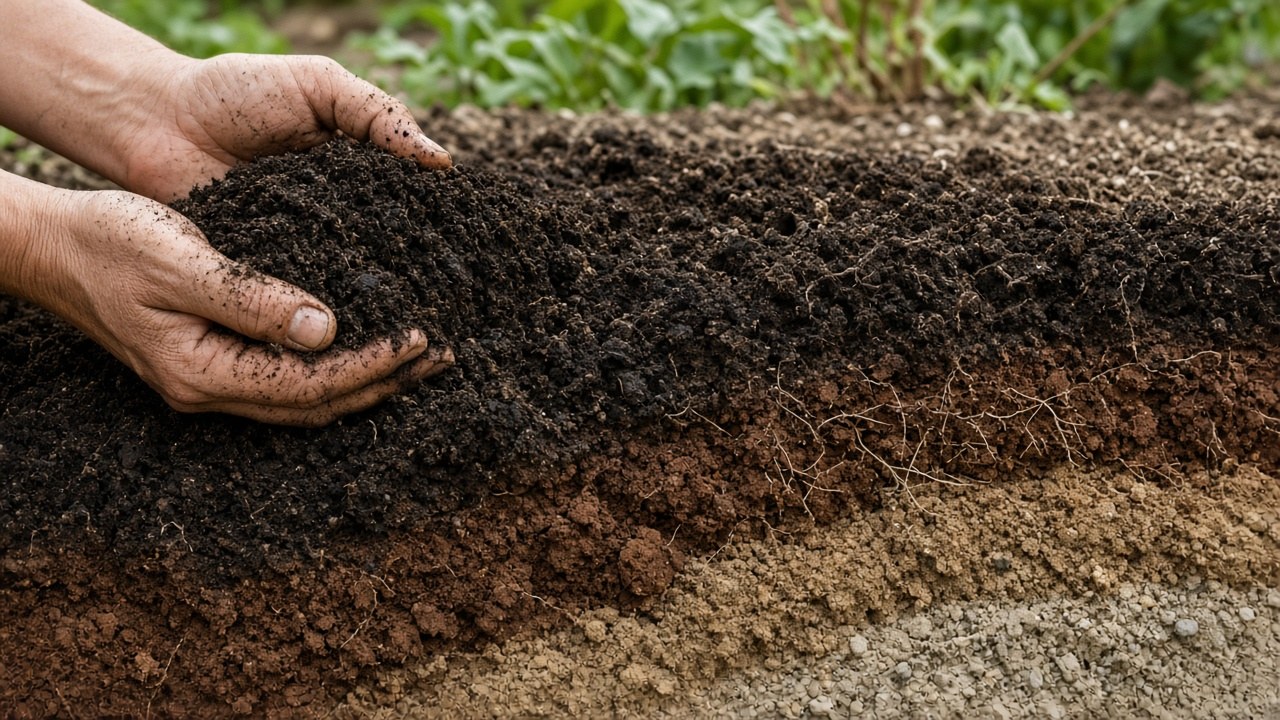
Soil color gives gardeners quick visual clues about what’s happening beneath the surface—rich, dark brown soil usually signals high organic matter and good fertility, while pale grey or yellowish soil often indicates nutrient depletion or poor drainage. But soil color alone can’t tell the complete fertility story. Red soils in the tropics can be ancient and nutrient-poor despite their vibrant color, while pale desert soils may be rich in certain minerals but lack nitrogen and organic matter. Here’s what soil color really reveals about fertility, what it doesn’t tell you, and why a soil test is the only way to get accurate fertility information.
What Soil Color Actually Indicates
Soil color results from the minerals, organic matter, water content, and chemical reactions present in the soil profile.
The main factors that determine soil color:
Organic matter content:
- Dark brown to black: High organic matter (humus)
- Tan to light brown: Moderate organic matter
- Pale grey or white: Very low organic matter
Iron and manganese oxides:
- Red and orange: Iron oxides (well-aerated, oxidized iron)
- Yellow: Hydrated iron oxides (moderately wet soils)
- Grey or blue-grey: Reduced iron (waterlogged, anaerobic soils)
Parent material (underlying rock):
- Red: Weathered sandstone or iron-rich minerals
- Yellow or brown: Shale, limestone
- White or pale: Limestone, gypsum, or heavily leached soils
- Black: Volcanic ash, basalt
Moisture and drainage:
- Bright reds, browns: Well-drained, well-aerated
- Mottled (mixed colors): Alternating wet and dry conditions
- Grey or blue-grey (gleyed): Poorly drained, waterlogged
- Grey with rust spots: Fluctuating water table
What Dark Soil Really Tells You
Dark brown to black soil is often equated with fertility, but the relationship is more nuanced than it appears.