How To Water Orchids Correctly: 9 Essential Tips For Healthy Blooms
Master orchid watering with proven techniques that prevent root rot and promote flowering. Learn when to water, how much water to use, and why the ice cube method isn't recommended.
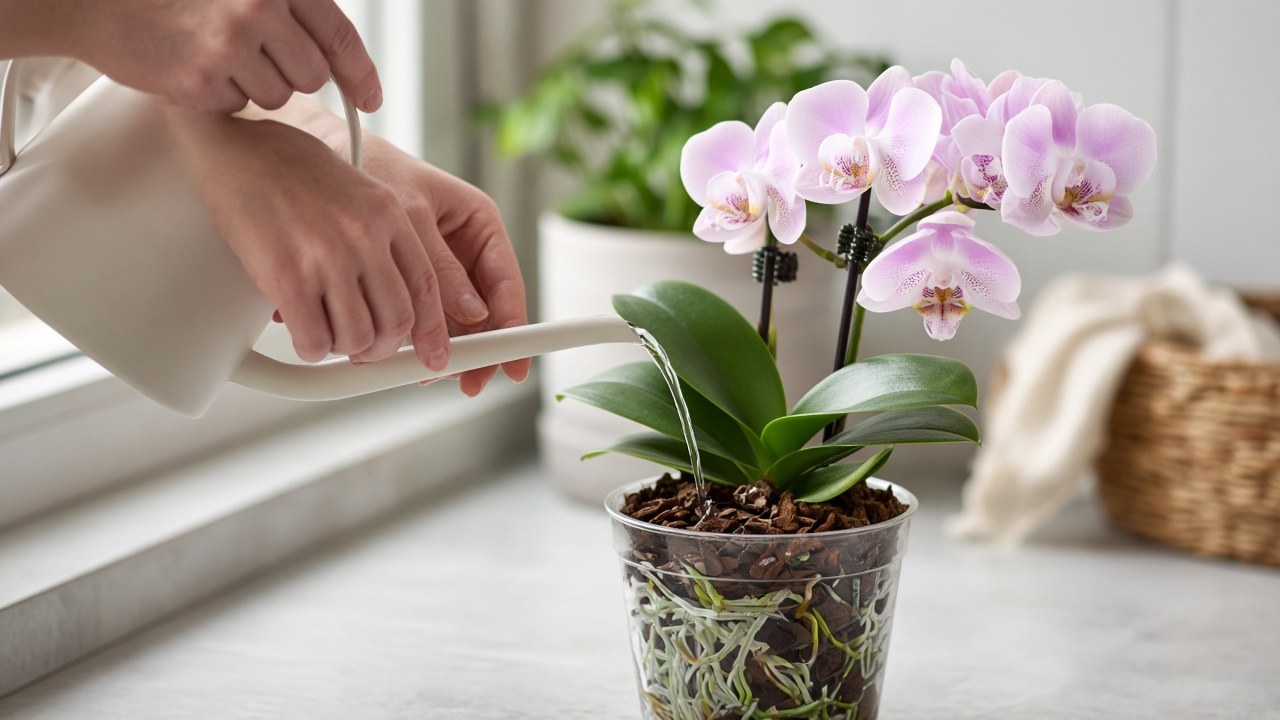
Orchids have a reputation for being finicky about water, but the truth is simpler: their watering needs are just different from typical houseplants. Most orchids sold as houseplants are epiphytes—plants that naturally grow on tree branches in tropical forests, absorbing water from rain and humidity rather than from soil. Overwatering kills more orchids than any other cause, yet underwatering stresses them and prevents flowering. Here are nine essential tips for watering orchids correctly so they thrive and rebloom year after year.
Tip 1: Understand Your Orchid’s Natural Habitat
Knowing where your orchid comes from explains how it wants to be watered.
Epiphytic orchids (most common houseplants):
What “epiphyte” means:
- Grows on tree branches or rocks (not in soil)
- Roots exposed to air much of the time
- Absorbs water quickly during rain, then dries out
- Roots need oxygen (not constantly wet)
Common epiphytic orchids:
- Phalaenopsis (moth orchids): Most popular houseplant orchid
- Cattleya: Large showy flowers
- Dendrobium: Cane-like stems
- Oncidium (dancing lady): Sprays of small flowers
- Epidendrum: Clusters of small blooms
Watering needs:
- Wet-dry cycle (water thoroughly, then let dry)
- Roots need to dry between waterings
- Require excellent drainage
- Prefer to dry out slightly rather than stay constantly moist
Terrestrial orchids (less common as houseplants):
What “terrestrial” means:
- Grows in soil or humus (ground-dwelling)
- Roots in organic matter
- Prefers more consistent moisture (but still well-drained)
Common terrestrial orchids:
- Paphiopedilum (lady slipper): Slipper-shaped pouch flower
- Cymbidium: Large plants with long-lasting flowers
- Ludisia (jewel orchid): Grown for foliage
Watering needs:
- More frequent watering than epiphytes
- Should not dry completely between waterings