When To Repot Your Orchid: Signs It's Time For Fresh Media
Recognize the clear signs your orchid needs repotting. Learn why bark breaks down, how overcrowded roots affect blooming, and the best time to repot for healthy growth.
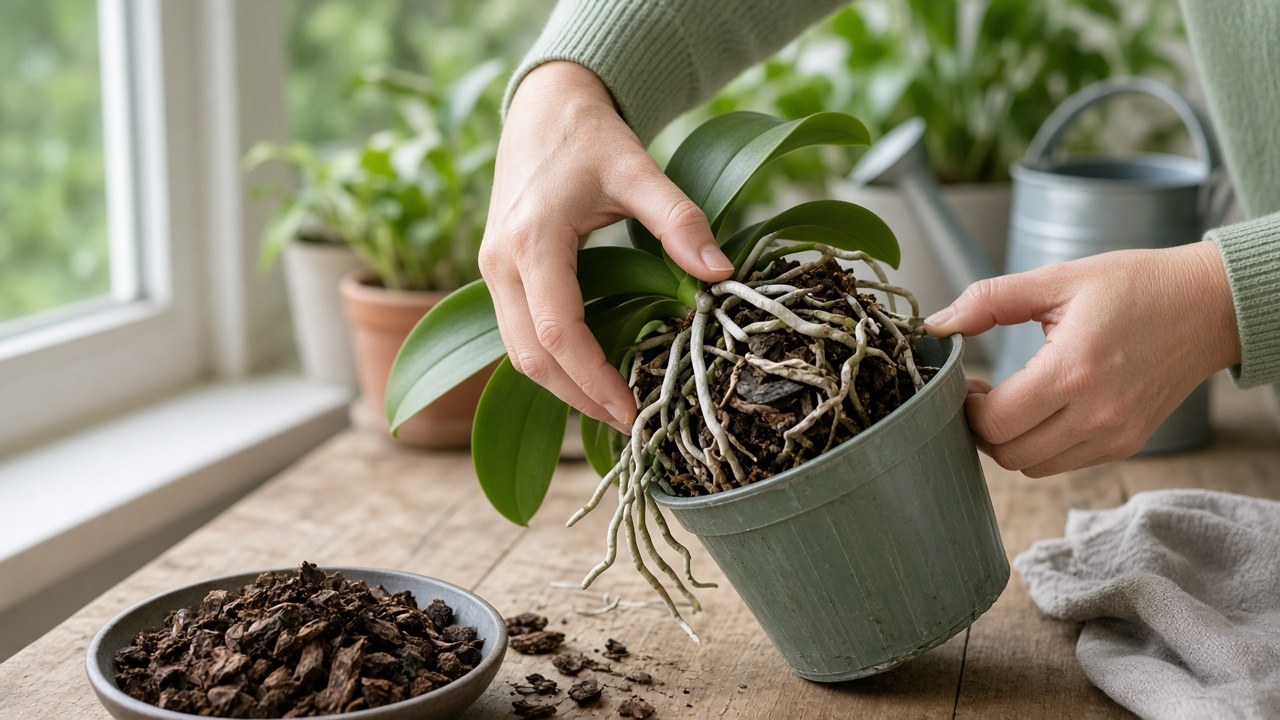
Orchids don’t need repotting as often as typical houseplants, but when the time comes, the signs are unmistakable—roots overflowing the pot, potting media crumbling into dust, or a plant that used to bloom reliably suddenly refusing to flower. Most orchid growers wait too long to repot, letting plants struggle in depleted media until health declines and flowering stops. Recognizing when your orchid needs fresh media and timing the repotting correctly can revive a struggling plant and restore vigorous blooms. Here’s how to tell it’s time to repot your orchid and when to do it for the best results.
Why Orchids Eventually Need Repotting
Unlike garden plants that can stay in the same soil for years, orchids in pots require periodic repotting for specific reasons.
Potting media breaks down over time:
What happens to bark and media:
- Orchid bark: Decomposes slowly, but after 1-3 years breaks into small, compacted pieces
- Sphagnum moss: Decomposes faster (1-2 years); becomes dense and soggy
- Coconut husk chips: Last longer (2-3 years) but eventually compact
- Perlite and other additives: Don’t break down but get buried in decomposed organic matter
Why decomposed media is problematic:
- Compaction: Broken-down media packs tightly around roots
- Poor drainage: Water doesn’t flow freely; roots stay too wet
- Reduced air pockets: Roots suffocate (orchid roots need oxygen)
- Salt accumulation: Mineral deposits build up over time from water and fertilizer
- Root rot risk: Constantly wet, compacted media rots roots
- Nutrient depletion: Decomposed media holds less nutrition
Visual signs of media breakdown:
- Media looks like soil or dirt (not chunky bark pieces)
- Dark brown or black color (fresh bark is reddish-tan)
- Stays soggy for more than a week after watering