Buffalo vs Kikuyu vs Couch Grass: Which Australian Lawn Is Right for You?
Compare buffalo, kikuyu, and couch grass for Australian lawns. Learn about shade tolerance, water needs, wear resistance, and maintenance to choose the best grass type for your climate and lifestyle.
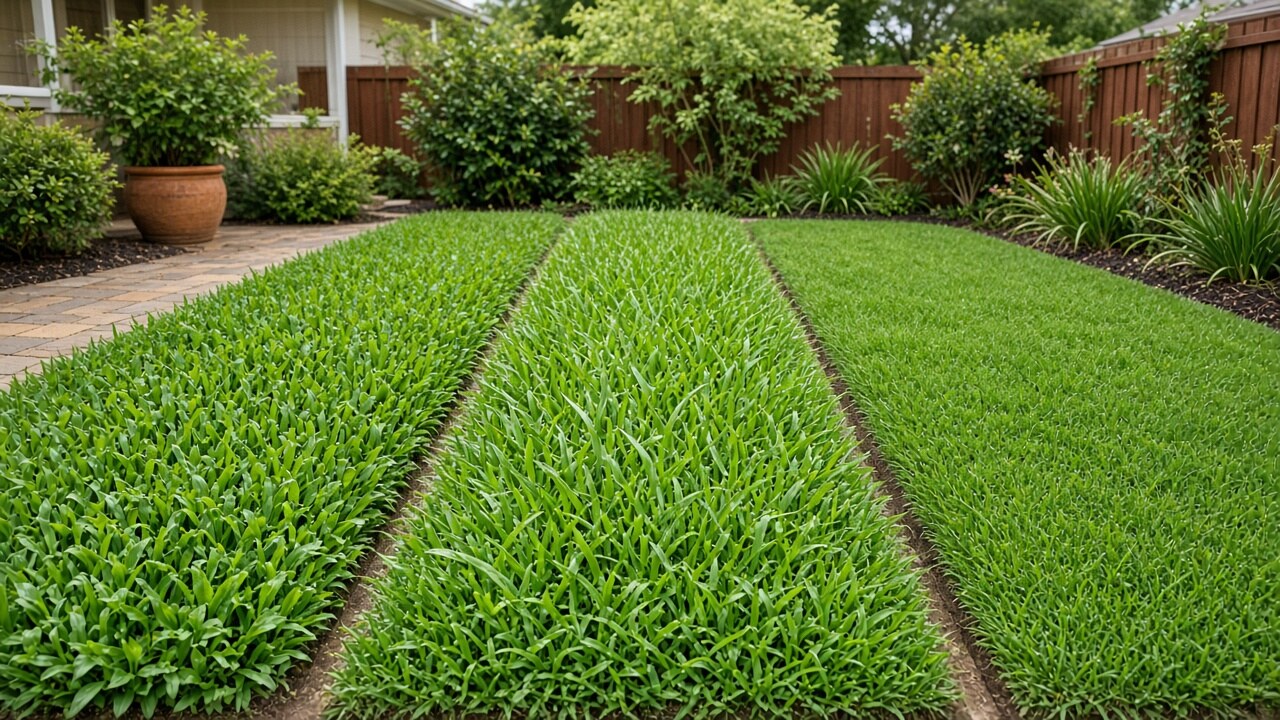
Choosing the right grass type is one of the most important decisions you’ll make for your Australian lawn. Buffalo, kikuyu, and couch are the three most popular warm-season grasses across the country, but each performs very differently depending on your climate, soil, shade conditions, and how you use your lawn. Here’s an honest comparison to help you choose the best grass for your garden.
Buffalo Grass: The Shade-Tolerant All-Rounder
Buffalo grass has become Australia’s most popular lawn choice, and for good reason. Modern cultivars like Sir Walter, Palmetto, and Sapphire Soft Leaf combine excellent shade tolerance with a soft texture and relatively low maintenance.
Buffalo grass strengths
Shade tolerance: Buffalo is the most shade-tolerant warm-season grass available in Australia. Most varieties tolerate 3-4 hours of direct sun, with some cultivars handling even less. This makes buffalo ideal for typical suburban blocks with trees, shade sails, or buildings casting shadows.
Soft underfoot: Modern buffalo varieties have a soft, fine leaf that’s comfortable for bare feet, making them popular for family lawns where kids play.
Moderate water needs: Buffalo survives dry periods better than kikuyu but isn’t as drought-hardy as couch. Once established, buffalo typically needs watering once or twice per week in summer.
Low mowing requirement: Buffalo grows more slowly than kikuyu, so you can mow every 7-14 days during the growing season rather than twice weekly.
Good winter colour: Quality buffalo varieties like Sir Walter retain reasonable colour through winter, especially in warmer climates.
Buffalo grass weaknesses
Wear tolerance: Buffalo doesn’t handle heavy foot traffic as well as kikuyu or couch. High-traffic areas (goalposts, pathways, dog runs) can thin out and need renovation more frequently.
Thatch buildup: Buffalo produces more thatch than other grasses and may require dethatching every 1-2 years to maintain health and prevent sponginess underfoot.
Higher cost: Buffalo turf typically costs $10-15 per square metre, compared to $5-8 for kikuyu or couch.
Salt sensitivity: Buffalo struggles in coastal areas with salt spray or where irrigation water has high salinity.
Slower establishment: Buffalo takes longer to establish from new turf and is much slower to fill in bare patches compared to the more aggressive kikuyu and couch.
Best buffalo grass for
- Shaded suburban gardens
- Family lawns with moderate traffic
- Gardens where aesthetics matter (formal, landscaped lawns)
- Temperate to subtropical climates
- Homeowners who prefer less frequent mowing
For detailed care instructions on Australia’s most popular buffalo cultivar, see our guide to Sir Walter buffalo grass care.
Kikuyu Grass: The Tough, Fast-Growing Survivor
Kikuyu grass is an aggressively spreading runner that thrives in full sun. It’s the go-to choice for sports fields, large acreages, and anywhere durability matters more than appearance.
Kikuyu grass strengths
Exceptional wear tolerance: Kikuyu recovers from damage faster than any other grass. It handles heavy foot traffic, sporting activities, and even vehicle traffic better than buffalo or couch.
Rapid growth and repair: Kikuyu spreads quickly through runners, filling in bare spots within weeks. This aggressive growth is ideal for quick establishment or repairing damaged lawns.
Deep drought resistance: Kikuyu develops deep roots (up to 2 metres) that access moisture other grasses can’t reach. Established kikuyu can survive extended dry periods without irrigation.
Low cost: Kikuyu is typically the cheapest turf option at $5-8 per square metre.
Tolerates poor soil: Kikuyu grows in a wide range of soil types, including compacted or low-fertility soils that would stress other grasses.
Kikuyu grass weaknesses
No shade tolerance: Kikuyu needs full sun (6+ hours daily). It thins out rapidly in shade, becoming patchy and weak.
Aggressive growth: The same vigorous spreading that makes kikuyu durable also makes it invasive. Kikuyu invades garden beds, paving cracks, and neighbouring properties if not edged regularly.
High maintenance: Kikuyu requires mowing twice per week during peak growing season. Miss a week and you’ll have a shaggy, uneven lawn that’s difficult to cut back down.
Poor winter dormancy: Kikuyu turns brown or straw-coloured in cooler months, especially in southern states. Some homeowners overseed with ryegrass for winter colour.
Coarse texture: Kikuyu has a coarser, wider leaf than buffalo, which some find less comfortable barefoot.
Weed competition: Ironically, kikuyu’s aggressive growth makes it harder to establish. Existing weeds compete heavily during the establishment phase.
Best kikuyu grass for
- Full-sun locations
- Large blocks or acreage
- High-traffic areas (play areas, sports fields)
- Budget-conscious homeowners
- Properties needing fast coverage
- Temperate to subtropical climates with hot summers
Couch Grass: The High-Performance Sports Turf
Couch grass (Cynodon dactylon) is the finest-textured warm-season grass available in Australia. Hybrid varieties like TifTuf and Santa Ana dominate golf courses, bowling greens, and high-end residential lawns.
Couch grass strengths
Finest texture: Couch has the thinnest leaf blade of the three grasses, creating a dense, carpet-like appearance that many consider the most attractive lawn.
Excellent wear tolerance: While not quite as tough as kikuyu, couch handles heavy traffic extremely well and recovers quickly from damage.
Outstanding drought tolerance: Modern hybrids like TifTuf are among the most drought-tolerant grasses available. Couch develops deep roots and can survive extended periods without water once established.
Salt tolerance: Couch handles coastal conditions and saline irrigation water better than buffalo or kikuyu, making it popular in seaside suburbs.
Low growth habit: Couch grows low and dense, creating that prized “golf course” look when properly maintained.
Couch grass weaknesses
No shade tolerance: Like kikuyu, couch needs full sun. It performs poorly with less than 6 hours of direct sunlight daily.
High maintenance: Premium couch varieties demand frequent mowing (twice weekly in summer), regular fertilising, and sometimes dethatching to maintain their fine texture.
Winter dormancy: Couch goes completely brown in winter across most of Australia. Some homeowners overseed with ryegrass for winter colour.
Cost: Quality hybrid couch varieties cost $10-20 per square metre, similar to or higher than buffalo.
Scalping risk: Because couch grows so low and dense, mowing too short can scalp the lawn, removing all green growth and exposing brown stems.
Establishment care: Couch requires careful establishment with frequent light watering. It’s less forgiving than kikuyu during the establishment phase.
Best couch grass for
- Full-sun locations
- Coastal properties
- Homeowners wanting a premium, fine-textured lawn
- High-traffic areas needing aesthetic appeal
- Warm to hot climates
- Those willing to invest in maintenance
Side-by-Side Comparison
| Feature | Buffalo | Kikuyu | Couch |
|---|---|---|---|
| Shade tolerance | Excellent (3-4 hours sun) | Poor (needs 6+ hours) | Poor (needs 6+ hours) |
| Wear tolerance | Moderate | Excellent | Excellent |
| Drought resistance | Moderate | Excellent | Excellent |
| Mowing frequency | Weekly-fortnightly | Twice weekly | Twice weekly |
| Texture | Soft, medium width | Coarse, wide leaf | Fine, narrow leaf |
| Growth rate | Slow-moderate | Very fast | Fast |
| Thatch buildup | High | Moderate | Moderate-high |
| Winter colour | Good | Poor | Poor |
| Cost (turf) | $10-15/m² | $5-8/m² | $10-20/m² |
| Invasiveness | Low | High | Moderate |
| Salt tolerance | Poor | Moderate | Excellent |
| Best for | Shaded yards | Large sunny areas | Premium sunny lawns |
Climate Considerations for Australian Regions
Tropical and subtropical (Brisbane, Gold Coast, northern NSW, Darwin)
All three grasses thrive in warm, humid climates. Buffalo and kikuyu are most popular for residential lawns, while couch dominates sports fields and golf courses. Summer rainfall reduces irrigation needs for all varieties.
Best choice: Buffalo for shade, kikuyu for sun and durability, couch for premium appearance.
Temperate coastal (Sydney, Newcastle, Wollongong, Perth)
Moderate temperatures suit all three grasses. Couch’s salt tolerance makes it excellent for beachside properties. Buffalo performs well in typical suburban conditions.
Best choice: Couch for coastal blocks, buffalo for inland suburbs with trees.
Warm temperate inland (Canberra, inland NSW, inland Victoria)
Cold winters cause all three grasses to go dormant, though buffalo retains better colour. Kikuyu’s aggressive growth compensates for shorter growing seasons.
Best choice: Buffalo for winter colour, kikuyu for durability and quick spring recovery.
Mediterranean (Adelaide, Perth)
Hot, dry summers favour drought-tolerant grasses. Couch and kikuyu handle heat stress better than buffalo, which requires more frequent irrigation.
Best choice: Kikuyu or couch for water efficiency, buffalo if irrigation is available.
Cool temperate (Melbourne, Tasmania, southern Victoria)
Cooler temperatures limit all three grasses. Buffalo is most popular because it retains colour longer into winter and greens up faster in spring. Kikuyu and couch go fully dormant.
Best choice: Buffalo for longer green season, kikuyu for summer durability.
Making Your Decision
Choose buffalo if:
- Your lawn has 3-4+ hours of sun
- You want a soft, family-friendly lawn
- You prefer less frequent mowing
- Aesthetics and winter colour matter
- You’re willing to pay more for lower maintenance
Choose kikuyu if:
- Your lawn receives full sun (6+ hours)
- You need maximum durability for heavy use
- You want fast establishment and low cost
- You have a large area to cover
- You don’t mind frequent mowing or winter dormancy
Choose couch if:
- Your lawn receives full sun
- You want a premium, fine-textured appearance
- You live in a coastal area
- You’re willing to invest in maintenance
- You don’t mind winter dormancy
For most Australian homeowners, buffalo grass offers the best balance of performance, appearance, and reasonable maintenance. However, if your lawn is in full sun and takes heavy punishment, kikuyu’s toughness is hard to beat. And if you want that golf-course look and are willing to maintain it, hybrid couch delivers the finest quality lawn available.
Whichever grass you choose, proper establishment and ongoing care make the difference between an average lawn and a great one. For essential lawn care practices that apply to all grass types, see our lawn care basics guide and lawn watering best practices.
For help choosing the right grass variety and expert installation, Mowing Magic provides professional turf selection and lawn care services across Australia.