How to Dethatch Your Lawn: Complete Australian Guide
Learn when and how to dethatch your Australian lawn. Discover what thatch is, identify problem levels, master dethatching techniques for buffalo, kikuyu, and couch grass, and understand recovery care.
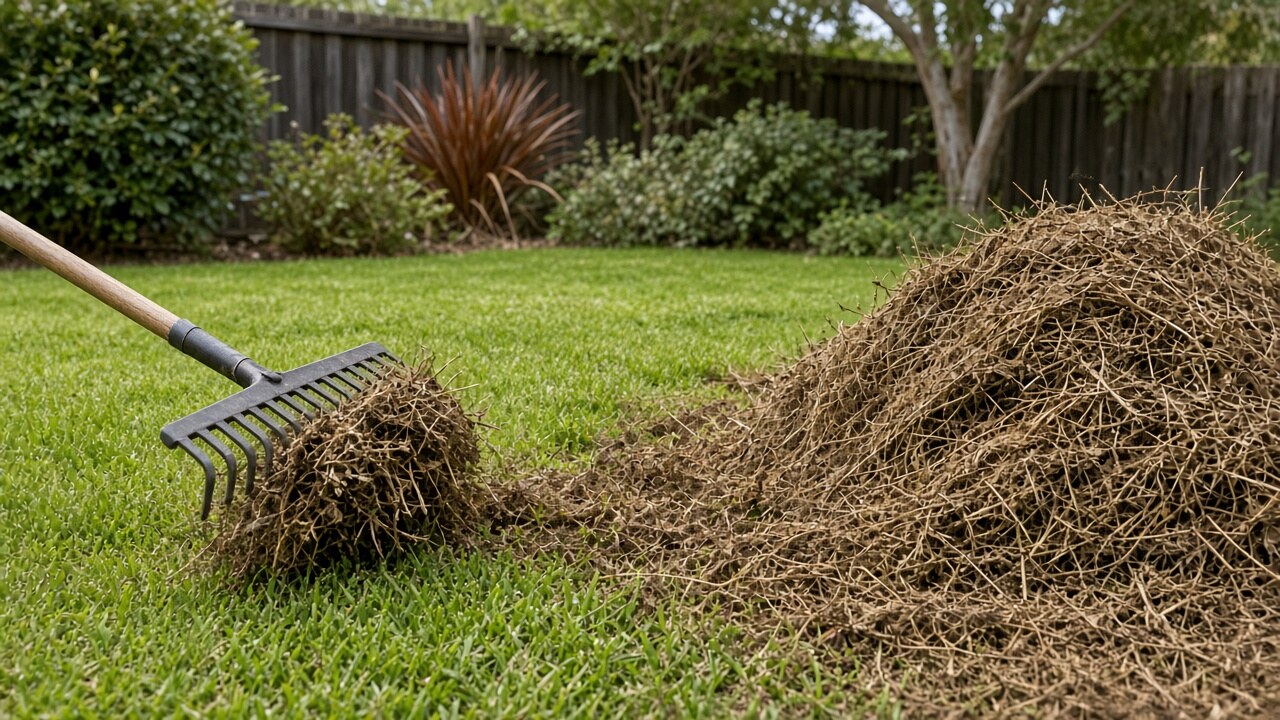
A thick layer of thatch can turn a healthy lawn into a struggling, spongy mess. Dethatching removes that accumulated layer of dead grass, stolons, and roots to restore your lawn’s health and appearance. But dethatching at the wrong time or using the wrong technique can damage your lawn worse than the thatch itself. Here’s everything Australian lawn owners need to know about dethatching safely and effectively.
What Is Lawn Thatch?
Thatch is the layer of dead and living stems, stolons (runners), roots, and organic debris that accumulates between the soil surface and the green grass blades.
Thatch composition:
- Dead grass stems and leaf sheaths
- Stolons and rhizomes (grass runners)
- Roots and root fragments
- Undecomposed organic matter
- Living crown tissue
How thatch forms: Grass naturally sheds old growth as new growth emerges. Normally, soil microbes, earthworms, and other decomposers break down this organic matter at roughly the same rate it accumulates. When production exceeds decomposition, thatch builds up.
Good thatch vs bad thatch
Thin thatch (5-10 mm): Beneficial
- Cushions the lawn
- Insulates soil from temperature extremes
- Retains some moisture
- Protects crowns from wear
Moderate thatch (10-20 mm): Borderline
- May be acceptable for some grass types
- Monitor for problems
Thick thatch (over 20 mm): Problematic
- Blocks water and nutrients from reaching roots
- Harbours pests and diseases
- Creates soft, spongy lawn surface
- Reduces stress tolerance
- Causes scalping when mowing (mower rides on thatch, cutting into crown)
Why Some Lawns Build Excessive Thatch
Several factors cause thatch accumulation:
Fast-growing grass types: Buffalo and kikuyu produce more thatch than slower grasses.
Over-fertilising: Excess nitrogen stimulates rapid shoot growth faster than decomposers can break down old material.
Frequent shallow watering: Encourages shallow root growth in the thatch layer rather than deep in soil.
Acidic soil: Low pH reduces microbial activity, slowing decomposition.
Compacted soil: Poor soil aeration reduces earthworm and microbe populations.
Heavy clay soil: Poor drainage and aeration slow decomposition.
Overuse of pesticides: Kills beneficial soil organisms that decompose thatch.
Removing clippings: Bagging clippings removes nutrients but has minimal effect on thatch (thatch is mostly stems and roots, not leaf blades).
How to Check Thatch Depth
Checking thatch is quick and tells you whether dethatching is necessary.
Method:
-
Use a trowel, shovel, or knife to cut and remove a small wedge of turf (10 cm wide × 10 cm deep)
-
Examine the cross-section and identify three layers:
- Green grass blades (top)
- Brown spongy thatch layer (middle)
- Soil (bottom)
-
Measure the thatch layer thickness with a ruler
What your measurement means:
- Under 10 mm: Healthy. No action needed.
- 10-20 mm: Borderline. Monitor and consider cultural controls (see prevention section).
- Over 20 mm: Dethatching recommended.
- Over 30 mm: Severe. Immediate dethatching needed.
When to Dethatch Australian Lawns
Timing is critical. Dethatch when grass is actively growing so it recovers quickly. Dethatching during dormancy or stress periods can severely damage your lawn.
Best dethatching times by grass type
Buffalo grass (Sir Walter, Palmetto, Sapphire):
- Best time: Late spring to early summer (October-December)
- Why: Warm temperatures and active growth support rapid recovery
- Avoid: Autumn, winter, or extreme summer heat
Kikuyu grass:
- Best time: Mid-spring to early summer (October-December)
- Why: Kikuyu’s aggressive growth fills in quickly during peak season
- Avoid: Late summer onwards (growth slows)
Couch grass (including TifTuf, Santa Ana):
- Best time: Spring to early summer (October-December)
- Why: Active growth phase ensures recovery
- Avoid: Cooler months when couch goes dormant
General rule
Dethatch when:
- Soil temperature is consistently above 20°C
- Grass is actively growing (green, not dormant)
- Weather forecast shows warm, favourable conditions ahead
- You can water regularly for 2-4 weeks afterward
Never dethatch:
- During drought or water restrictions
- When grass is dormant or semi-dormant
- During extreme heat (over 35°C)
- Before or during prolonged rain (soggy conditions)
- If lawn is already stressed or diseased
Dethatching Methods
Three main methods exist, ranging from gentle to aggressive.
Method 1: Manual dethatching (small lawns under 50 m²)
Tools:
- Thatching rake (also called dethatching rake or spring-tine rake)
- Standard rake for collecting debris
How to manually dethatch:
-
Mow lawn short: Cut to lower end of ideal height range for your grass type
- Buffalo: 3 cm
- Kikuyu: 2 cm
- Couch: 1.5 cm
-
Water day before: Moist soil is easier to work with
-
Rake vigorously: Use thatching rake with firm downward pressure, pulling toward you
- Work in multiple directions (north-south, then east-west)
- Spring tines penetrate thatch and pull it to surface
-
Collect debris: Rake up loosened thatch and remove from lawn
-
Repeat: Multiple passes may be needed for thick thatch
Pros: Inexpensive, good control, less aggressive than machines
Cons: Labour-intensive, exhausting for large areas, time-consuming
Method 2: Powered dethatching (medium to large lawns)
Tools:
- Powered dethatcher (also called vertical mower, power rake, or scarifier)
- Available as rental equipment ($60-100 per day)
How to power dethatch:
-
Mow short (same as manual method)
-
Set blade height: Adjust dethatcher blades to penetrate 5-15 mm deep
- Start shallow (5 mm) for first pass
- Deepen slightly (10-15 mm) for subsequent passes if needed
-
Water day before: Moist (not wet) soil
-
First pass: Run dethatcher over lawn in one direction (e.g. north-south)
- Overlap passes slightly
- Move at steady walking pace
-
Second pass: Run perpendicular to first pass (e.g. east-west) for thorough thatch removal
- Not always necessary; assess after first pass
-
Collect debris: Rake or use lawn mower with catcher to collect thatch
Pros: Efficient for large areas, thorough thatch removal, faster than manual
Cons: Requires equipment rental, can damage lawn if done incorrectly, more aggressive
Important: Don’t set blades too deep. You want to remove thatch, not tear out healthy grass or damage crowns.
Method 3: Core aeration (gentler alternative)
Tools:
- Hollow-tine aerator (manual or powered)
How core aeration helps thatch:
Core aeration removes plugs of soil and thatch, creating channels that:
- Improve water and air penetration
- Introduce soil microbes to thatch layer (accelerates decomposition)
- Reduce compaction (improves microbial activity)
Process:
-
Water lawn day before
-
Run aerator over lawn in two perpendicular passes
-
Leave soil cores on surface to break down (or collect and compost)
-
Water regularly for 2 weeks
Pros: Less disruptive than dethatching, improves soil health, reduces compaction
Cons: Slower thatch reduction, may need annual treatments for severe thatch, doesn’t remove thatch immediately
When to use: Core aeration is ideal for:
- Moderate thatch (10-20 mm) that doesn’t need aggressive removal
- Compacted lawns
- Annual maintenance to prevent thatch buildup
- Lawns where dethatching would be too stressful
Step-by-Step Dethatching Process
Here’s the complete process for powered dethatching (the most common method for Australian lawns):
1-2 weeks before:
- Check thatch depth to confirm dethatching is needed
- Plan timing (spring-early summer, active growth)
- Book equipment rental if using powered dethatcher
3-4 days before:
- Mow lawn short (see heights above)
- Apply light fertiliser (half-strength) to boost recovery
Day before:
- Water lawn thoroughly (soil should be moist but not saturated)
Dethatching day:
- Confirm equipment settings (blade depth 5-15 mm)
- Make two perpendicular passes over lawn
- Collect and remove thatch debris (bag, bin, or compost)
- Lawn will look rough — this is normal
Immediately after:
- Apply starter fertiliser or balanced slow-release lawn fertiliser (half to full strength)
- Water lightly to settle soil and wash in fertiliser
Week 1-2 after:
- Water deeply 2-3 times weekly (keep soil moist, not soggy)
- Avoid foot traffic as much as possible
- Monitor for recovery (new growth should appear within 7-10 days)
Week 3-4 after:
- Resume normal watering schedule (1-2 times weekly, deeply)
- First mow when grass reaches normal height (use sharp blades, minimal mower weight)
- Resume normal foot traffic
Optional enhancements:
- Top-dressing: Apply 5-10 mm of quality lawn soil or sand to smooth surface and improve soil
- Overseeding: Not common for Australian warm-season grasses (they self-repair), but can be done for bare patches
Grass-Specific Dethatching Advice
Dethatching buffalo grass (including Sir Walter)
Buffalo produces significant thatch due to its dense growth habit.
Frequency: Every 1-3 years depending on thatch accumulation
Timing: Late spring to early summer (October-December)
Technique: Moderate dethatching. Buffalo is softer than kikuyu or couch and can be damaged by over-aggressive dethatching.
Recovery: Buffalo recovers more slowly than kikuyu. Expect 3-4 weeks for full recovery with proper care.
Special notes:
- Premium buffalo varieties like Sir Walter may need more frequent dethatching than older varieties
- Apply slow-release fertiliser after dethatching to support recovery
- Water consistently for 3-4 weeks
For complete buffalo care including dethatching schedules, see our Sir Walter buffalo grass care guide.
Dethatching kikuyu grass
Kikuyu’s aggressive growth creates moderate thatch.
Frequency: Every 2-3 years or as needed
Timing: Mid-spring to early summer (October-December)
Technique: Kikuyu tolerates aggressive dethatching. Use deeper blade settings (10-15 mm) if necessary.
Recovery: Fast. Kikuyu fills in within 2-3 weeks due to vigorous runner growth.
Special notes:
- Kikuyu’s toughness makes it forgiving for first-time dethatchers
- After dethatching, kikuyu spreads quickly; may invade garden beds if not edged properly
Dethatching couch grass
Couch (especially hybrid varieties) can develop dense thatch.
Frequency: Every 1-2 years for hybrid couch, less often for common couch
Timing: Spring to early summer (October-December)
Technique: Couch tolerates moderate to aggressive dethatching but is susceptible to scalping
Recovery: Fast. Couch recovers within 2-3 weeks with proper care.
Special notes:
- Hybrid couch varieties (TifTuf, Santa Ana) may need annual dethatching as part of premium maintenance
- Common couch produces less thatch than hybrids
For comparisons of these grass types including maintenance needs, see our buffalo vs kikuyu vs couch grass guide.
Preventing Thatch Buildup
Prevention reduces or eliminates the need for dethatching.
Cultural practices to minimize thatch:
1. Avoid over-fertilising: Use slow-release fertiliser 3-4 times yearly at label rates. More is not better.
2. Water deeply and infrequently: 1-2 times weekly, deeply. This encourages deep roots in soil rather than shallow roots in thatch.
3. Mow at correct height: Never scalp grass. Maintain recommended height for your grass type. See our lawn care basics guide for details.
4. Core aerate annually: Improves soil aeration and microbial activity, accelerating thatch decomposition.
5. Improve soil pH: Test soil every 2-3 years. Add lime if pH is below 6.0 (for most grasses). Better pH supports microbial activity.
6. Top-dress occasionally: 5-10 mm of quality soil or compost (not sand alone) introduces microbes and improves soil structure.
7. Reduce pesticide use: Use pesticides only when necessary. Overuse kills beneficial soil organisms.
8. Leave clippings on lawn: Clippings don’t cause thatch (they’re mostly water and decompose quickly). Leaving clippings returns nutrients to soil.
When NOT to Dethatch
Dethatching stresses turf. Skip it if:
Thatch is under 20 mm: No need. Cultural practices will manage it.
Lawn is stressed: Drought, disease, pest damage, or nutrient deficiency. Address the problem first, then dethatch next season.
Water restrictions: You can’t water regularly for 3-4 weeks? Don’t dethatch.
Wrong season: Autumn, winter, or extreme summer heat for warm-season grasses.
Grass is dormant: Cool-season dormancy (winter) or drought dormancy.
Recent installation: Don’t dethatch new turf until it’s fully established (at least 6-12 months).
Dethatching vs Core Aeration: Which to Choose?
Both address thatch and compaction but work differently.
| Factor | Dethatching | Core Aeration |
|---|---|---|
| What it does | Physically removes thatch | Creates holes, improves decomposition |
| Thatch removal | Immediate, aggressive | Gradual, gentle |
| Best for | Thick thatch (over 20 mm) | Moderate thatch (10-20 mm) |
| Compaction | No effect | Reduces compaction |
| Stress to lawn | High | Low to moderate |
| Recovery time | 3-4 weeks | 1-2 weeks |
| Frequency | Every 1-3 years | Annually as maintenance |
| Equipment | Dethatcher / scarifier | Core aerator |
Use dethatching when: Thatch exceeds 20 mm and needs immediate removal.
Use core aeration when: Thatch is moderate (10-20 mm), lawn is compacted, or you want annual preventative maintenance.
Use both: For severely thatched, compacted lawns, dethatch first, then core aerate 2-3 weeks later after initial recovery.
Dethatching Equipment Rental
Most Australian tool hire companies rent dethatching equipment.
Costs (approximate, varies by location):
- Powered dethatcher: $60-100 per day
- Core aerator (powered): $80-120 per day
- Lawn mower with catcher (if you don’t own one): $40-60 per day
Rental tips:
- Book ahead (spring is peak season for lawn equipment)
- Ask for operating instructions and safety briefing
- Inspect equipment before leaving (check blade condition, adjustments)
- Rent for half-day if your lawn is under 200 m² (save money)
- Consider splitting cost with neighbours (dethatch multiple lawns in one day)
Professional Dethatching Services
Hiring professionals makes sense for:
- Large lawns (over 500 m²)
- Lack of time or physical ability
- Uncertainty about technique
- Desire for comprehensive lawn renovation (dethatching + aeration + fertiliser + top-dressing package)
Costs: $150-400 for typical suburban lawn, depending on size and services
What pros offer:
- Correct equipment and expertise
- Proper timing recommendations
- Post-dethatching care (fertiliser, top-dressing)
- Guaranteed results
Mowing Magic provides professional lawn dethatching, core aeration, and renovation services across Australia. Their lawn care specialists assess thatch levels, dethatch at optimal timing, and implement recovery care programs to restore your lawn’s health.
Dethatching is an intensive but necessary maintenance task for many Australian lawns, particularly buffalo grass varieties. Check thatch depth annually, dethatch only when necessary (over 20 mm), time it for active growth periods, and support recovery with water and fertiliser. With proper technique and timing, dethatching transforms a spongy, struggling lawn into a healthy, resilient turf that looks and performs beautifully.