Raised Garden Beds in Australia: Complete Beginner's Guide
Start your raised bed vegetable garden with confidence. Learn about Australian-suitable materials, soil mixes for different climates, drainage, orientation, and what to plant in raised beds.
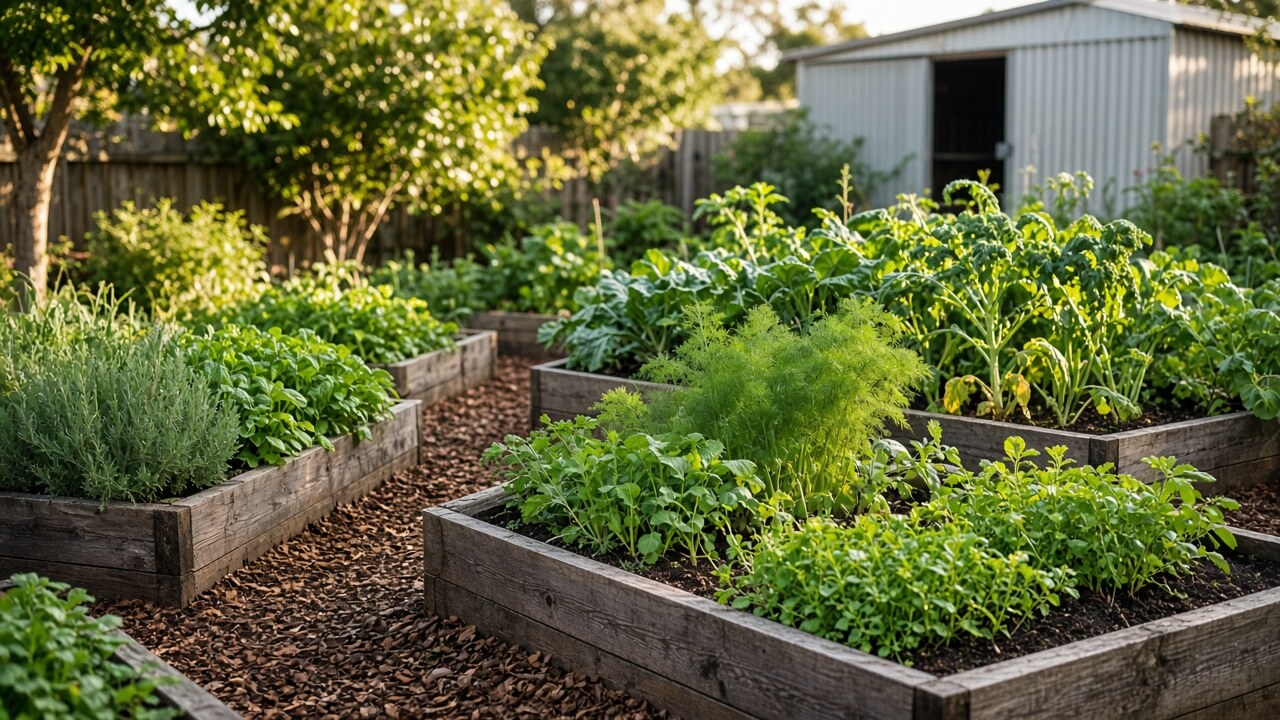
Raised garden beds have become the go-to solution for Australian home food growers, and for good reason. They solve common gardening challenges like poor soil, drainage problems, and limited space while making gardening easier on your back. Whether you’re growing vegetables, herbs, or flowers, raised beds offer a controlled environment where you can create perfect growing conditions regardless of what’s underneath. Here’s everything Australian gardeners need to know to get started with raised beds.
Why Raised Garden Beds Work in Australia
Raised beds solve many problems Australian gardeners face:
Poor native soil: Much of Australia has challenging soil — heavy clay, sandy coastal soil, or compacted urban fill. Raised beds let you bypass problem soil entirely with imported quality soil mix.
Drainage control: Raised beds drain faster than in-ground gardens, preventing waterlogging in heavy clay soils or during wet weather.
Warmer soil: Elevated beds warm up faster in spring, extending your growing season and helping heat-loving crops like tomatoes and capsicums.
Easier access: Waist-high or knee-high beds reduce bending and make gardening more comfortable, especially for those with mobility limitations.
Defined spaces: Raised beds create clear, organised growing areas that look tidy and prevent grass or weeds from invading.
Pest protection: Elevating plants makes them less accessible to some pests like snails, though not all (possums and birds still present challenges).
Choosing Materials for Australian Raised Beds
The material you choose affects cost, longevity, and aesthetics. Here are the most common options for Australian conditions.
Timber raised beds
Treated pine:
- Cost: Budget-friendly ($30-80 per bed depending on size)
- Longevity: 7-10 years with modern CCA-free treated timber
- Considerations: Use only modern H3 or H4 treated pine (older CCA treatments contained arsenic). Avoid direct contact between soil and timber on beds for edibles by lining with plastic.
Hardwood sleepers:
- Cost: Mid-range ($80-200 per bed)
- Longevity: 15-25+ years
- Considerations: Heavy and expensive but very durable. Recycled railway sleepers may contain creosote (toxic) — avoid for vegetable beds. New hardwood sleepers are safe.
Cypress pine:
- Cost: Mid to high ($100-250 per bed)
- Longevity: 15-20 years
- Considerations: Naturally rot-resistant without treatment. Popular for organic gardeners.
Untreated pine:
- Cost: Cheapest ($20-50 per bed)
- Longevity: 3-5 years
- Considerations: Rots quickly. Only worthwhile for temporary beds or trial setups.
Metal raised beds
Corrugated steel (galvanised or Colorbond):
- Cost: Mid to high ($100-300 per bed)
- Longevity: 20-30+ years
- Considerations: Durable, modern look, reflects heat (good in cool climates, can overheat in hot climates). May need insulation or mulching to protect roots in summer.
Aluminium:
- Cost: High ($200-500 per bed)
- Longevity: 30+ years
- Considerations: Lightweight, doesn’t rust, doesn’t leach. Premium option.
Other materials
Recycled plastic:
- Cost: Mid-range ($80-200)
- Longevity: 15-25 years
- Considerations: Eco-friendly from recycled materials, lightweight, won’t rot.
Concrete blocks or besser blocks:
- Cost: Low to mid ($40-100)
- Longevity: Permanent
- Considerations: Heavy, permanent, utilitarian look. Blocks can be stacked without mortar for easy setup.
Stone or brick:
- Cost: High ($200-500+)
- Longevity: Permanent
- Considerations: Beautiful, durable, expensive, labour-intensive to install.
What to avoid
Avoid these materials for food gardens:
- Railway sleepers (creosote contamination)
- Old CCA-treated timber (arsenic)
- Tyres (petroleum contaminants)
- Painted or stained wood (chemical leaching)
Raised Bed Dimensions and Height
Size and height affect how much you can grow, how comfortable the bed is to work in, and how much it costs.
Ideal dimensions
Width: 1-1.2 metres maximum. This allows you to reach the centre from either side without stepping into the bed. Narrower (60-80 cm) if you can only access one side.
Length: As long as your space allows. 2-3 metres is common and practical. Longer beds may need internal bracing to prevent bowing.
Height: 30-60 cm is the sweet spot for most vegetable gardens.
- 30 cm (low profile): Minimum for most vegetables. Economical on soil. Still requires bending.
- 40-50 cm (standard): Excellent for deep-rooted crops like tomatoes, carrots, potatoes. Less bending.
- 60-80 cm (waist height): Ideal for accessibility. Requires significantly more soil (expensive). Consider a “trough” design with thick walls and hollow centre to reduce soil volume.
Soil depth requirements:
- Shallow-rooted crops (lettuce, herbs, radishes): 15-20 cm minimum
- Medium-rooted crops (beans, capsicums, beetroot): 25-35 cm
- Deep-rooted crops (tomatoes, carrots, potatoes, pumpkins): 40-60 cm
Raised Bed Soil Mix for Australian Conditions
Soil mix is the most important factor for raised bed success. Don’t use garden soil or pure compost — you need a balanced mix designed for containers.
Basic raised bed soil recipe
50% quality topsoil or loam
- Provides structure and bulk
- Look for screened, weed-free topsoil
- Avoid cheap “fill” dirt (often just clay)
30% compost
- Adds organic matter and nutrients
- Use well-aged compost (not fresh manure)
- Options: mushroom compost, cow manure compost, homemade compost
20% drainage amendment
- Prevents compaction and improves drainage
- Options: coarse sand, perlite, coco coir
Optional additions:
- Aged animal manure (5-10%): Extra nutrients for heavy feeders
- Worm castings (5-10%): Slow-release nutrients and beneficial microbes
- Blood and bone (handful per square metre): Nitrogen and phosphorus boost
Pre-mixed options
Many Australian nurseries and landscape suppliers sell pre-mixed raised bed or “vegetable garden mix”:
- Premium vegetable mix: Best option, formulated specifically for edibles
- Garden soil mix: Acceptable budget option
- Avoid: Pure compost, pure potting mix, topsoil alone
Pre-mixed soil costs $60-120 per cubic metre delivered (depending on location and quality).
Climate considerations
Hot, dry climates (inland NSW, QLD, NT, WA):
- Add extra compost and coco coir for moisture retention
- Consider water-storing crystals for containers (less useful in large beds)
- Mulch heavily to reduce evaporation
Humid subtropical (Brisbane, Gold Coast, northern NSW):
- Ensure excellent drainage to prevent root rot
- Slightly higher sand/perlite content
- Good air circulation around plants
Cool temperate (Melbourne, Tasmania, Canberra):
- Standard mix works well
- Consider dark-coloured beds to absorb solar heat
- Raise beds slightly higher to warm soil faster in spring
Mediterranean (Adelaide, Perth):
- Add extra organic matter for water retention
- Mulch heavily
- Consider partial shade for summer crops in extreme heat
Calculating soil volume
Volume (litres) = Length (cm) × Width (cm) × Height (cm) ÷ 1000
Example: 2.4 m × 1.2 m × 0.4 m bed = 240 × 120 × 40 ÷ 1000 = 1,152 litres
Most suppliers sell by cubic metre (1 m³ = 1,000 litres), so you’d need about 1.2 m³.
Pro tip: Calculate volume for multiple beds together to order efficiently and reduce delivery costs.
Drainage and Location
Proper drainage and positioning determine whether your raised beds thrive or struggle.
Drainage essentials
Raised beds drain naturally better than in-ground gardens, but you still need to address drainage:
No bottom: Never put a solid bottom on raised beds. Roots need to drain into the soil beneath.
Base layer: If building on heavy clay or compacted soil:
- Loosen underlying soil with a fork (15-20 cm deep)
- Add a 5-10 cm layer of coarse material (gravel, scoria, broken terracotta pots)
- Lay weed mat (optional) to suppress weeds from below
- Fill with soil mix
Building on concrete or paving:
- Drill drainage holes if possible
- Use deeper beds (50+ cm) to allow drainage within the bed
- Consider a layer of gravel at the base for drainage reservoir
- Be aware that beds may drain onto paving (potential staining)
Positioning your raised beds
Sunlight: Most vegetables need 6-8 hours of direct sun. Position beds in the sunniest part of your yard.
Orientation: Run beds north-south (long axis) if possible. This ensures both sides receive even sun throughout the day and prevents tall plants from shading shorter ones.
Access: Leave 60-90 cm paths between beds for comfortable access with wheelbarrows, hoses, and tools.
Water access: Position beds within easy reach of water supply. Dragging hoses long distances gets old quickly.
Level ground: Choose reasonably level spots. Sloped sites require terracing or adjustable-height bed construction.
Aspect: In hot climates, consider east-facing orientation (morning sun, afternoon shade) for heat-sensitive crops like lettuce.
What to Grow in Raised Beds
Raised beds suit nearly all vegetables, herbs, and some fruits. Here’s what works best.
Excellent raised bed crops
Leafy greens (lettuce, spinach, rocket, Asian greens):
- Grow quickly
- Shallow roots
- Appreciate consistent moisture
Herbs (basil, parsley, coriander, mint):
- Shallow to medium roots
- Thrive in controlled environment
- Perfect for accessible beds near kitchen
Root vegetables (carrots, beetroot, radishes, turnips):
- Need loose, deep soil (hard to achieve in-ground)
- Raised beds provide ideal texture
Tomatoes and capsicums:
- Heavy feeders that appreciate rich soil
- Benefit from warmer soil and excellent drainage
Beans and peas:
- Productive in raised beds
- Climbing varieties use vertical space efficiently
Strawberries:
- Thrive in raised beds
- Easier to protect from pests
- Trailing varieties can spill over edges
Challenging raised bed crops
Large pumpkins and melons:
- Very aggressive vines need lots of space
- Can sprawl outside beds (not necessarily a problem)
Corn:
- Needs to be planted in blocks for pollination (requires large bed or multiple beds)
Perennial vegetables (asparagus, artichokes):
- Tie up bed space long-term
- Better in dedicated perennial beds
Deep-rooted perennials (fruit trees):
- Roots restricted by bed dimensions
- Better in-ground or very large containers
Seasonal planting guide (general Australian climate)
Spring (September-November):
- Tomatoes, capsicums, eggplant, cucumber, zucchini, beans, basil
Summer (December-February):
- Sweet potato, beans (successive plantings), leafy greens (heat-tolerant varieties), herbs
Autumn (March-May):
- Lettuce, rocket, Asian greens, broccoli, cauliflower, beetroot, carrots, peas, broad beans
Winter (June-August):
- Leafy greens (hardy varieties), peas, broad beans, garlic, onions, silverbeet
Adjust timing based on your specific climate zone.
Starting Your First Raised Bed
If you’re new to raised bed gardening, start simple:
First bed recommendations:
- Size: 2.4 m × 1.2 m × 40 cm (manageable size, standard materials)
- Material: Treated pine sleepers or galvanised steel kit (balance of cost and durability)
- Location: Sunniest spot with water access
- Soil: 1.2 m³ premium vegetable mix from landscape supplier
- First crops: Lettuce, rocket, cherry tomatoes, herbs (easy, fast results)
Once you’ve successfully grown your first bed, expand with additional beds based on what you’ve learned.
For detailed construction instructions, see our step-by-step raised bed building guide.
Ongoing Raised Bed Maintenance
Raised beds need less maintenance than in-ground gardens, but they’re not zero maintenance.
Annual tasks:
- Top up soil: Soil level drops as organic matter decomposes. Add 5-10 cm of compost or fresh soil mix annually.
- Refresh mulch: Apply 5-8 cm of organic mulch (sugar cane, pea straw, lucerne) 2-3 times per year to suppress weeds and retain moisture.
- Compost addition: Work 2-5 cm of compost into top 10 cm of soil between crops.
- Crop rotation: Rotate plant families between beds or within beds to prevent pest and disease buildup.
Seasonal tasks:
- Fertilise: Side-dress heavy feeders (tomatoes, capsicums) with slow-release fertiliser or liquid feed.
- Weed: Even raised beds get weeds. Hand-pull regularly (much easier than in-ground gardens).
- Monitor moisture: Raised beds dry out faster than ground-level gardens. Check regularly and water as needed.
Soil amendments: Every 2-3 years, refresh soil with:
- Aged compost or manure (improves structure and nutrients)
- Dolomite lime (if soil becomes acidic)
- Gypsum (if clay content increases due to splash-up)
For more on building healthy soil, see our guide to composting basics and starting a vegetable garden.
Common Raised Bed Mistakes to Avoid
Using poor-quality soil: Cheap topsoil alone won’t support healthy plants. Invest in proper soil mix.
Building too wide: Can’t reach the centre? You’ll compact soil by stepping into the bed.
Insufficient depth: 15 cm isn’t enough for most vegetables. Aim for 30+ cm.
No drainage: Solid bottoms or building on impervious surfaces without drainage causes waterlogging.
Wrong timber: Old railway sleepers or CCA-treated timber can contaminate soil.
Overcrowding: More plants doesn’t mean more harvest. Follow spacing recommendations for each crop.
Ignoring succession planting: Planting everything at once leads to glut and then nothing. Stagger plantings every 2-3 weeks.
Council and HOA Considerations
Before building raised beds, check whether you need approvals:
Most councils allow raised beds as “exempt development” or “minor works” without permits, but:
- Height limits: Very tall structures (over 1 m) may need approval
- Setbacks: Must be certain distance from boundaries or buildings
- Strata/HOA rules: Body corporate may have restrictions on appearance or location
Check your local council’s website or contact them directly. Most homeowners won’t encounter issues with standard-height vegetable beds.
Getting Professional Help
DIY raised beds are straightforward, but professional help makes sense for:
- Large projects: Multiple beds or very large beds
- Difficult sites: Sloped land requiring terracing or retaining
- Irrigation systems: In-bed drip irrigation installation
- Heavy materials: Sleepers and stone require muscle and equipment
Peninsula Hard Yards provides professional landscaping services including raised bed design, construction, soil preparation, and installation across Australia. Their team can help design a productive raised bed system tailored to your space and needs.
Raised garden beds open up vegetable gardening to anyone, regardless of existing soil quality or physical limitations. Choose durable materials suited to your budget, fill beds with quality soil mix, position them for maximum sun, and start with easy crops to build confidence. You’ll be harvesting fresh vegetables within weeks and wondering why you didn’t start sooner.