Sir Walter Buffalo Grass Care: Complete Australian Growing Guide
Master Sir Walter buffalo grass care with proven techniques for establishment, mowing, watering, fertilising, and thatch management. Keep your premium buffalo lawn healthy year-round.
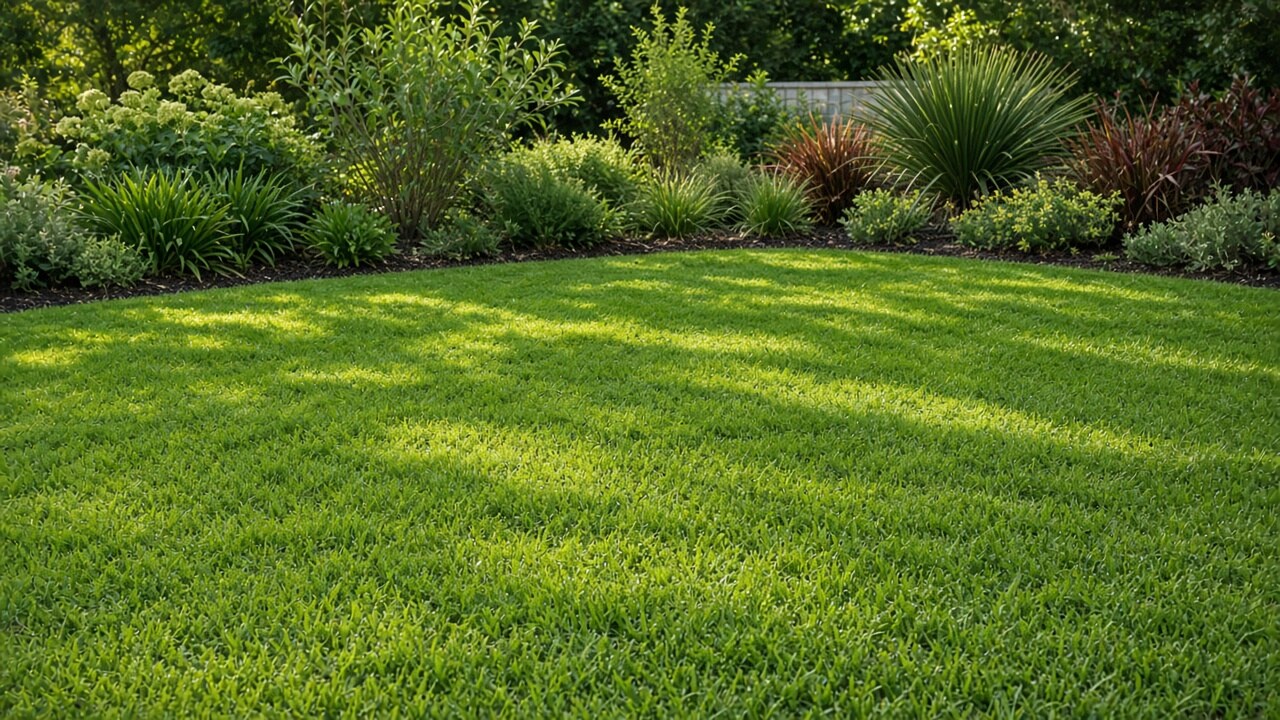
Sir Walter DNA Certified buffalo grass is Australia’s most popular premium turf variety, combining excellent shade tolerance, soft texture, and low maintenance. But even the best grass needs proper care to deliver its full potential. Here’s everything you need to know to keep your Sir Walter lawn thick, green, and healthy year-round.
What Makes Sir Walter Different
Sir Walter is a selected cultivar of buffalo grass (Stenotaphrum secundatum) bred specifically for Australian conditions. Unlike older buffalo varieties that were coarse and prone to thatch, Sir Walter offers:
- Superior shade tolerance: Thrives with just 3-4 hours of direct sunlight
- Soft, fine leaf: Comfortable for bare feet and aesthetically pleasing
- Self-repairing: Spreads through stolons to fill bare patches
- Good winter colour: Retains green colour better than most warm-season grasses
- DNA certification: Genuine Sir Walter comes with DNA certification to guarantee you’re getting the real thing
These traits make Sir Walter ideal for typical suburban gardens with trees, shade structures, and mixed sun exposure.
Establishing New Sir Walter Turf
The first 4-6 weeks after installation determine your lawn’s long-term health. Proper establishment creates deep roots and dense coverage.
Week 1: Daily watering
Goal: Keep turf constantly moist while roots establish contact with soil.
- Water 2-3 times daily for 10-15 minutes per session
- Lift corners of turf rolls to check soil moisture underneath
- Soil should remain damp but not waterlogged
- Avoid foot traffic completely
Weeks 2-3: Transition watering
Goal: Encourage roots to penetrate into underlying soil.
- Reduce to once daily, watering more deeply (20-30 minutes)
- Water in early morning (5-9 AM) to reduce disease risk
- Check root penetration by gently lifting turf edges — roots should anchor into soil
- Limit foot traffic to essential tasks
Weeks 4-6: Weaning to normal schedule
Goal: Develop deep roots for long-term drought tolerance.
- Reduce to 2-3 times weekly, watering deeply (30-45 minutes)
- Allow soil surface to dry slightly between waterings
- First mow when grass reaches 7-8 cm (see mowing section below)
- Resume normal foot traffic after first mow
First fertiliser application
Apply a starter fertiliser 4-6 weeks after installation once roots are established. Use a balanced slow-release lawn fertiliser (e.g. 16-4-8 or similar) at label rates. This gives new turf the nutrients it needs for vigorous growth without burning young roots.
Mowing Sir Walter Buffalo Grass
Proper mowing height and frequency are critical for Sir Walter’s health. Incorrect mowing is the most common mistake homeowners make.
Optimal mowing height
Keep Sir Walter at 3-5 cm (30-50 mm). Most homeowners mow too short, stressing the grass and encouraging weeds.
Why height matters:
- Taller grass develops deeper roots (better drought tolerance)
- More leaf surface captures more sunlight (healthier growth)
- Shades out weed seeds (fewer weeds)
- Protects soil from sun (retains moisture)
Set your mower to at least 3 cm, or ideally 4-5 cm for best results.
Mowing frequency
Mow every 7-14 days during active growth (spring-autumn). Never remove more than one-third of the leaf blade in a single mowing.
If you let Sir Walter get too tall:
- Don’t scalp it back to ideal height in one cut
- Raise mower deck to remove only one-third
- Wait 3-5 days and lower deck slightly
- Repeat until you reach the target height
Seasonal frequency:
- Spring-summer: Weekly (Sir Walter grows most actively)
- Autumn: Every 10-14 days (growth slows)
- Winter: Minimal mowing (monthly or as needed)
Mower blade sharpness
Sharp blades cut cleanly; dull blades tear grass, leaving brown, ragged tips that invite disease.
Sharpen blades every 20-25 mowing hours (typically 2-3 times per season). You’ll know blades are dull when grass tips look shredded 1-2 days after mowing.
Mowing pattern
Alternate mowing direction each time. This prevents soil compaction, encourages upright growth, and reduces wear patterns.
Watering Sir Walter Buffalo Grass
Established Sir Walter needs about 25-30 mm of water per week from all sources (rainfall + irrigation). Deep, infrequent watering builds drought tolerance; shallow, frequent watering creates weak roots.
Established lawn watering schedule
Water 1-2 times per week, deeply:
- Run sprinklers for 30-45 minutes per zone
- Water should penetrate 10-15 cm deep
- Water in early morning (5-9 AM) to reduce evaporation and disease risk
How to check depth: Push a screwdriver or metal rod into the soil. It should penetrate 10-15 cm easily if you’ve watered enough.
Signs Sir Walter needs water
Wait until you see early drought stress before watering:
- Leaf blades fold or curl slightly
- Grass develops a blue-grey tint
- Footprints remain visible after walking across the lawn
These signs indicate it’s time to water. Don’t irrigate on a fixed schedule — adjust based on weather, season, and actual lawn needs.
Seasonal watering adjustments
Summer: May need 2-3 times weekly during extreme heat Autumn/spring: Once weekly is usually sufficient Winter: Minimal watering, rely mostly on rainfall
Overwatering is worse than underwatering. Sir Walter tolerates short dry periods but suffers from constantly wet conditions, which promote disease and shallow roots.
Fertilising Sir Walter Buffalo Grass
Sir Walter needs regular feeding to maintain its deep green colour and dense growth. Use slow-release lawn fertiliser designed for buffalo grass.
Fertiliser schedule
Apply fertiliser 3-4 times per year:
- Early spring (September): Slow-release nitrogen fertiliser to kickstart growth
- Mid-summer (December-January): Balanced fertiliser to sustain growth during peak season
- Late summer/early autumn (March): Fertiliser with potassium for stress tolerance
- Optional late autumn (May): Light application if lawn looks pale
Recommended fertilisers
Use products specifically formulated for buffalo grass or general lawn fertilisers with:
- NPK ratio: 3:1:2 or 4:1:2 (higher nitrogen, moderate potassium)
- Slow-release formula: Feeds for 6-12 weeks
- Avoid high-phosphorus fertilisers: Buffalo needs little phosphorus; excess causes problems
Popular options:
- Lawn Solutions Premium Lawn Fertiliser
- Scotts Lawn Builder for Buffalo
- Seasol Lawn Fertiliser + Soil Improver
Always water fertiliser in thoroughly after application to prevent burning and move nutrients into the root zone.
Signs of nutrient deficiency
Nitrogen deficiency (most common):
- Pale green or yellowish colour
- Slow growth
- Thin, sparse coverage
Iron deficiency:
- Yellow leaves with green veins
- Often occurs in alkaline soils
Over-fertilising symptoms:
- Very dark green, lush growth
- Excessive thatch buildup
- Increased disease susceptibility
- Burnt, brown patches
If unsure about nutrient needs, conduct a soil test every 2-3 years to guide your fertiliser program.
Managing Thatch in Sir Walter Buffalo
Thatch is a layer of dead stems, stolons, and roots that accumulates between the soil surface and green grass. All buffalo varieties produce thatch, and Sir Walter is no exception.
Why thatch matters
Thin thatch (up to 1 cm): Beneficial. Cushions the lawn, protects roots, and retains moisture.
Thick thatch (over 2 cm): Problematic. Prevents water and nutrients from reaching roots, harbours pests and diseases, and makes the lawn spongy underfoot.
Checking thatch depth
Push a screwdriver or knife into your lawn and pull back a small section. Measure the thatch layer between green grass and soil. If it exceeds 2 cm, dethatching is needed.
Dethatching Sir Walter
When to dethatch: Late spring or early summer when Sir Walter is actively growing. Never dethatch during dormancy.
Methods:
Manual dethatching (lawns under 50 m²):
- Use a thatching rake or spring-tine rake
- Rake vigorously to pull out dead material
- Labour-intensive but effective for small areas
Mechanical dethatching (larger lawns):
- Rent a vertical mower (dethatcher) or scarifier
- Set blades to cut into thatch but not soil
- Make 2-3 passes in different directions
- Rake up and remove debris
Coring/aeration (alternative):
- Use a hollow-tine aerator to remove soil plugs
- Reduces compaction and helps break down thatch naturally
- Less disruptive than dethatching
Post-dethatching care
Dethatching stresses turf temporarily. Support recovery with:
- Light fertiliser application (half-strength)
- Regular watering (2-3 times weekly)
- Top-dressing with 5-10 mm of quality lawn soil or sand
- Overseeding bare spots if necessary (though Sir Walter will self-repair)
For a detailed guide on dethatching techniques, see our how to dethatch your lawn article.
Shade Limits for Sir Walter
Sir Walter is Australia’s most shade-tolerant warm-season grass, but it’s not a shade-grass miracle. It still needs some sun.
Minimum sunlight requirements
3-4 hours of direct sunlight daily is the minimum for acceptable Sir Walter performance. Less than this and the grass will thin out, weaken, and eventually fail.
Factors that help:
- Bright, indirect light extends usable shade tolerance slightly
- Pruning tree canopies to allow dappled light improves performance
- Reflected light from buildings or paving helps
Factors that hurt:
- Dense, deep shade under large trees
- Competing tree roots (steal water and nutrients)
- Poor air circulation (increases disease risk)
If your lawn receives less than 3 hours of direct sun, consider shade-tolerant alternatives like native violets, dichondra, or shade-loving ground covers rather than forcing grass to struggle.
Seasonal Care Calendar for Sir Walter
Spring (September-November)
- First mow: When soil warms and grass begins growing
- Fertilise: Early spring slow-release nitrogen fertiliser
- Dethatch: If thatch exceeds 2 cm, dethatch in late spring
- Weed control: Apply pre-emergent herbicide for summer weeds
- Watering: Begin regular watering as temperatures rise
Summer (December-February)
- Mow weekly: Growth is most vigorous
- Fertilise: Mid-summer balanced fertiliser
- Water regularly: 1-2 times weekly, deeply
- Watch for grubs: Monitor for lawn beetle larvae
- Raise mowing height: During extreme heat to reduce stress
Autumn (March-May)
- Fertilise: Late summer/early autumn with potassium-rich fertiliser
- Reduce mowing: As growth slows
- Aerate: If soil is compacted
- Weed control: Apply broadleaf weed herbicide if needed
- Reduce watering: As temperatures cool
Winter (June-August)
- Minimal mowing: Monthly or as needed
- Minimal watering: Rely on rainfall
- Avoid traffic: On frosted grass
- Plan renovations: Winter is for planning, not working on the lawn
Common Sir Walter Problems and Solutions
Thin, patchy growth
Causes: Insufficient sun, compacted soil, thatch buildup, poor drainage, pest damage
Solutions: Improve sunlight (prune trees), aerate compacted areas, dethatch if needed, improve drainage, treat pests
Yellow or pale colour
Causes: Nitrogen deficiency, iron deficiency (in alkaline soil), overwatering, poor drainage
Solutions: Apply nitrogen fertiliser, add iron chelate for iron deficiency, reduce watering frequency, improve drainage
Brown patches
Causes: Drought stress, disease (brown patch, dollar spot), grub damage, dog urine, fertiliser burn
Solutions: Water deeply, apply fungicide if disease confirmed, treat grubs with lawn insecticide, train dogs to use designated areas, water in fertiliser thoroughly
Weeds
Causes: Mowing too short, thin turf, poor soil fertility, incorrect watering
Solutions: Raise mowing height, fertilise to thicken turf, improve watering practices, spot-treat weeds with selective herbicide safe for buffalo
For weed identification and control in Australian lawns, see our guide to getting rid of bindii and managing crabgrass.
Comparing Sir Walter to Other Grasses
Sir Walter is one buffalo variety among many. If you’re deciding whether Sir Walter is right for you, compare it to alternatives:
- Sir Walter vs other buffalo varieties: Generally superior to older buffalo types, comparable to Palmetto and Sapphire
- Sir Walter vs kikuyu: Better shade tolerance and appearance, but less wear-tolerant and more expensive
- Sir Walter vs couch: Better shade tolerance and winter colour, but coarser texture and more thatch
For a complete comparison of Australian lawn types, see our buffalo vs kikuyu vs couch grass guide.
Getting Professional Help
Sir Walter is relatively low maintenance, but professional services can help with:
- Installation: Proper ground preparation and turf laying
- Dethatching: Hiring equipment and labour for large lawns
- Pest and disease diagnosis: Correctly identifying and treating problems
- Soil testing: Professional analysis guides fertiliser programs
Mowing Magic provides expert Sir Walter installation, maintenance, and renovation services across Australia. Their lawn care specialists can help establish new turf, diagnose problems, and design custom maintenance programs.
Sir Walter buffalo grass delivers a beautiful, low-maintenance lawn for most Australian homes when given proper care. Focus on correct mowing height, deep watering, seasonal fertilising, and occasional thatch management, and your Sir Walter lawn will reward you with years of lush, green coverage.