Lawn Weeds in Australia: Identification and Control Guide
Identify and control common Australian lawn weeds including bindii, clover, crabgrass, oxalis, and more. Practical guide covering ID, lifecycle, and effective control strategies.
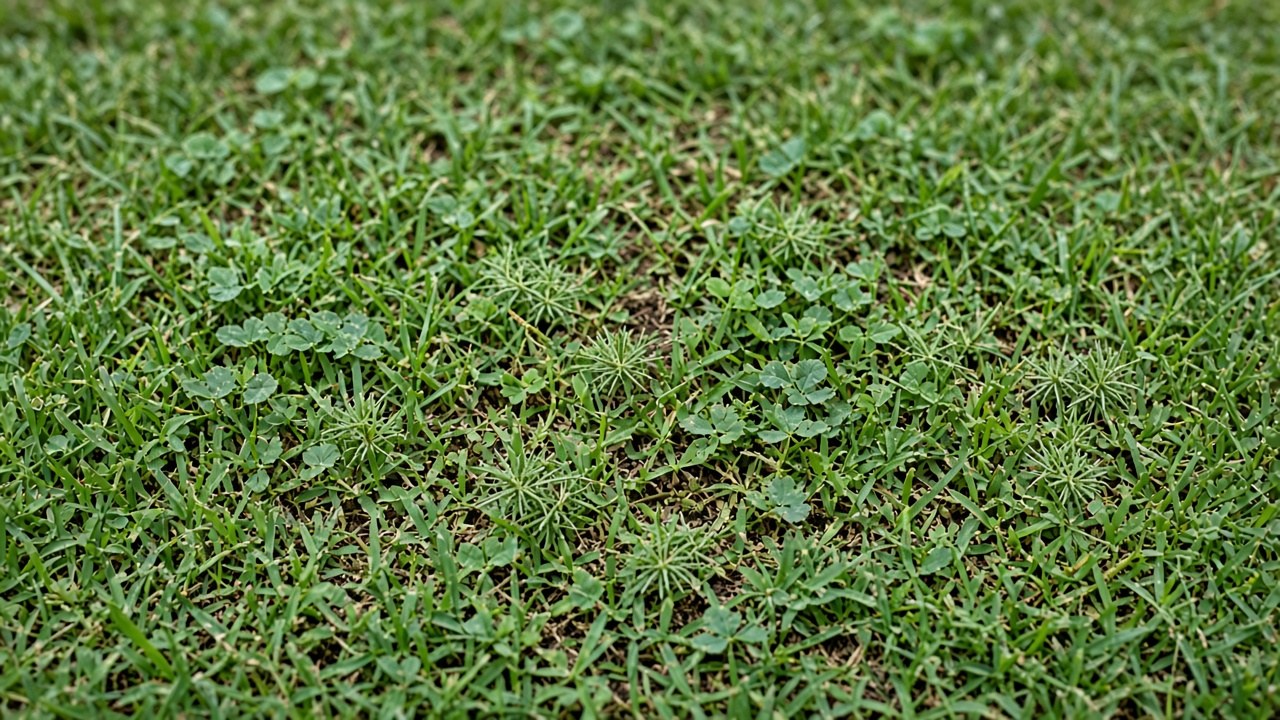
Australian lawns face a rogues’ gallery of weeds — from the painful bindii burrs that ruin barefoot summer days to invasive crabgrass that chokes out your turf. The key to weed control is accurate identification followed by targeted action at the right time. This guide covers the most common lawn weeds across Australia and how to eliminate them.
Understanding Lawn Weeds
Why lawns get weeds: Weeds are opportunists. They thrive where grass is thin, stressed, or improperly maintained. Healthy, dense turf naturally crowds out most weeds.
The prevention principle: Improving lawn health is more effective long-term than constantly fighting weeds. Focus on creating conditions where grass wins the competition.
Weed categories:
- Broadleaf weeds: Non-grass plants with wide leaves (bindii, clover, dandelion)
- Grass weeds: Weedy grass species that differ from your lawn grass (crabgrass, summer grass, wintergrass)
- Sedges: Grass-like plants with triangular stems (nutgrass, mullumbimby couch)
Control timing matters: Each weed has a lifecycle. Control is most effective at specific stages. Learn your target weed’s timing.
Common Australian Lawn Weeds: Identification and Control
1. Bindii (Jo-jo, Onehunga Weed)
Identification
Appearance:
- Low-growing rosette (circular flat growth)
- Finely divided, feathery carrot-like leaves
- Bright to dark green
- 5-20cm diameter
- Seed burrs: Sharp, spiky, painful (mature in late spring)
Lifecycle: Annual broadleaf. Germinates in autumn, grows through winter, flowers and seeds in spring, dies in summer heat.
Similar to: Nothing else has the distinctive feathery leaves + painful burrs combination.
When and where it thrives
Conditions: Thin turf, low-fertility soil, dry winters, compacted soil. Common across temperate and subtropical Australia (Sydney, Melbourne, Brisbane, Adelaide, Perth).
Season: Visible autumn-spring. Seeds dormant in summer.
Control
Best timing: Late winter (August-early September) before seed burrs form.
Cultural control:
- Hand weed small infestations (remove entire plant including roots)
- Improve lawn density (crowds out bindii)
- Increase mowing height (shades out bindii rosettes)
Chemical control:
- Apply selective broadleaf herbicide in late winter
- Products containing bromoxynil + MCPA effective
- Pre-emergent herbicides in early autumn (prevent germination)
For comprehensive bindii control, see our detailed bindii control guide covering identification, lifecycle, and step-by-step elimination strategies.
2. Clover (White Clover, Shamrock)
Identification
Appearance:
- Trifoliate leaves (three leaflets per stem)
- Round leaflets with white V-marking
- Low-growing, spreads via stolons (runners)
- White or pink pom-pom flowers
- Forms dense mats
Lifecycle: Perennial broadleaf. Grows year-round in mild climates, dormant in extreme heat or cold.
Similar to: Medick (yellow flowers, toothed leaflets) or oxalis (heart-shaped leaflets).
When and where it thrives
Conditions: Low-nitrogen soils (clover fixes nitrogen), compacted soil, moist areas, thin turf. Common across all Australian climates.
Season: Most vigorous in spring and autumn.
Control
To control or tolerate?: Some homeowners tolerate clover — it’s green, soft, drought-tolerant, and fixes nitrogen. If you like it, let it stay. If not:
Cultural control:
- Increase nitrogen fertiliser (promotes grass over clover)
- Improve lawn density (grass outcompetes clover)
- Aerate compacted soil
Chemical control:
- Selective broadleaf herbicide containing MCPA or dicamba
- Multiple applications often needed (clover is persistent)
- Best applied when clover is actively growing (spring, autumn)
3. Crabgrass / Summer Grass
Identification
Appearance:
- Coarse-textured grass (much coarser than lawn grass)
- Light green colour (stands out from darker lawn grass)
- Grows in clumps or spreading mats
- Seed heads: Finger-like projections radiating from stem tip (distinctive)
- Stems root at nodes where they touch soil
Lifecycle: Annual grass. Germinates in spring when soil warms (18°C+), grows vigorously through summer, seeds in late summer/autumn, dies with first frost.
Similar to: Crowsfoot grass (similar but spreads more aggressively).
When and where it thrives
Conditions: Thin turf, bare patches, hot weather, low mowing heights, compacted soil. Common across temperate, subtropical, and tropical Australia.
Season: Spring germination, peak growth summer, dies in autumn/winter.
Control
Best timing: Spring prevention (pre-emergent) or early summer removal (young plants).
Cultural control:
- Hand-pull young plants (before they seed)
- Increase mowing height (shades soil, prevents germination)
- Overseed bare patches (dense turf prevents establishment)
- Water deeply but infrequently (crabgrass prefers shallow frequent watering)
Chemical control:
- Pre-emergent herbicides (apply in early spring before soil reaches 18°C):
- Oxadiazon, pendimethalin (prevent germination)
- Timing is critical — too late and crabgrass already germinated
- Post-emergent herbicides (for existing plants):
- DSMA or MSMA (specific to grass weeds, safe for most lawn grasses)
- Apply to young plants (more effective than mature plants)
For detailed crabgrass control, see our crabgrass control guide covering identification, prevention, and elimination.
4. Oxalis (Soursob, Sourgrass)
Identification
Appearance:
- Heart-shaped leaflets (three per stem)
- Bright green or purple leaves
- Creeping or upright growth
- Yellow or pink flowers (5 petals)
- Small bulbs underground (key to persistence)
Lifecycle: Perennial broadleaf. Grows autumn-spring, dormant or dies back in summer heat.
Similar to: Clover (but clover has round leaflets, oxalis has heart-shaped).
When and where it thrives
Conditions: Thin turf, moist soil, shaded areas, low-fertility soil. Common across temperate and subtropical Australia.
Season: Most vigorous in spring.
Control
Challenge: Underground bulbs regenerate even when top growth is removed. Persistent weed requiring repeated efforts.
Cultural control:
- Hand weed (remove bulbs, not just top growth — tedious but effective for small areas)
- Improve lawn density (dense turf suppresses oxalis)
- Reduce shade (prune overhanging branches)
Chemical control:
- Selective broadleaf herbicide (multiple applications needed)
- Glyphosate (non-selective, kills everything including grass — use for spot treatment only)
- Best applied in spring when actively growing
- Expect to repeat treatment (bulbs sprout new plants)
5. Winter Grass (Poa annua)
Identification
Appearance:
- Light green tufts (lighter than most lawn grasses)
- Fine texture, soft leaves
- Grows in clumps (tufted appearance)
- Seed heads: Small white-green seed heads even when mowed short
- Shallow roots
Lifecycle: Annual grass. Germinates in autumn, grows through winter, seeds heavily in spring, dies in summer heat.
Similar to: Young lawn grass (look for lighter colour, clumped growth, prolific seeding).
When and where it thrives
Conditions: Cool weather, thin turf, moist soil, shaded areas. Common in temperate zones (Melbourne, Adelaide, Canberra, Hobart).
Season: Germinates autumn, visible winter-spring, dies summer.
Control
Best timing: Autumn prevention (pre-emergent) or hand-removal in winter (before seeding).
Cultural control:
- Hand weed individual plants (shallow roots, easy to pull)
- Improve lawn density (crowds out winter grass)
- Reduce watering in autumn/winter (discourages germination)
Chemical control:
- Pre-emergent herbicide in early autumn (before germination)
- Post-emergent selective herbicide for winter grass (limited options — check product labels)
- Non-selective spot treatment with glyphosate (kills grass too)
6. Dandelion
Identification
Appearance:
- Rosette of jagged-edged leaves (lion’s tooth shape)
- Hollow stems
- Bright yellow flowers (single flower per stem)
- Fluffy white seed heads (blow-away seeds)
- Deep taproot (up to 30cm)
Lifecycle: Perennial broadleaf. Grows year-round in mild climates, most vigorous spring and autumn.
Similar to: Other rosette weeds (flatweeds, cat’s ear), but dandelion’s hollow stem and single yellow flower distinctive.
When and where it thrives
Conditions: Thin turf, any soil type, tolerates wide range of conditions. Common across all Australian climates.
Season: Flowers heavily in spring, but present year-round.
Control
Challenge: Deep taproot regenerates if broken. Must remove entire root or kill with herbicide.
Cultural control:
- Hand weed using weeding tool to lever out entire taproot
- Remove before flowering and seeding (one plant = hundreds of seeds)
- Improve lawn density
Chemical control:
- Selective broadleaf herbicide (absorbed by leaves, kills taproot)
- Apply when dandelion is actively growing (spring, autumn)
- May require repeat application
7. Creeping Oxeye Daisy (Broadleaf Fleabane)
Identification
Appearance:
- Low-growing rosette
- Spoon-shaped leaves
- Small white daisy flowers (yellow center)
- Spreads via seeds and short runners
Lifecycle: Perennial broadleaf. Grows year-round in mild areas.
Similar to: Other small daisy-type weeds (capeweed has lobed leaves).
When and where it thrives
Conditions: Thin turf, poor soil, dry areas. Common in NSW, QLD.
Season: Flowers spring-summer.
Control
Cultural control:
- Hand weed (remove entire plant including root crown)
- Improve lawn density and fertility
Chemical control:
- Selective broadleaf herbicide
- Apply in spring when actively growing
8. Nutgrass (Mullumbimby Couch, Nutgrass)
Identification
Appearance:
- Grass-like but actually a sedge
- Triangular stems (roll stem between fingers — triangle shape is diagnostic)
- Bright green, shiny leaves
- Grows faster and taller than lawn grass (stands out after mowing)
- Brown seed heads in summer
- Underground tubers (“nuts”) spread aggressively
Lifecycle: Perennial sedge. Grows year-round in warm climates, most vigorous in summer.
Similar to: Grass (but triangular stem differentiates).
When and where it thrives
Conditions: Moist soil, poorly drained areas, warm climates. Common in subtropical and tropical Australia (QLD, northern NSW).
Season: Most vigorous in warm months.
Control
Challenge: One of the hardest lawn weeds to control. Underground tubers spread laterally and regenerate even from small fragments.
Cultural control:
- Dig out entire network of tubers (extremely difficult for large infestations)
- Improve drainage (nutgrass loves wet soil)
- Mulch heavily (garden beds, not lawns) to smother
Chemical control:
- Sedge-specific herbicides (e.g., halosulfuron)
- Multiple applications required (tubers regenerate)
- Glyphosate kills top growth but tubers remain
9. Capeweed
Identification
Appearance:
- Rosette of deeply lobed leaves (dandelion-like but more lobed)
- Hairy leaves
- Yellow daisy flowers (black center disk)
- Seed heads: Black, hard, spiky seed cases
Lifecycle: Annual broadleaf. Germinates in autumn, grows through winter, flowers in spring, dies in summer.
Similar to: Dandelion (but capeweed leaves more deeply lobed, flowers have black center).
When and where it thrives
Conditions: Thin turf, low-fertility soil, dry conditions. Common in temperate regions (southern Australia).
Season: Visible autumn-spring.
Control
Cultural control:
- Hand weed before flowering and seeding
- Improve lawn density and fertility
Chemical control:
- Selective broadleaf herbicide in late winter/early spring
- Pre-emergent herbicides in autumn
10. Cudweed (Cats Ears)
Identification
Appearance:
- Low-growing rosette
- Narrow, hairy leaves
- Small yellow daisy-like flowers on thin stalks
- Forms dense mats
Lifecycle: Annual or short-lived perennial. Grows in cooler months.
Similar to: Cat’s ear (similar name and appearance — both low rosettes with yellow flowers).
When and where it thrives
Conditions: Thin turf, compacted soil, shaded areas.
Season: Cooler months.
Control
Cultural control:
- Hand weed
- Improve lawn density
- Aerate compacted soil
Chemical control:
- Selective broadleaf herbicide
General Lawn Weed Prevention Strategies
1. Maintain dense, healthy turf
The single most important weed control strategy. Healthy grass naturally outcompetes weeds.
How to achieve dense turf:
- Fertilise regularly: 3-4 times per year (spring, summer, autumn, optional winter)
- Mow at correct height: Don’t scalp. Higher mowing shades soil and prevents weed germination.
- Buffalo: 25-50mm
- Kikuyu: 25-40mm
- Couch: 10-25mm
- Water correctly: Deep, infrequent watering (encourages deep grass roots)
- Overseed thin areas: Fill bare patches before weeds do
- Top-dress: Thin layer of quality lawn soil annually (fills depressions, improves soil)
For comprehensive lawn care guidance, see our lawn care basics guide.
2. Choose the right grass for your climate
Wrong grass = stressed grass = weedy lawn. Match grass species to your climate:
Warm-season grasses (most of Australia):
- Buffalo: Shade-tolerant, drought-tolerant, wear-tolerant. Good all-rounder.
- Kikuyu: Fast-growing, wear-tolerant, invasive (can be a weed itself in garden beds).
- Couch: Fine texture, wear-tolerant, full sun only, high maintenance.
For detailed comparison of Australian lawn grass types, see our buffalo vs kikuyu vs couch guide.
Cool-season grasses (Tasmania, high-altitude areas):
- Ryegrass, fescue blends
Cultivar selection matters: Modern cultivars offer better disease resistance, density, and weed suppression. For example, Sir Walter buffalo is shade-tolerant and forms dense turf that naturally suppresses weeds.
3. Mow correctly
Mowing height: Don’t scalp (cut too short). Scalping:
- Stresses grass
- Exposes soil to light (triggers weed germination)
- Reduces grass’s competitive advantage
Mowing frequency: Mow often enough that you never remove more than one-third of grass blade height in single cut.
Sharp blades: Dull blades tear grass (stress, disease entry). Sharpen or replace mower blades annually.
4. Watering technique
Deep, infrequent watering (1-2 times per week):
- Encourages deep grass roots (drought tolerance, competitive advantage)
- Allows soil surface to dry between waterings (discourages shallow-rooted weeds)
Avoid frequent shallow watering:
- Encourages shallow grass roots (weak, easily outcompeted)
- Keeps soil surface moist (ideal for weed germination)
For comprehensive lawn watering guidance, see our lawn watering guide.
5. Aerate compacted soil
Compaction reduces grass vigour. Weeds tolerate compaction better than grass.
Solution: Core aerate annually (spring or autumn). Removes soil plugs, allows air, water, and nutrients to reach roots.
6. Dethatch when needed
Thatch (layer of dead grass stems and roots) accumulates over time. Excessive thatch (>15mm):
- Creates spongy surface
- Harbours pests and disease
- Prevents water and nutrients reaching soil
- Weakens grass
Solution: Dethatch when thatch layer exceeds 15mm. Best time: spring or early autumn.
For comprehensive dethatching guidance, see our lawn dethatching guide.
7. Use pre-emergent herbicides strategically
Pre-emergent herbicides prevent weed seeds from germinating. They don’t kill existing weeds.
Best for: Annual weeds with predictable germination timing (bindii, crabgrass, winter grass).
Application timing:
- Autumn (March-April): Prevents bindii, winter grass, capeweed
- Spring (September): Prevents crabgrass, summer grass
Important: Pre-emergents also prevent grass seed germination. Don’t overseed for 6-12 weeks after application (check product label).
Chemical Control: Herbicide Types
Selective herbicides
Kill weeds, not grass (when used correctly).
Broadleaf herbicides: Target broadleaf weeds (bindii, clover, dandelion). Common active ingredients: MCPA, bromoxynil, dicamba.
Grass-weed herbicides: Target grass weeds. Limited options. DSMA/MSMA (crabgrass). Sethoxydim (some grass weeds in some lawn types).
Sedge herbicides: Target sedges (nutgrass). Halosulfuron.
Application tips:
- Read label carefully (check your grass type is listed as safe)
- Apply when weeds actively growing (spring, autumn)
- Avoid applying in heat (>28°C), wind, or before rain
- Don’t mow 2-3 days before or after application
- Avoid overuse (can damage lawn)
Non-selective herbicides
Kill everything (including your lawn grass).
Glyphosate: Systemic (absorbed by leaves, kills entire plant including roots). Use for spot treatment or total lawn renovation only.
Application tips:
- Spot-treat individual weeds with spray bottle or brush application
- Protect desirable plants (overspray kills grass too)
- Allow 1-2 weeks for full effect (then dead weeds can be removed)
Pre-emergent herbicides
Prevent seed germination. Don’t kill existing plants.
Common active ingredients: Oxadiazon, pendimethalin, oryzalin, dithiopyr.
Application tips:
- Apply before weed germination (timing is everything)
- Water in lightly after application (activates herbicide)
- Effectiveness lasts 8-12 weeks (reapply if needed)
Professional Lawn Care Services
Maintaining a dense, weed-free lawn requires consistent effort — regular mowing, fertilising, watering, and targeted weed control at the right times. For many homeowners, professional lawn care services offer:
- Expert weed identification and targeted control programs
- Correct herbicide selection for your grass type and weed species
- Proper application timing (pre-emergents before germination, post-emergents when weeds vulnerable)
- Integrated programs combining weed control, fertilisation, and lawn health improvement
- Ongoing monitoring and follow-up treatments as needed
Mowing Magic provides professional lawn care services across Australia, including comprehensive weed control programs tailored to your lawn type and local weed species. Their lawn specialists can diagnose persistent weed problems and implement customised solutions to achieve and maintain a healthy, weed-free lawn.
Final Thoughts
Lawn weeds are a symptom, not the root problem. The root problem is usually thin, stressed, or improperly maintained turf. Focus on improving lawn health — correct fertilisation, mowing height, watering technique, and seasonal maintenance — and weed pressure naturally decreases.
When weeds do establish, accurate identification leads to effective control. Learn your weeds’ lifecycles and time your interventions accordingly: pre-emergent herbicides before germination, hand-weeding or selective herbicides when weeds are young and actively growing.
With consistent effort and the right approach, you can minimise weed pressure and enjoy a healthy, dense lawn that naturally resists weed invasion.