Why Plant Leaves Turn Yellow: Complete Diagnosis Guide
Diagnose why your plant leaves are turning yellow with this practical troubleshooting guide. Learn to identify overwatering, nutrient deficiencies, light issues, pests, and disease causes.
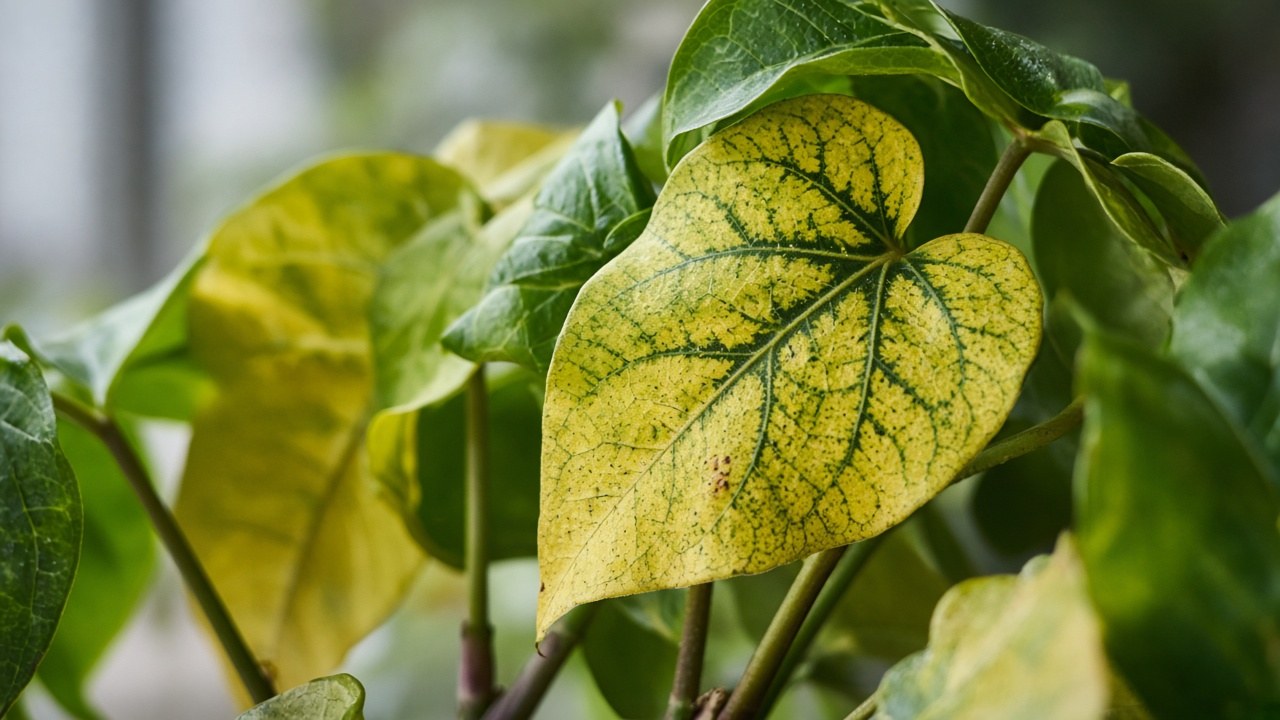
Yellow leaves are one of the most common signs that something’s wrong with your plant — but the tricky part is that yellowing can indicate many different problems. Is it too much water? Not enough? A nutrient issue? Pests? This guide will help you diagnose the cause and fix it before the problem spreads.
Understanding Leaf Yellowing (Chlorosis)
Chlorosis is the technical term for yellowing leaves. It occurs when chlorophyll (the green pigment that enables photosynthesis) breaks down or fails to form.
Key principle: Yellow leaves are a symptom, not a disease. Your job is detective work — observe the pattern of yellowing, consider recent care changes, and systematically rule out causes.
The Diagnostic Process
Follow this decision-tree approach:
- Which leaves are yellow? (lower, upper, new, old, scattered)
- What pattern? (entire leaf, veins stay green, edges only)
- What’s your care routine? (watering frequency, light conditions, fertiliser)
- Any recent changes? (repotting, location move, season change)
- Other symptoms? (wilting, spots, pests visible, stunted growth)
Let’s work through the most common causes systematically.
Cause 1: Overwatering
Most common cause of yellowing in houseplants and garden plants.
Symptoms
Yellow leaves starting from bottom:
- Lower leaves turn yellow first
- Leaves may feel soft or soggy
- Yellowing progresses upward over time
- Often accompanied by wilting (despite wet soil)
- Soil stays wet for days after watering
- Sour smell from soil (anaerobic bacteria)
- Stunted new growth
Why overwatering causes yellowing: Waterlogged soil suffocates roots (roots need oxygen). Damaged roots can’t absorb nutrients or water. Plant responds by shedding older leaves.
How to diagnose
- Stick finger 5cm into soil: If wet days after watering, overwatering likely
- Check drainage holes: Is water draining freely? Or sitting in saucer?
- Inspect roots (if possible): Mushy brown roots = root rot from overwatering. Healthy roots are firm and white/tan.
- Smell soil: Sour or rotten smell = anaerobic conditions from waterlogging
The fix
Immediate:
- Stop watering immediately
- Empty any water in saucers or cache pots
- Move plant to better-ventilated location (helps soil dry)
- If potting mix stays soggy for week+, consider repotting into fresh, well-draining mix
Long-term:
- Water only when top 2-5cm of soil is dry (finger test)
- Ensure pot has drainage holes
- Use well-draining potting mix (never garden soil in pots)
- Adjust watering frequency to season (less in winter)
Recovery time: 2-4 weeks for new growth to appear healthy. Remove completely yellow leaves (they won’t recover).
Cause 2: Underwatering
Less common than overwatering but still frequent, especially with garden plants in summer.
Symptoms
Yellowing plus wilting and crispness:
- Leaves yellow starting from edges or tips
- Leaves feel dry and crispy (not soft)
- Leaf tips brown and crispy
- Soil pulls away from sides of pot (severe cases)
- Soil is dust-dry when you check
- Entire plant may droop or wilt
Why underwatering causes yellowing: Severe water stress triggers leaf drop. Plant sheds leaves (oldest first) to reduce water demand.
How to diagnose
- Finger test: Soil dry 5cm+ down?
- Wilting: Plant perks up after watering?
- Leaf texture: Dry and crispy vs soft and soggy (overwatering)?
- Recent weather: Hot spell? Missed regular watering?
The fix
Immediate:
- Water thoroughly until water drains from bottom
- If soil is so dry it repels water (hydrophobic), place pot in tray of water for 30 minutes (bottom-soaking)
- Remove crispy dead leaves
Long-term:
- Establish consistent watering routine
- Mulch garden plants to retain soil moisture
- Check soil moisture before watering (learn your plant’s needs)
- Group pots together (creates humidity, reduces evaporation)
- Consider self-watering pots for forgetful waterers
Recovery time: 1-2 weeks. New growth should be healthy.
Cause 3: Nitrogen Deficiency
Most common nutrient deficiency causing yellowing.
Symptoms
Uniform yellowing starting from oldest (lower) leaves:
- Lower leaves turn pale yellow-green then bright yellow
- Yellowing is uniform across leaf (not mottled)
- Veins and rest of leaf same colour (entire leaf yellow)
- Older leaves affected first
- New growth may be pale but not as yellow
- Slow growth overall
- Smaller leaves than normal
Why nitrogen deficiency causes yellowing: Nitrogen is mobile — plants move it from old leaves to new growth when supply is short. Old leaves yellow and drop.
How to diagnose
- Pattern: Lower leaves only? Uniform yellowing?
- Fertilising history: Not fertilised in 6+ months? Or never?
- Other symptoms: Slow growth? Small leaves?
- Soil test (if unsure): Confirms low nitrogen
The fix
Immediate:
- Apply liquid fertiliser with nitrogen (look for higher first number in NPK ratio, e.g., 10-5-5)
- Dilute to half-strength for first application (avoid shock)
- Water before fertilising (prevents root burn)
Long-term:
- Fertilise regularly during growing season (spring-summer)
- Vegetables: Every 2-3 weeks
- Houseplants: Every 4-6 weeks
- Lawns: 3-4 times per year
- Use slow-release fertiliser for low-maintenance feeding
- Add compost to garden beds annually (provides slow-release nutrients)
- For lawns: Apply nitrogen-rich fertiliser in spring
For guidance on making natural fertilisers, see our natural fertiliser guide.
Recovery time: 1-2 weeks for new growth to green up. Old yellow leaves won’t recover (remove them).
Cause 4: Iron Deficiency (Iron Chlorosis)
Common in alkaline soils or poorly-drained soils.
Symptoms
Yellowing between veins (veins stay green):
- Interveinal chlorosis: Leaf tissue between veins turns yellow, veins remain bright green (distinctive pattern)
- New growth affected first (opposite of nitrogen deficiency)
- Young leaves at top of plant most yellow
- Severe cases: Entire leaf turns white-yellow
- Slow growth
Why iron deficiency causes yellowing: Iron is essential for chlorophyll production. When unavailable, new leaves can’t produce chlorophyll properly.
Common in: Alkaline soils (high pH locks up iron), waterlogged soils (roots can’t absorb iron), plants adapted to acidic soils (azaleas, camellias, blueberries, citrus).
How to diagnose
- Pattern: Veins green, tissue between yellow? New growth affected?
- Soil pH: Alkaline soil (pH >7)? (Test with pH kit if unsure)
- Plant type: Acid-loving plant in neutral/alkaline soil?
- Drainage: Poor drainage? Waterlogged soil?
For comprehensive information on identifying and treating iron chlorosis, see our iron chlorosis guide.
The fix
Immediate (foliar treatment):
- Apply liquid iron chelate as foliar spray (fast symptom relief)
- Follow product directions
Medium-term (soil treatment):
- Apply iron sulphate or iron chelate to soil (water in well)
- For ongoing issues: Use chelated iron products designed for alkaline soils
Long-term (address underlying cause):
- Lower soil pH (if too alkaline):
- Add sulphur or acidifying fertiliser
- Mulch with acidic materials (pine needles, pine bark)
- Takes months to change pH significantly
- Improve drainage (if waterlogged):
- Amend soil with compost and gypsum
- Create raised beds
- Install drainage
- Choose appropriate plants for your soil pH:
- Stop fighting your soil — grow plants suited to it
Recovery time: Foliar treatment shows improvement in 1-2 weeks. Soil treatment takes longer. Addressing pH takes months.
Cause 5: Magnesium Deficiency
Less common than nitrogen or iron but still significant, especially in sandy soils.
Symptoms
Yellowing between veins starting from older leaves:
- Interveinal chlorosis (like iron deficiency)
- But older/lower leaves affected first (unlike iron deficiency)
- Leaf edges may curl upward
- Veins remain green
- Purple or brown spots may develop between yellow areas
Why magnesium deficiency causes yellowing: Magnesium is central to chlorophyll molecule. Deficiency prevents chlorophyll formation.
Common in: Sandy soils (magnesium leaches easily), acidic soils (low magnesium availability), over-use of potassium fertilisers (potassium competes with magnesium uptake).
How to diagnose
- Pattern: Interveinal yellowing on older leaves (not new growth)?
- Soil type: Sandy, fast-draining soil?
- High potassium use: Heavy potash/tomato fertiliser use?
The fix
Immediate:
- Apply Epsom salts (magnesium sulphate):
- Dissolve 1 tablespoon per 4 litres water
- Apply as foliar spray or soil drench
- Repeat every 2 weeks until symptoms improve
Long-term:
- Use balanced fertilisers (avoid excess potassium)
- Add dolomite lime to garden beds (provides magnesium + calcium, raises pH slightly)
- Compost (releases magnesium slowly)
Recovery time: 2-4 weeks
Cause 6: Insufficient Light
Very common cause for houseplants.
Symptoms
Pale yellow leaves, especially on shaded side:
- Entire plant pale yellow-green (not vibrant green)
- Lower/inner leaves yellow first (receive least light)
- Leggy, stretched growth (reaching toward light)
- Sparse foliage
- Slow growth
- New leaves smaller and paler than old leaves
Why insufficient light causes yellowing: Plants produce chlorophyll in response to light. Low light = less chlorophyll = paler leaves. Severe cases: plant sheds shaded leaves (can’t photosynthesize efficiently).
How to diagnose
- Light measurement: Is plant in bright indirect light? Or dark corner?
- Symptoms match: Pale overall + leggy growth?
- Recent move: Did yellowing start after moving to lower-light location?
The fix
Immediate:
- Move plant to brighter location (bright indirect light for most houseplants)
- For outdoor plants: Prune overhanging branches blocking sunlight
- Avoid direct hot sun suddenly (acclimatise gradually)
Long-term:
- Match plant to location light levels:
- High-light plants (cacti, succulents, citrus): Full sun
- Medium-light plants (most houseplants): Bright indirect light
- Low-light plants (pothos, snake plant, ZZ plant): Can tolerate shade
- Consider grow lights for dark indoor spaces
- Rotate plants weekly (even light exposure)
Recovery time: 2-4 weeks for new growth to green up
Cause 7: Too Much Light / Sunburn
Less common than insufficient light but devastating when it occurs.
Symptoms
Bleached yellow-white patches:
- Sudden yellowing/whitening on sun-exposed leaves
- Crispy brown patches (sunburn)
- Damage on side facing sun/window
- Shaded leaves remain green
Why it happens: Intense direct sun overwhelms plant’s ability to dissipate light energy. Chlorophyll breaks down. Tissue burns.
Common scenario: Houseplant moved from shade to full sun without acclimatisation. Or heatwave suddenly intensifies sunlight.
How to diagnose
- Timing: Yellowing appeared suddenly after moving plant or heatwave?
- Location: Sun-exposed side affected, shaded side fine?
- Texture: Crispy, bleached appearance?
The fix
Immediate:
- Move plant out of direct intense sun
- Provide shade during hottest part of day
- Remove severely damaged leaves (they won’t recover)
Long-term:
- Acclimatise plants gradually when moving to brighter location (increase exposure by 1-2 hours per day over 1-2 weeks)
- Provide afternoon shade for sensitive plants during summer
- Use shade cloth (30-50%) for plants in too-bright locations
Recovery time: Immediate relief. New growth should be healthy within 2-4 weeks.
Cause 8: Pests
Several common pests cause yellowing as they drain plant fluids.
Symptoms
Yellow leaves plus visible pests or pest evidence:
- Aphids: Clusters of small soft-bodied insects on new growth, sticky honeydew, yellowing/curling leaves
- Spider mites: Tiny specks (barely visible), fine webbing, stippled yellow leaves
- Whiteflies: Tiny white flying insects (fly when disturbed), sticky honeydew, yellowing leaves
- Scale: Brown bumps on stems/leaves, sticky honeydew, yellowing
- Mealybugs: White cottony masses, yellowing
Why pests cause yellowing: Sap-sucking insects drain plant fluids, causing nutrient loss and weakening plant. Heavy infestations cause widespread yellowing.
How to diagnose
- Inspect closely: Check undersides of leaves, new growth, stems
- Look for honeydew: Sticky substance on leaves (sign of aphids, scale, whiteflies)
- Check for webbing: Fine silk webbing (spider mites)
- Shake plant over white paper: Tiny specks moving = spider mites or thrips
For comprehensive pest identification, see our garden pest guide.
The fix
For aphids: See our detailed aphid control guide covering organic and chemical control methods.
For spider mites:
- Spray plant with strong water (dislodges mites)
- Apply insecticidal soap or neem oil weekly for 3 weeks
- Increase humidity (mites hate humidity)
General pest control:
- Isolate infested plant (prevent spread)
- Remove heavily infested leaves
- Apply appropriate treatment (soap, neem, or pesticide)
- Repeat treatment weekly until pest-free
Recovery time: 2-4 weeks once pests controlled
Cause 9: Disease
Fungal, bacterial, and viral diseases can cause yellowing.
Symptoms
Yellow leaves plus additional disease symptoms:
- Brown or black spots on yellow leaves (fungal leaf spot)
- Wilting despite adequate water (fusarium/verticillium wilt)
- Yellowing in patterns (mosaics, rings) = viral disease
- Yellowing + stunted distorted growth = virus
- Yellowing + root rot smell = root rot disease
How to diagnose
- Spots or lesions: Fungal or bacterial disease likely
- Wilting + yellowing: Root or vascular disease
- Pattern: Mosaic pattern = viral
- Spread: Does yellowing spread from plant to plant? (Infectious disease)
The fix
Fungal diseases:
- Remove infected leaves
- Improve airflow (prevent moisture buildup)
- Avoid overhead watering
- Apply fungicide if severe
Bacterial diseases:
- Remove infected plants (bacterial diseases difficult to control)
- Disinfect tools
- Avoid overhead watering
Viral diseases:
- No cure — remove infected plants
- Control insect vectors (aphids, whiteflies spread viruses)
Root rot:
- Reduce watering
- Improve drainage
- Repot in fresh mix if severe
Cause 10: Transplant Shock
Yellowing after repotting or transplanting.
Symptoms
Yellowing starts within days of transplanting:
- Lower leaves yellow and drop
- Temporary wilting
- Occurs within 1-2 weeks of transplanting
- Otherwise plant looks healthy
Why it happens: Root damage during transplanting reduces water/nutrient uptake temporarily. Plant sheds some leaves to reduce demand while roots regrow.
How to diagnose
Timing: Yellowing started within 2 weeks of transplanting/repotting?
The fix
Usually self-correcting:
- Water consistently (keep soil evenly moist, not wet)
- Avoid fertilising for 4-6 weeks (let roots establish first)
- Provide bright indirect light (not full sun)
- Remove yellow leaves
- Be patient
Recovery time: 2-6 weeks
Cause 11: Natural Aging
Not actually a problem!
Symptoms
Occasional lower leaf yellowing:
- One or two lowest leaves yellow and drop
- Rest of plant healthy, vibrant green
- New growth vigorous
- Occurs sporadically throughout growing season
Why it happens: Natural leaf turnover. Older leaves senesce (age and die). Plant sheds them to focus energy on new growth.
How to diagnose
Minimal yellowing (1-2 leaves at a time) + otherwise healthy plant = normal aging.
The “fix”
No action needed! Remove yellow leaves for aesthetics. This is normal plant behaviour.
Diagnosing Multiple Causes
Often yellowing results from combination of issues:
Example: Overwatering → root rot → reduced nutrient uptake → nitrogen deficiency symptoms
Example: Insufficient light + overwatering → weak growth + fungal disease
Approach: Address most obvious/severe issue first (e.g., stop overwatering). Then address secondary issues (e.g., fertilise once roots recover).
Quick Reference: Yellowing Patterns
| Pattern | Likely Cause |
|---|---|
| Lower leaves yellow first, uniform colour | Overwatering OR nitrogen deficiency |
| Lower leaves yellow, dry and crispy | Underwatering |
| New leaves yellow, veins green | Iron deficiency |
| Older leaves yellow, veins green | Magnesium deficiency |
| Whole plant pale yellow-green, leggy | Insufficient light |
| Sun-exposed side bleached/yellow | Too much light |
| Yellow + visible pests | Pest damage |
| Yellow + spots or lesions | Disease |
| Yellow right after repotting | Transplant shock |
| 1-2 lower leaves occasionally | Natural aging |
Preventing Yellow Leaves
Watering discipline: Check soil before watering. Water thoroughly but infrequently. Ensure drainage.
Proper light: Match plant to location light levels. Acclimatise gradually to brighter light.
Regular fertilising: Feed during growing season. Use appropriate fertiliser for plant type.
Pest monitoring: Inspect plants weekly. Catch pests early.
Good airflow: Prevent fungal disease. Prune dense growth.
Appropriate soil: Use well-draining potting mix for containers. Amend garden soil with compost.
Seasonal adjustment: Reduce watering and fertilising in winter. Increase in spring/summer.
For comprehensive vegetable garden care including troubleshooting, see our beginner’s vegetable garden guide.
Final Thoughts
Yellow leaves tell you something’s wrong, but they don’t tell you what. Systematic observation — which leaves are yellow, what pattern, what’s your care routine, any recent changes — leads you to the cause.
Start with the most common issues (overwatering, underwatering, nitrogen deficiency, insufficient light), rule them out one by one, and adjust care accordingly. Most yellow leaf problems are fixable if caught early and addressed properly.
Remember: Yellow leaves won’t turn green again. Focus on producing healthy new growth with corrected care. Remove yellow leaves once you’ve identified and fixed the problem — they’re just draining resources at that point.