How to Aerate Your Lawn (Australian Guide)
Complete guide to lawn aeration in Australia. Learn when and how to aerate buffalo, kikuyu, and couch lawns to fix compaction, improve drainage, and restore thick, healthy turf.
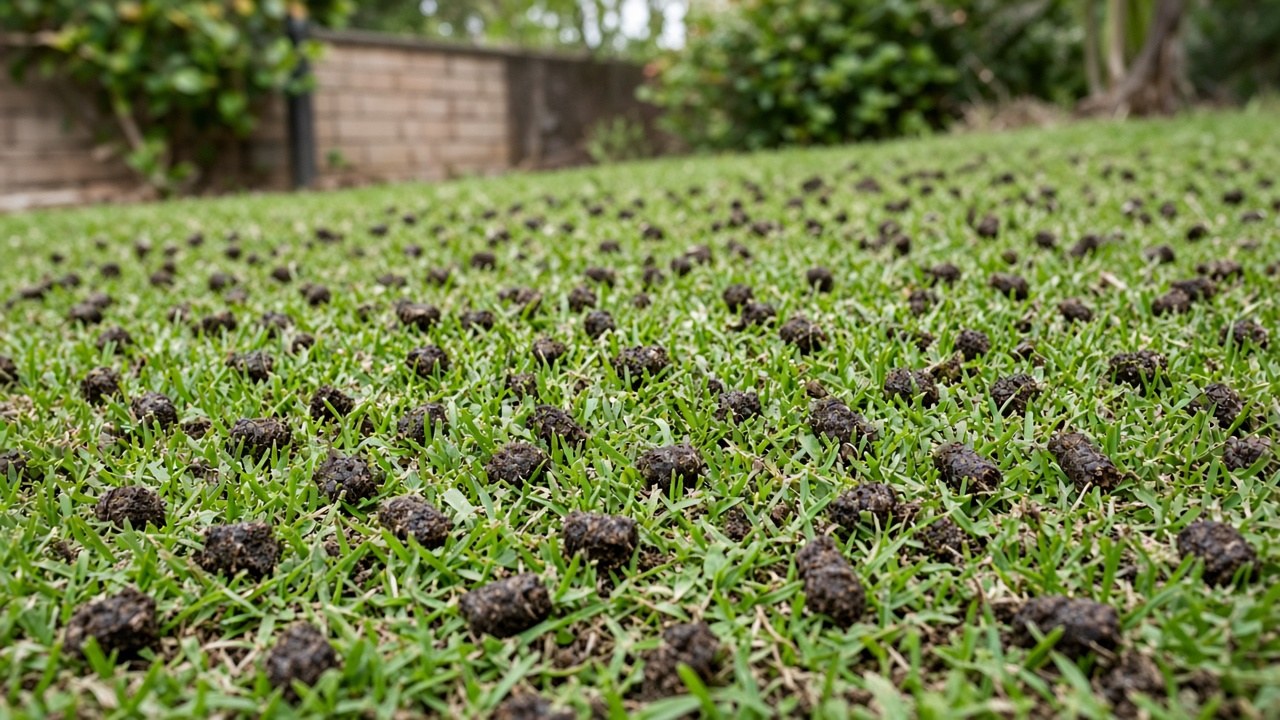
Lawn aeration is one of those maintenance tasks that sounds optional until you see the dramatic difference it makes. If your lawn feels spongy underfoot, water pools on the surface instead of soaking in, or the grass looks thin despite regular feeding and watering, soil compaction is likely the culprit. Aeration fixes compaction by creating channels for air, water, and nutrients to reach grass roots. Here’s how to aerate your Australian lawn properly.
What Is Lawn Aeration?
Aeration is the process of creating small holes or removing small plugs of soil from your lawn. These holes break up compacted soil layers, allowing oxygen, water, and nutrients to penetrate down to the root zone.
Core aeration (also called hollow-tine aeration) is the most effective method. It removes small plugs of soil (typically 10-15mm diameter, 50-75mm deep) and deposits them on the lawn surface. The holes remain open, and the removed soil plugs break down naturally with mowing and rain.
Spike aeration uses solid tines to punch holes without removing soil cores. Less effective than core aeration because it can increase compaction around the holes, but better than nothing for lightly compacted lawns.
Why Australian Lawns Need Aeration
1. Soil compaction
The problem: Foot traffic, heavy rain, clay soils, and lawn equipment gradually compress soil particles together. Compacted soil has tiny pore spaces that restrict root growth and prevent water and air from penetrating.
How aeration helps: Breaks up compacted layers, restoring pore space for air, water, and root growth.
2. Poor drainage
The problem: Water pools on lawn surface instead of soaking in. Grass stays wet too long, encouraging disease. Roots suffocate in waterlogged soil.
How aeration helps: Creates drainage channels. Water moves through cores and into deeper soil layers.
3. Thatch buildup
The problem: Thick thatch layers (>15mm) accumulate above the soil surface, especially in buffalo grass. Thatch holds water and fertiliser away from soil, weakening roots.
How aeration helps: Cores pull up soil, mixing it into the thatch layer. Soil microbes break down thatch faster. Aeration doesn’t remove thatch directly (dethatching does that), but it accelerates natural decomposition.
For comprehensive thatch management, see our lawn dethatching guide.
4. Weak root systems
The problem: Compacted soil prevents roots from growing deep. Shallow roots mean poor drought tolerance, weak grass, and lawns that struggle in heat.
How aeration helps: Improved soil structure lets roots grow deeper. Deeper roots access water and nutrients other grass can’t reach.
5. Fertiliser and water waste
The problem: Fertiliser sits on compacted soil surface instead of reaching roots. Water runs off instead of soaking in. You waste time and money on inputs that don’t work.
How aeration helps: Nutrients and water move through aeration holes directly to root zone. Better uptake, less waste.
Signs Your Lawn Needs Aeration
You should aerate if:
- Soil feels hard and compacted underfoot
- Water pools on lawn surface instead of soaking in within 30 minutes
- Grass is thin or patchy despite regular feeding and watering
- Lawn gets heavy foot traffic (kids playing, pets, regular use)
- Lawn has thick thatch layer (>15mm)
- Grass grows in clay or heavy soil
- Lawn was established from turf (turf installation compresses soil during laying)
- Lawn turns brown quickly in heat despite watering
Test for compaction: Push a screwdriver or garden fork into lawn soil. If it’s difficult to penetrate 10-15cm deep, your soil is compacted and needs aeration.
Frequency: Most Australian lawns benefit from annual aeration. High-traffic lawns or heavy clay soils may need aeration twice per year (spring and autumn).
Best Time to Aerate Lawn in Australia
For warm-season grasses (buffalo, kikuyu, couch — most of Australia):
Spring (September-November)
Best time. Grass is actively growing and recovers quickly from aeration stress. Soil is warming up, root growth is vigorous, and there’s usually adequate moisture.
Ideal timing: Late spring (October-November) for southern states. Early-mid spring (September-October) for subtropical and tropical regions.
Autumn (March-April)
Second-best time. Grass is still growing actively but slowing down. Soil is warm from summer. Autumn aeration gives roots time to establish before winter dormancy.
Ideal timing: Mid-autumn (late March to mid-April). Too late and grass won’t recover before cold weather.
Avoid aerating:
- Summer: High heat stresses grass. Aeration adds extra stress. Only aerate in summer if you can irrigate heavily afterward.
- Winter: Grass is dormant. Slow recovery, risk of weed invasion, soil may be too wet.
- During drought: Stressed grass won’t recover from aeration. Water lawn deeply for 1-2 weeks before aerating.
- On dry, hard soil: Aeration equipment can’t penetrate hard soil. Water lawn 24-48 hours before aerating if soil is very dry.
How to Aerate Your Lawn: Step-by-Step
Step 1: Choose your aeration method
Core aerator (recommended)
What it is: Machine with hollow tines that remove soil plugs. Most effective option.
Types:
- Petrol walk-behind aerator: Heavy-duty. Best for large lawns (>200m²). Hire from equipment rental stores for $80-150 per day.
- Manual core aerator: Foot-powered tool with hollow tines. Good for small lawns (<50m²) or spot treatment. Buy for $40-100.
- Tow-behind aerator: Attaches to ride-on mower. Best for very large properties.
Pros: Removes soil, creates long-lasting holes, doesn’t increase compaction.
Cons: Equipment rental cost, heavy/awkward to use, leaves soil plugs on surface.
Spike aerator
What it is: Solid spikes that punch holes without removing soil. Less effective than core aeration but cheaper and easier.
Types:
- Rolling spike aerator: Lawn roller with spikes. Cheap ($30-80) but superficial.
- Aerator sandals: Spiked platforms you strap to shoes. Walk around lawn. Novel but exhausting and ineffective for serious compaction.
Pros: Cheap, easy, no soil plugs to clean up.
Cons: Can worsen compaction around holes, shallow penetration, temporary benefit.
When to use: Light compaction only, or between core aeration years.
Professional aeration services
Cost: $100-300+ depending on lawn size.
Pros: Commercial equipment, experienced operators, no equipment hire hassle.
Cons: Cost.
When to use: Large lawns, severe compaction, if you’re unable to operate heavy equipment.
Mowing Magic offers professional lawn aeration services across Australia, using commercial-grade core aerators to treat compacted lawns efficiently as part of comprehensive lawn care programs.
Step 2: Prepare your lawn
Mow first: Mow lawn 1-2 days before aerating. Short grass (25-40mm) allows aerator tines to reach soil easily.
Mark obstacles: Flag irrigation heads, shallow pipes, cables, or other buried obstacles. Aerator tines can damage these.
Water lawn 24-48 hours before: Soil should be moist but not waterlogged. Aerator tines penetrate moist soil more easily than dry, hard soil. If soil is wet and muddy, wait for it to dry slightly.
Remove debris: Clear lawn of sticks, rocks, toys, or other objects.
Step 3: Aerate the lawn
Using walk-behind core aerator:
- Start aerator and engage tines (follow machine instructions).
- Walk at steady pace across lawn in straight lines (like mowing pattern).
- Overlap passes slightly to ensure complete coverage.
- Focus extra passes on high-traffic areas (pathways, play areas, dog runs) or areas with visible compaction.
- Multiple passes recommended: One pass creates holes spaced 50-100mm apart. For heavily compacted lawns, make a second pass at 90-degree angle to first pass (creates crosshatch pattern with holes every 25-50mm).
Using manual core aerator:
- Push foot-powered aerator into soil, rock back on handles to extract soil cores.
- Move backward 100-150mm and repeat.
- Work systematically across lawn.
- Focus on compacted areas (skip lightly-used areas if time-limited).
Safety tips:
- Wear closed-toe shoes and gloves
- Petrol aerators are heavy (70-100kg) — get help maneuvering them
- Watch your footing on slopes
- Take breaks (aeration is physically demanding)
Step 4: Leave soil plugs on lawn
What to do with soil cores: Leave them on the lawn surface. They look messy but break down naturally within 1-3 weeks. Mowing, rain, and foot traffic crumble them back into the lawn.
Speed up breakdown:
- Mow over plugs 1-2 times (mulches them into lawn)
- Rake or drag a piece of chain-link fence over lawn to break up plugs
- Irrigate lightly (helps plugs dissolve)
Don’t bag plugs. They contain valuable soil and microbes that benefit your lawn.
Step 5: Post-aeration care
Water deeply: Water lawn deeply (10-15mm) within 24 hours of aerating. This helps grass recover and moves nutrients down into aeration holes.
Top-dress (optional but highly recommended): Spread thin layer (5-10mm) of quality lawn soil or sandy loam over aerated lawn. Brush or rake into holes. Top-dressing fills aeration holes with better-quality soil, improving long-term structure. See top-dressing guide (coming soon) for details.
Overseed thin areas (optional): Aeration creates perfect conditions for overseeding. Grass seed falls into holes and germinates with excellent soil contact. Good time to thicken thin lawns.
Fertilise (optional): Some lawn owners fertilise immediately after aerating. Fertiliser moves through holes directly to roots. However, this isn’t required — you can follow your normal fertiliser schedule.
For comprehensive fertiliser guidance, see our lawn fertiliser guide.
Avoid heavy traffic: Keep foot traffic off lawn for 1-2 weeks while grass recovers.
DIY Aeration vs Professional Services
DIY aeration
Pros:
- Saves money long-term if you aerate regularly
- Do it on your schedule
- Satisfying to see immediate improvement
Cons:
- Equipment hire cost and logistics
- Physically demanding
- Learning curve for first-time users
- Need vehicle to transport hired aerator
Best for: Homeowners comfortable with equipment, medium-sized lawns (50-300m²), those wanting to learn lawn care.
Cost: Equipment hire $80-150 per day, or buy manual aerator $40-100.
Professional aeration
Pros:
- Commercial equipment is more effective
- Experienced operators ensure thorough coverage
- Often combined with other services (fertilising, top-dressing)
- No physical effort required
Cons:
- Ongoing cost ($100-300+ per service)
Best for: Large lawns, severe compaction, time-poor homeowners, those unable to operate heavy equipment.
Aerating Different Australian Grass Types
Buffalo grass
Frequency: Annually, preferably late spring or autumn.
Special considerations:
- Buffalo builds thatch aggressively. Aeration helps break down thatch by introducing soil microbes.
- If thatch layer exceeds 20-25mm, dethatch first, then aerate.
- Buffalo recovers well from aeration stress.
- Good time to address thin areas with overseeding (buffalo seed is expensive but available for some varieties).
For complete buffalo care, see our Sir Walter buffalo grass guide.
Kikuyu grass
Frequency: Annually for most kikuyu lawns. Twice per year (spring and autumn) for high-traffic kikuyu.
Special considerations:
- Kikuyu tolerates compaction better than buffalo or couch, but still benefits from aeration.
- Kikuyu recovers rapidly from aeration (aggressive growth habit).
- Good candidate for twice-yearly aeration if lawn gets heavy use.
- Aeration + fertiliser creates explosive kikuyu growth — be ready to mow frequently.
Couch grass
Frequency: Annually in spring.
Special considerations:
- Couch has shallow root system and benefits greatly from aeration (encourages deeper roots).
- Core aeration is essential for premium couch lawns (golf course quality).
- Couch can develop significant thatch. Aeration + light top-dressing with sand improves surface smoothness.
- Couch recovers well but more slowly than kikuyu.
For detailed grass comparison, see our buffalo vs kikuyu vs couch guide.
Aeration + Other Lawn Renovation Practices
Aeration works best when combined with other lawn improvement practices:
Aeration + top-dressing: Apply 5-10mm of quality lawn soil or sand after aerating. Brush into holes. Improves soil structure permanently. The #1 combination for lawn renovation.
Aeration + dethatching: If thatch layer exceeds 20mm, dethatch first (removes excess thatch), then aerate (improves soil). Don’t do both on the same day — dethatch in spring, aerate in autumn, or space them 4-6 weeks apart.
Aeration + overseeding: Aeration holes provide perfect germination sites for grass seed. Overseed immediately after aerating to thicken thin lawns.
Aeration + fertilising: Some lawn care programs apply fertiliser immediately after aerating. Fertiliser falls into holes and reaches roots directly.
Aeration + soil amendment: If soil test shows pH problems or nutrient deficiencies, apply lime (to raise pH), sulfur (to lower pH), or gypsum (to improve clay soil) after aerating. Amendments move through holes into root zone.
Common Aeration Mistakes
1. Aerating at the wrong time
Problem: Aerating during summer heat or winter dormancy stresses grass. Recovery is slow or non-existent.
Solution: Aerate in spring or autumn when grass is actively growing.
2. Aerating dry, hard soil
Problem: Aerator tines can’t penetrate. Shallow cores, poor results.
Solution: Water lawn 24-48 hours before aerating. Soil should be moist but not muddy.
3. Making only one pass
Problem: Single pass creates widely-spaced holes (50-100mm apart). Benefit is limited.
Solution: Make two passes at 90-degree angles (crosshatch pattern) for heavily compacted lawns.
4. Removing soil plugs immediately
Problem: Losing valuable soil and microbes.
Solution: Leave plugs on lawn. They break down naturally in 1-3 weeks.
5. Not following up with watering
Problem: Grass is stressed after aeration. Without water, recovery is slow.
Solution: Water deeply within 24 hours of aerating.
6. Aerating too frequently
Problem: Excessive aeration disrupts grass growth and wastes money.
Solution: Once per year is sufficient for most lawns. Twice per year only for severe compaction or high-traffic areas.
7. Using spike aerator on heavily compacted soil
Problem: Spike aerators can worsen compaction.
Solution: Use core aerators for compacted soil. Reserve spike aerators for light compaction or maintenance between core aeration years.
Aeration for Specific Lawn Problems
Fixing poor drainage
If water pools on lawn:
- Core aerate entire lawn (two passes, crosshatch pattern)
- Top-dress with coarse sand mixed 50/50 with quality lawn soil
- Brush top-dressing into holes
- Repeat annually until drainage improves
For severe drainage problems, consider installing subsurface drainage or regrading.
Fixing thin, weak grass
If grass is thin despite feeding and watering:
- Core aerate to improve root growth
- Fertilise immediately after aerating
- Overseed thin areas (seed falls into holes)
- Top-dress with thin layer of quality soil
- Water daily until seed germinates (1-2 weeks)
Fixing high-traffic damage
If pathways, play areas, or dog runs are bare and compacted:
- Core aerate problem areas (multiple passes)
- Top-dress with quality soil
- Overseed heavily (double normal rate)
- Keep traffic off area for 4-6 weeks while grass establishes
Final Thoughts
Lawn aeration isn’t glamorous, but it’s one of the most effective lawn care practices available. If your lawn is compacted — and most lawns are to some degree — aeration improves everything else you do. Fertiliser works better. Water penetrates deeper. Roots grow stronger. Grass looks healthier.
For Australian warm-season grasses, aerate once per year in spring (preferred) or autumn. Use a core aerator rather than spike aerator for best results. You can hire equipment and do it yourself for $80-150 per day, or engage professional services for thorough treatment with commercial equipment.
Combine aeration with top-dressing and fertiliser for the ultimate lawn renovation program. Within weeks, you’ll notice improved colour, thickness, and resilience. Your lawn will handle foot traffic better, resist drought stress, and require less water and fertiliser to stay healthy.
If you’re unsure whether your lawn needs aeration or want professional treatment, Mowing Magic offers expert lawn aeration services and can assess your lawn’s condition and recommend the right maintenance program for your grass type and soil conditions.