Citrus Gall Wasp: Identify, Prune & Control
Complete guide to identifying and controlling citrus gall wasp in Australian gardens. Learn to recognise galls, prune correctly, use traps, and protect lemon, mandarin, and orange trees.
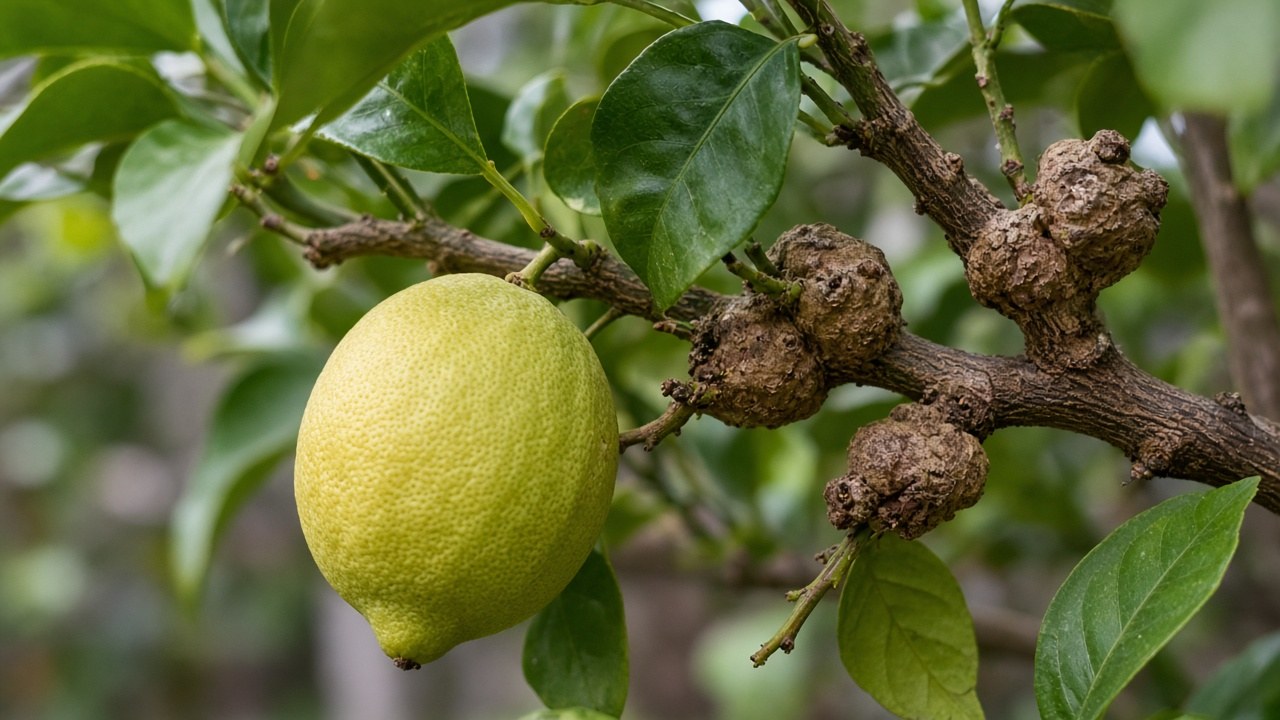
Citrus gall wasp is one of the most frustrating pests facing Australian backyard citrus growers. Native to coastal Queensland, this tiny wasp has spread throughout eastern Australia, attacking lemon, lime, mandarin, orange, and grapefruit trees. The adult wasps are harmless to humans and nearly invisible, but their larvae create distinctive woody galls on citrus branches that weaken trees, reduce fruit production, and eventually kill branches if left untreated. Here’s how to identify, control, and prevent citrus gall wasp damage in your garden.
What Is Citrus Gall Wasp?
Scientific name: Bruchophagus fellis
Origin: Native to coastal Queensland and northern NSW. Now widespread through NSW, Victoria, South Australia, and parts of Queensland.
Host plants: All citrus species, but particularly severe on:
- Lemons (most susceptible)
- Limes
- Mandarins
- Grapefruit
- Sweet oranges (less susceptible)
- Cumquats
Life cycle: Adult wasps emerge from galls in spring (September-November), mate, and lay eggs in new citrus growth. Eggs hatch into larvae that feed inside the twig, causing gall formation. Larvae develop inside galls over 9-12 months, pupate, and emerge as adults the following spring.
Damage: Galls disrupt nutrient and water flow in branches, weakening the tree. Heavy infestations cause dieback, reduced flowering, and smaller fruit crops. Branches with galls eventually die.
Identifying Citrus Gall Wasp Damage
What galls look like
Galls are woody swellings on citrus twigs and small branches. They’re the most obvious symptom of gall wasp infestation.
Appearance:
- Bulbous, spindle-shaped swellings on young twigs (5-50mm diameter)
- Larger than the normal branch diameter (often 2-3 times thicker)
- Hard and woody to touch
- Green when young (matches branch colour), turning brown as they age
- Found on pencil-thin to finger-thick branches (wasps prefer new growth)
- Multiple galls often appear on the same branch
Location: Typically found on outer branches where new growth occurs. Rarely on thick, old wood or on main trunk.
Timing:
- Galls develop slowly over 6-9 months after wasps lay eggs (spring to autumn)
- Most visible in late autumn and winter when leaves fall and galls stand out
- Fresh galls are smooth and green (current season)
- Old galls are rough, brown, and cracked (previous seasons)
Similar to: Nothing else causes these distinctive swellings on citrus. If you see woody galls on citrus twigs, it’s citrus gall wasp.
Adult wasps (rarely seen)
Adult wasps are extremely small (2-3mm long), dark brown or black, and emerge from galls in spring. You’re unlikely to see them — they’re active for only 3-4 weeks and fly mainly at dawn and dusk.
Why you don’t need to see wasps: The galls are diagnostic. If you see galls, you have gall wasp, whether you see adult wasps or not.
Early symptoms
Before galls are obvious, infested branches may show:
- Slight swelling at leaf nodes
- Cracking bark
- Yellowing leaves on affected branches
- Dieback of twig tips
Most gardeners notice the problem when galls are already well-developed.
Citrus Gall Wasp Life Cycle (and Why Timing Matters)
Understanding the wasp’s life cycle is critical for effective control.
Spring (September-November): Adult emergence
Adult wasps chew exit holes and emerge from galls. They mate and live for only 1-2 weeks.
Female wasps search for new citrus growth (soft, green twigs) and insert eggs into the twig using their ovipositor (egg-laying organ).
One female lays 20-60 eggs over her short life.
Multiple eggs are laid in the same twig (often 10-30 eggs in a single twig).
Summer (December-February): Larvae develop
Eggs hatch. Larvae feed inside the twig, secreting chemicals that cause the tree to form a gall around them. The gall provides food and protection.
Galls begin to swell noticeably in mid-to-late summer. By autumn, galls are obvious.
Autumn-Winter (March-August): Larvae mature
Larvae continue feeding inside galls. Galls harden and turn woody. Infested branches may show dieback or reduced vigour.
By late winter, larvae pupate inside galls, preparing to emerge as adults in spring.
Key control windows
1. Prune galls (June-August): Remove galls before adult wasps emerge in spring.
2. Trap wasps (September-November): Trap emerging adults before they lay eggs.
3. Monitor new growth (October-December): Watch for egg-laying and new gall formation.
How to Control Citrus Gall Wasp
There’s no chemical spray that effectively kills gall wasp larvae inside galls. Control relies on physical removal (pruning) and trapping adult wasps.
1. Prune out galls (most important control method)
When: Late winter (June-August), before adult wasps emerge in spring.
How:
-
Inspect the entire tree for galls. Look carefully — galls hide among foliage. It’s easier to spot galls after leaf drop in deciduous citrus (some lime varieties) or during winter when growth slows.
-
Cut branches with galls 5-10cm below the gall (to ensure you remove all larvae). Use sharp secateurs or loppers.
-
Dispose of pruned galls immediately:
- Seal in plastic bags and place in household rubbish bin, OR
- Burn galls (if permitted in your area), OR
- Leave prunings in black plastic bags in full sun for 2-4 weeks (heat kills larvae), then compost or bin.
Don’t compost fresh galls. Wasps will emerge from galls in your compost and reinfest trees.
-
Repeat inspection monthly through winter. Galls are easy to miss, and it’s better to find them late than not at all.
Pruning tips:
- Heavy pruning weakens young trees. If tree is heavily infested (20+ galls), stagger pruning over 2 years to avoid over-pruning.
- Focus on removing galls first, tree shape second. You can reshape the tree later. Wasp control is the priority.
- Sterilise secateurs between cuts with methylated spirits or disinfectant (prevents disease spread).
Result: Removes larvae before they emerge as adults. Breaks the breeding cycle. This is the most effective control method available.
2. Use gall wasp traps
Traps catch adult wasps as they emerge from galls, preventing them from laying eggs in new growth.
Trap types:
Yellow sticky traps: Bright yellow plastic sheets coated with sticky glue. Wasps are attracted to yellow and get stuck. Available from garden centres or online ($5-15 per trap).
Commercial gall wasp traps: Purpose-designed traps with attractants. More effective than generic sticky traps. Brands include NaTURA Gall Wasp Trap and similar products (check local nurseries or online).
How to use traps:
-
Hang traps in spring (early September) before wasps emerge.
-
Place traps in and around citrus trees:
- Hang 1-2 traps per small tree
- 3-4 traps per large tree
- Position traps among outer branches where wasps emerge and lay eggs
- Hang at adult eye level to head height
-
Check traps weekly. Replace when covered with insects or after 4-6 weeks (glue loses stickiness).
-
Remove traps by late November (after wasp emergence period ends).
Effectiveness: Traps reduce wasp numbers but don’t eliminate infestations on their own. Use traps in combination with pruning for best results.
Note: Traps catch beneficial insects too (bees, ladybirds, lacewings). Use traps only during peak wasp emergence (September-November) to minimise impact on beneficials.
3. Encourage natural predators
Several predators attack citrus gall wasp:
Parasitoid wasps: Megastigmus species (tiny wasps) lay eggs inside gall wasp larvae. The parasitoid larva eats the gall wasp larva from inside. These parasitoids are native and naturally present in many gardens.
How to encourage parasitoids:
- Avoid broad-spectrum insecticides (they kill parasitoids along with pests)
- Plant flowering plants nearby (parasitoid adults feed on nectar): dill, fennel, alyssum, coriander
- Leave some old galls on tree (controversial but sometimes recommended). Parasitoids emerge from old galls and attack new galls. However, if old galls also produce gall wasps, this can backfire. Best practice: Remove all galls you find.
Effectiveness: Parasitoids help but rarely provide complete control, especially in areas with severe infestations.
4. Protect new growth (spring-summer)
If practical, cover young citrus trees with insect-proof mesh or netting during spring (September-November) to exclude adult wasps from laying eggs on new growth.
Pros: Prevents infestation on small trees.
Cons: Labour-intensive, impractical for large trees.
Best for: Young citrus trees (1-3 years old), potted citrus, high-value trees.
5. Improve tree health
Healthy, vigorous trees tolerate gall wasp damage better than stressed trees.
How to support tree health:
- Water regularly (deep watering weekly in summer)
- Fertilise with citrus-specific fertiliser 3-4 times per year
- Mulch around tree base (retains moisture, moderates soil temperature)
- Prune for good airflow (reduces disease pressure)
- Monitor for other pests (scale insects, aphids, leaf miners) and control as needed
For comprehensive garden pest management, see our common garden pests guide.
Result: Vigorous trees produce more new growth, compensating for branches lost to gall wasp. Strong trees fruit better despite gall presence.
Why Insecticides Don’t Work
Problem: Gall wasp larvae develop inside woody galls, protected from contact insecticides. Systemic insecticides (absorbed by the tree) have limited effectiveness because galls restrict nutrient flow through infested branches.
Adult wasps: Active for only 1-2 weeks and difficult to target with sprays. Spraying adult wasps is impractical and often ineffective.
Parasitoid impact: Broad-spectrum insecticides kill beneficial parasitoid wasps that naturally control gall wasp.
Bottom line: Chemical control is not recommended for citrus gall wasp. Pruning and trapping are far more effective.
Regional Differences in Australia
NSW and Victoria (severe problem)
Citrus gall wasp is widespread and severe. Lemons and mandarins in Melbourne, Sydney, Newcastle, and Wollongong suburbs are heavily affected. Nearly every backyard citrus has some level of infestation.
Control emphasis: Strict winter pruning + spring trapping. Community-wide control programs help (if your neighbours control gall wasp, fewer wasps reinfest your tree).
Queensland (native range)
Gall wasp is native to coastal Queensland. Populations are high, but natural predators (parasitoid wasps) provide some control.
Control emphasis: Regular pruning. Parasitoid populations help but don’t eliminate infestations.
South Australia (spreading)
Gall wasp is established in Adelaide and surrounding areas but less severe than NSW/Vic. Early detection and control can prevent severe infestations.
Control emphasis: Vigilant monitoring + immediate gall removal.
Western Australia, Tasmania, NT (limited or absent)
Citrus gall wasp is not yet established or is present in limited areas. Strict quarantine rules apply to prevent spread. Don’t bring citrus plants or prunings from affected states into these regions.
Citrus Varieties and Susceptibility
Most susceptible
- Eureka lemon (extremely susceptible)
- Lisbon lemon (susceptible)
- Tahitian lime (susceptible)
- Grapefruit (susceptible)
- Imperial mandarin (susceptible)
Moderately susceptible
- Navel orange
- Valencia orange
- Other mandarin varieties
Less susceptible
- Cumquats (rarely affected)
- Finger limes (rarely affected)
Note: Even less susceptible varieties can be infested if wasp pressure is high and nearby susceptible trees are infested.
Planting tip: If gall wasp is severe in your area, consider planting less susceptible varieties or avoid citrus altogether. Unfortunately, the most popular backyard citrus (Meyer lemon, Eureka lemon) are highly susceptible.
Preventing Citrus Gall Wasp
Buy clean nursery stock
Purchase citrus trees from reputable nurseries. Inspect trees carefully before buying. Don’t buy trees with galls.
Quarantine new trees
Inspect new trees closely for galls before planting. Quarantine new trees away from existing citrus for 6 months and monitor for gall development.
Monitor regularly
Inspect trees monthly for new galls, especially in autumn and winter when galls are most visible.
Remove galls early
The sooner you remove galls, the fewer wasps emerge and spread to other trees (yours or your neighbours’).
Coordinate with neighbours
Citrus gall wasps fly 50-100m from infested trees. If your neighbour’s tree is infested and untreated, wasps will reinfest your tree. Polite communication and neighbourhood control efforts dramatically improve outcomes.
Consider sharing gall wasp information with neighbours or organising a community pruning day.
Common Questions
Will citrus gall wasp kill my tree?
Not usually. Gall wasp weakens trees, reduces fruit production, and kills individual branches, but rarely kills mature trees outright. However, severe, untreated infestations over many years can kill young trees or severely weaken old trees.
Can I eat fruit from infested trees?
Yes. Gall wasps don’t affect fruit quality or safety. You can eat fruit from infested trees. However, heavy infestations reduce overall fruit production.
Should I remove old galls?
Yes, prune them out during winter gall removal. Old galls may still contain live larvae or pupae that will emerge in spring. Even if they’re empty, removing them improves tree health and makes it easier to spot new galls next year.
Can gall wasp spread to other plants?
No. Citrus gall wasp only infests citrus species (lemon, lime, orange, mandarin, grapefruit, cumquat). It doesn’t attack other fruit trees or ornamental plants.
Is it worth growing citrus if gall wasp is bad in my area?
That depends on your tolerance for ongoing management. If you’re willing to prune galls every winter and use traps in spring, you can grow productive citrus trees even in heavily infested areas. If you want a low-maintenance fruit tree, consider alternatives (feijoa, loquat, fig, passionfruit).
Final Thoughts
Citrus gall wasp is frustrating but manageable. The key to control is consistent winter pruning to remove galls before adults emerge in spring. Combine pruning with yellow sticky traps during September-November to catch any wasps you missed, and you can keep gall wasp populations low enough that your citrus trees remain productive.
Inspect your citrus trees monthly through winter. When you find galls — and you will find galls if you look closely — prune them out immediately and dispose of prunings in sealed plastic bags in the rubbish bin. Don’t compost fresh galls or leave prunings lying around.
Citrus gall wasp won’t disappear from your garden, but with regular control efforts, your lemon, lime, and mandarin trees can continue producing fruit for many years. The alternative — doing nothing — leads to progressively weaker trees, reduced fruit crops, and eventual branch dieback that forces you to heavily prune or remove the tree anyway.
If you’re dealing with persistent gall wasp problems or other citrus pests, maintaining overall tree health through proper watering, feeding, and integrated pest management makes a significant difference. Healthy trees tolerate pest pressure better and recover faster from control measures.