Australian Native Plants for Beginners (Melbourne Focus)
Beginner's guide to growing Australian native plants in Melbourne gardens. Learn about waterwise natives, soil preparation, care requirements, and the best easy-care species for temperate climate gardens.
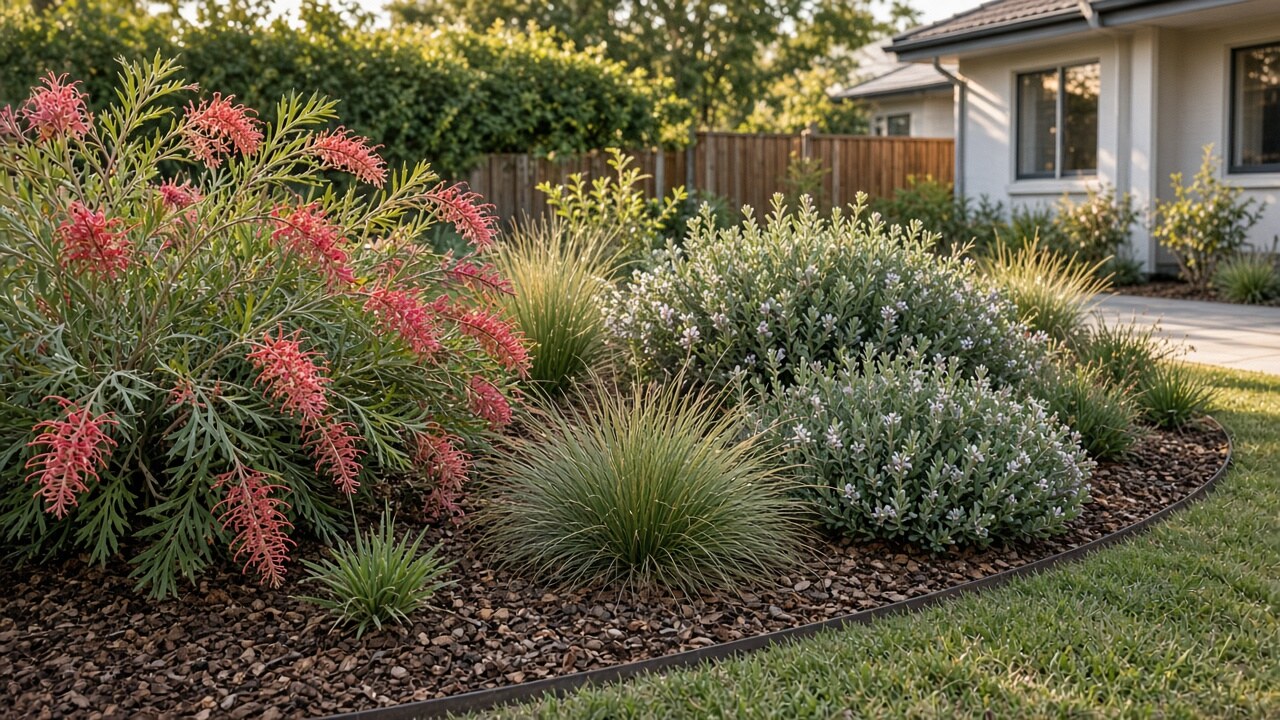
Australian native plants offer beauty, resilience, and low water requirements that suit our increasingly dry climate — yet many gardeners avoid them, believing natives are difficult or require specialist knowledge. The truth is that many Australian natives are easier to grow than exotic species once you understand their basic needs. Whether you’re redesigning a Melbourne garden, creating a waterwise landscape, or simply want to support local birds and wildlife, this beginner’s guide will help you choose and grow native plants successfully.
Why Grow Australian Native Plants?
1. Water efficiency
Most Australian natives evolved in nutrient-poor soils with irregular rainfall. Once established, many species tolerate extended dry periods without supplementary watering — a significant advantage in water-restricted areas or during drought.
Water savings: Established native gardens can reduce irrigation by 50-80% compared to exotic species like roses, camellias, or azaleas.
2. Attract native wildlife
Native plants provide food (nectar, pollen, seeds, insects) and habitat for native birds, butterflies, bees, and other wildlife. A native garden becomes a living ecosystem.
What you’ll see: Honeyeaters, lorikeets, wattlebirds, native bees, blue-banded bees, butterflies (including swallowtails and blues), skinks, and possums.
3. Low maintenance once established
Native plants adapted to Australian conditions require less intervention than many exotic species. Once established (typically 1-2 years), most natives need minimal fertiliser, infrequent watering, and light pruning.
Time savings: Less weeding (dense natives suppress weeds), less watering, less feeding, less pest management.
4. Year-round interest
Australian natives offer diverse foliage textures, colours, and forms, plus flowers in every season. You can design a native garden with something flowering or fruiting year-round.
5. Unique beauty
The sculptural forms, diverse textures, and often striking flowers of Australian natives create gardens unlike anywhere else in the world. Grey-green foliage, fluffy bottlebrush blooms, intricate banksias, and architectural grass trees are distinctly Australian.
Common Myths About Native Plants (Debunked)
Myth 1: “Natives are hard to grow”
Reality: Some natives (alpine species, rainforest plants from different climates) are difficult, but hundreds of species are beginner-friendly. Grevilleas, westringias, correas, and native grasses are as easy as standard garden shrubs.
Myth 2: “Natives need special native soil”
Reality: Most natives prefer well-drained soil but don’t need “special” soil. Improving drainage and avoiding over-fertilising is more important than soil type.
Myth 3: “You can’t fertilise natives”
Reality: Natives can be fertilised, but they need low-phosphorus fertiliser. High-phosphorus fertiliser (standard garden fertiliser) can harm or kill phosphorus-sensitive species.
Myth 4: “Natives don’t need water”
Reality: Natives need regular watering during establishment (first 1-2 years). Once established, most tolerate dry periods, but occasional deep watering in summer improves flowering and health.
Myth 5: “Native gardens look messy”
Reality: Native gardens can be formal, structured, and manicured or relaxed and naturalistic — it’s your design choice. Pruning, mulching, and thoughtful plant selection create tidy native gardens.
Understanding Melbourne’s Climate for Native Plants
Melbourne has a temperate climate with four distinct seasons:
- Cool, wet winters (June-August)
- Warm to hot, dry summers (December-February)
- Mild spring and autumn
- Frost-prone inland areas, frost-free coastal areas
What this means for native plants:
- Choose natives from temperate regions (Victoria, southern NSW, SA, Tasmania) — they’re adapted to cool winters and moderate rainfall
- Avoid tropical natives (northern Queensland, Northern Territory species) — they struggle with frost and cool winters
- Avoid alpine natives unless you’re in the Dandenongs or have excellent drainage (they dislike hot, dry summers)
Melbourne’s biggest challenge: Dry summers with occasional extreme heat (40°C+). Choose drought-tolerant natives and provide occasional summer water.
Best Australian Native Plants for Melbourne Beginners
These species are proven performers in Melbourne’s temperate climate, tolerate a range of soils, and require minimal specialist care.
Small to medium shrubs (1-2 metres)
1. Westringia fruticosa (Coastal Rosemary)
Why it’s great: Dense, evergreen foliage; white or mauve flowers spring-summer; handles coastal winds, frost, drought, and poor soil. Often used as low hedge.
Height × width: 1-1.5m × 1-1.5m
Sun: Full sun to part shade
Water needs: Low once established
Pruning: Light trim after flowering to maintain shape
Best use: Informal hedges, borders, screening, coastal gardens
2. Correa species (Native Fuchsia)
Why it’s great: Tubular flowers autumn-spring (when little else flowers); attracts honeyeaters; tolerates shade, frost, and coastal conditions.
Varieties:
- Correa reflexa (Common Correa): Red, pink, or green tubular flowers
- Correa alba (White Correa): White bell flowers
- ‘Dusky Bells’: Deep pink-red bells, compact
Height × width: 0.5-1.5m × 1-1.5m
Sun: Full sun to part shade (one of few natives that tolerate shade)
Water needs: Low to moderate
Best use: Under trees, shaded areas, winter flower interest, bird gardens
3. Grevillea species (Grevillea, Spider Flower)
Why it’s great: Prolific flowers attracting honeyeaters and native bees; diverse sizes, colours, and forms; fast-growing; evergreen.
Best varieties for beginners:
- Grevillea ‘Robyn Gordon’: Red and yellow flowers year-round, 1.5m × 1.5m, most reliable grevillea
- Grevillea rosmarinifolia (Rosemary Grevillea): Red or pink flowers, fine foliage, 1-2m
- Grevillea lanigera (Woolly Grevillea): Ground cover or small shrub, pink/red/cream flowers, 0.5-1m
Height × width: 0.5-3m depending on variety (choose compact cultivars)
Sun: Full sun
Water needs: Low once established
Pruning: Prune after flowering to maintain compact shape
Caution: Avoid high-phosphorus fertiliser (use native plant fertiliser)
Best use: Feature plants, screening, bird gardens, slopes
4. Callistemon species (Bottlebrush)
Why it’s great: Iconic red, pink, or cream “bottlebrush” flowers; extremely tough; tolerates wet or dry soil, frost, coastal conditions.
Best varieties:
- Callistemon ‘Little John’: Dwarf red bottlebrush, 1m × 1m
- Callistemon viminalis (Weeping Bottlebrush): Graceful weeping form, red flowers, 3-5m (prune to 2-3m)
- Callistemon ‘Captain Cook’: Compact, red flowers, 1.5m × 1.5m
Height × width: 1-5m depending on variety
Sun: Full sun to light shade
Water needs: Low to moderate (tolerates wet and dry)
Pruning: Prune hard after flowering (reduces size, encourages dense growth)
Best use: Screening, feature plants, wet areas, bird gardens
Medium to large shrubs (2-4 metres)
5. Leptospermum species (Tea Tree)
Why it’s great: Masses of white, pink, or red flowers in spring; fine foliage; tolerates poor soil, coastal conditions, and frost.
Varieties:
- Leptospermum scoparium (Manuka): Pink or white flowers, 2-3m
- Leptospermum ‘Burgundy Queen’: Deep burgundy-red flowers, 2-3m
Height × width: 2-4m × 2-3m
Sun: Full sun
Water needs: Low once established
Best use: Screening, windbreaks, informal hedges
6. Acacia species (Wattle)
Why it’s great: Bright yellow flowers in winter-spring; fast-growing; nitrogen-fixing (improves soil); mostly short-lived (5-10 years) but excellent for quick screening.
Best varieties for beginners:
- Acacia fimbriata (Fringed Wattle): Weeping habit, yellow balls, 3m × 3m
- Acacia baileyana (Cootamundra Wattle): Silver-blue foliage, golden flowers, 4-6m
- Acacia cognata (River Wattle): Weeping, lime-green foliage, compact, 3-4m
Height × width: 2-6m depending on variety
Sun: Full sun
Water needs: Low once established
Pruning: Light prune after flowering to maintain shape
Note: Wattles are fast but relatively short-lived (5-10 years). Replace when they become straggly.
Best use: Fast screening, feature plants, early spring flowers
Ground covers and small plants
7. Myoporum parvifolium (Creeping Boobialla)
Why it’s great: Dense, fast-spreading ground cover; white star flowers in spring; tolerates foot traffic, drought, and poor soil.
Height × width: 0.1-0.3m × 1-2m
Sun: Full sun to part shade
Water needs: Low
Best use: Ground cover, banks, erosion control, lawn replacement in dry areas
8. Chrysocephalum apiculatum (Common Everlasting, Yellow Buttons)
Why it’s great: Bright yellow button flowers year-round; silver-grey foliage; compact; attracts butterflies.
Height × width: 0.3-0.5m × 0.5m
Sun: Full sun
Water needs: Low
Best use: Borders, rockeries, cottage gardens, butterfly gardens
Native grasses (clumping)
9. Lomandra longifolia (Spiny-headed Mat-rush)
Why it’s great: Tough, evergreen grass-like plant; tolerates full sun to deep shade, wet to dry soil, frost, coastal conditions. Virtually indestructible.
Height × width: 0.5-1m × 0.5-1m
Sun: Full sun to full shade
Water needs: Low to moderate
Maintenance: Cut back to 10cm every 2-3 years to rejuvenate (late winter)
Best use: Mass planting, borders, understory, dry shade, wet areas — grows anywhere
10. Poa labillardieri (Common Tussock Grass)
Why it’s great: Fine, arching blue-grey foliage; graceful form; handles shade, frost, and dry conditions.
Height × width: 0.5-1m × 0.5-1m
Sun: Full sun to part shade
Water needs: Low once established
Best use: Mass planting, borders, naturalistic gardens, texture contrast
Small trees (3-6 metres)
11. Acacia cognata ‘Lime Magik’ (River Wattle)
Why it’s great: Weeping lime-green foliage; compact; fast-growing; perfect small courtyard tree.
Height × width: 3-4m × 2-3m
Sun: Full sun to part shade
Water needs: Moderate
Best use: Small gardens, courtyards, screening, feature tree
12. Eucalyptus ‘Summer Beauty’ or E. leucoxylon (Yellow Gum cultivar)
Why it’s great: Compact eucalypt suitable for suburban gardens; pink, red, or white flowers; attractive bark; bird magnet.
Height × width: 4-6m × 3-4m
Sun: Full sun
Water needs: Low once established
Best use: Feature tree, small gardens, bird habitat
Caution: Most eucalypts grow too large for suburban gardens. Choose dwarf or compact cultivars only.
Soil Preparation for Native Plants
Key principle: Drainage is critical
Most Australian natives prefer well-drained soil. Poorly drained or waterlogged soil is the #1 cause of native plant failure.
Testing drainage
Dig a hole 30cm deep and fill with water. If water doesn’t drain within 4-6 hours, drainage is poor.
Improving drainage
Clay soil: Add gypsum (1kg per m²) and organic compost. Build raised beds (30cm high) for sensitive species.
Sandy soil: Usually drains well. Add compost to improve moisture retention.
Compacted soil: Break up with garden fork or mattock. Add gypsum and compost.
Soil pH
Most natives tolerate pH 5.5-7.0 (slightly acidic to neutral). Melbourne’s soils are often neutral to slightly alkaline, which suits most temperate natives.
Don’t over-improve soil
Unlike exotic plants, natives don’t need rich, heavily amended soil. Avoid adding too much compost or manure (excess nutrients, especially phosphorus, can harm natives).
Planting Native Plants Correctly
When to plant
Best time: Autumn (March-May) or spring (September-November). Autumn is ideal in Melbourne — plants establish roots over winter and face their first summer with strong root systems.
Avoid: Mid-summer (December-January) — heat stresses new plants.
Planting steps
-
Dig hole twice the width of the pot, same depth: Don’t plant too deep — the top of the root ball should be level with or slightly above ground level.
-
Remove plant from pot: Gently tease roots if root-bound (lightly score root ball with knife if roots are circling).
-
Position plant: Place in hole, ensuring top of root ball is level with soil surface.
-
Backfill with existing soil: Don’t add compost or fertiliser to planting hole (natives prefer unamended soil).
-
Water in thoroughly: Soak with 10-15 litres of water to settle soil and remove air pockets.
-
Mulch: Apply 5-7cm of mulch (wood chips, leaf mulch) around plant, keeping mulch 5-10cm away from stem (prevents collar rot).
-
Stake if needed: Tall or top-heavy plants may need staking for first year.
Watering Native Plants
Establishment phase (first 1-2 years)
Natives need regular watering until roots establish.
Frequency:
- First 6 months: 2-3 times per week in warm weather, once per week in cool weather
- Months 6-12: Once or twice per week in warm weather, fortnightly in cool weather
- Year 2: Occasional deep watering in hot, dry spells
How much: Deep watering (10-15 litres per plant) is better than frequent shallow watering.
Established plants (2+ years)
Most natives tolerate dry periods once established. However, occasional summer watering (once every 2-4 weeks in hot, dry weather) improves appearance and flowering.
General rule: Water deeply and infrequently rather than little and often.
Fertilising Native Plants
Key rule: Low phosphorus only
Many Australian natives (especially Proteaceae family — grevilleas, banksias, hakeas) are sensitive to phosphorus. High-phosphorus fertiliser can cause toxicity, yellowing, and death.
Safe fertilisers:
- Native plant fertilisers (clearly labelled low-phosphorus)
- Organic fertilisers: blood and bone (use sparingly), composted manure, worm castings
- Slow-release native plant fertiliser
When to fertilise: Spring (September-October).
How much: Follow product label rates. Natives need far less fertiliser than exotic species.
Signs of phosphorus toxicity: Yellow leaves with brown tips, stunted growth, leaf drop.
Natives that tolerate higher phosphorus
Some natives (wattles, eucalypts, melaleucas, callistemons) tolerate moderate phosphorus. However, it’s safer to use low-phosphorus fertiliser for all natives.
Pruning Native Plants
Regular light pruning keeps natives compact, promotes flowering, and prevents legginess.
When to prune
After flowering: Prune most natives immediately after flowering finishes. This maintains shape without removing next season’s flower buds.
Exceptions: Wattles and some eucalypts can be pruned anytime (they flower on new growth).
How to prune
Light prune (most natives): Remove spent flowers (deadhead) and prune back 10-30% of growth to maintain shape. Cut just above a leaf node.
Hard prune (rejuvenation): Some natives (callistemons, westringias, grevilleas) tolerate hard pruning to 30-50cm if they’ve become leggy. Do this in spring. Not all natives resprout from old wood — research your species before hard pruning.
Never: Prune into bare wood unless species is known to resprout (e.g., callistemon, westringia, leptospermum).
Species that tolerate hard pruning
- Callistemon (bottlebrush)
- Westringia
- Leptospermum (tea tree)
- Melaleuca
Species that don’t resprout from old wood
- Most grevilleas (only prune into green growth)
- Banksias (prune lightly only)
- Many eucalypts
Common Problems and Solutions
Yellow leaves
Causes: Overwatering, poor drainage, phosphorus toxicity, iron deficiency.
Solution:
- Check drainage (most common cause)
- Reduce watering if soil is wet
- Apply iron chelate or native plant tonic if drainage is good
- Switch to low-phosphorus fertiliser
Leaf drop
Causes: Transplant shock, underwatering, root disturbance.
Solution: Water deeply and regularly during establishment. Expect some leaf drop after planting (normal).
Leggy, sparse growth
Causes: Insufficient light, lack of pruning, old age.
Solution: Prune after flowering to encourage dense growth. Consider replacing very old, straggly plants.
Pests
Most natives have few pest problems. Occasional issues:
- Psyllids: Cause leaf deformities (especially on eucalypts and melaleucas). Usually tolerate low populations. Spray with eco-oil for heavy infestations.
- Scale: Sap-sucking insects causing sooty mould. Spray with white oil or eco-oil.
Diseases
Natives have few disease issues in well-drained soil. Avoid overwatering and improve drainage to prevent root rot.
Designing a Native Garden
Start small
If you’re new to natives, dedicate one garden bed or area to natives rather than converting your entire garden at once. Learn what works in your conditions before expanding.
Mix textures and forms
Combine fine-textured plants (grasses, grevilleas, westringias) with bold forms (grass trees, banksias, cycads) and flowering shrubs for visual interest.
Plan for year-round colour
Choose plants that flower in different seasons:
- Winter-spring: Wattles, grevilleas, correas
- Spring-summer: Callistemons, leptospermums, banksias
- Summer-autumn: Grevilleas (many flower year-round)
Layer planting
Upper layer: Small trees (3-6m) Middle layer: Shrubs (1-3m) Lower layer: Ground covers, grasses, small plants (0.3-1m)
This layered approach mimics natural ecosystems and creates habitat.
Include native grasses
Native grasses (lomandra, poa, themeda) add movement, texture, and naturalism. They’re also incredibly tough and low-maintenance.
For more on using natives as hedges and screening, see our Australian native hedge plants guide.
Professional Native Garden Design
Redesigning a garden with native plants requires thoughtful plant selection, soil preparation, and layout planning. Professional landscape designers specialising in native gardens can assess your site, select species suited to your microclimate, and create a cohesive design that thrives long-term.
Peninsula Hard Yards provides expert landscape design and installation services, including native garden design, across Melbourne. Their team selects regionally appropriate natives, prepares soil for optimal drainage, and creates sustainable, waterwise gardens tailored to your site conditions and aesthetic preferences.
Final Thoughts
Australian native plants are not difficult to grow — they’re simply different from the exotic species most gardeners are familiar with. Once you understand their basic needs (well-drained soil, low phosphorus, minimal intervention), natives are among the easiest and most rewarding plants you can grow.
Start with proven beginner-friendly species like westringia, correa, lomandra, and compact grevilleas. Improve drainage if your soil is heavy clay, water regularly during establishment, and use low-phosphorus fertiliser. Prune lightly after flowering to maintain shape, and within 1-2 years, your natives will be self-sufficient, requiring minimal water and care.
The rewards are significant: lower water bills, increased wildlife, year-round flowers, and a garden uniquely suited to Melbourne’s climate. Native plants aren’t just sustainable — they’re beautiful, resilient, and perfectly adapted to thrive in the conditions where other plants struggle.
Whether you’re planting a small courtyard or redesigning your entire garden, Australian natives offer diversity, beauty, and low-maintenance performance that exotic species simply can’t match. Choose species suited to Melbourne’s temperate climate, provide good drainage, and watch your native garden flourish.