How to Get Rid of Nutgrass in Your Lawn
Complete guide to identifying and controlling nutgrass (nutsedge) in Australian lawns. Learn about cultural, mechanical, and chemical control methods for buffalo, kikuyu, and couch grass lawns.
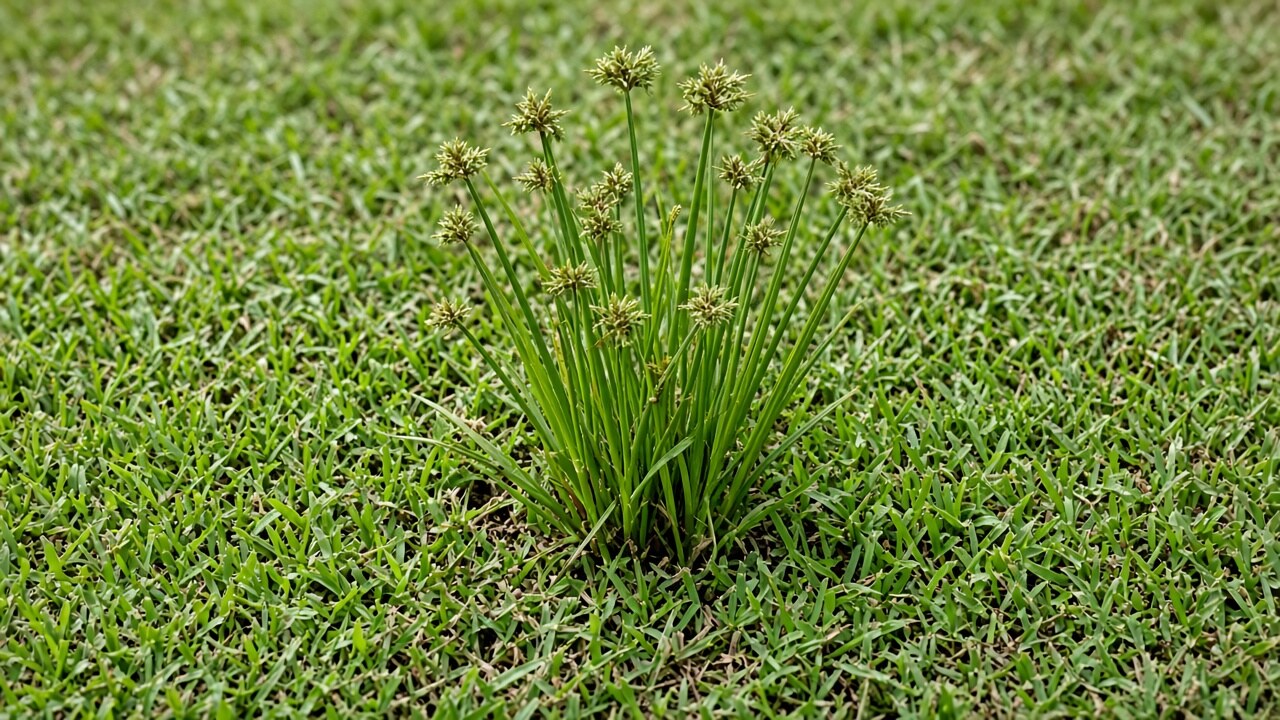
Nutgrass is one of the most frustrating weeds Australian lawn owners face. Also called nutsedge, this grass-like weed grows faster than your lawn, creates unsightly clumps of bright green triangular leaves, and comes back relentlessly thanks to underground tubers (the “nuts”) that survive most control efforts. Standard lawn herbicides don’t touch it, and pulling it out only makes it spread faster. But nutgrass is not invincible. With the right identification, timing, and control methods, you can eliminate nutgrass from your buffalo, kikuyu, or couch lawn. Here’s how.
What Is Nutgrass?
Botanical names:
- Cyperus rotundus (purple nutsedge) — most common in Australia
- Cyperus esculentus (yellow nutsedge) — less common
Common names: Nutgrass, nutsedge, nut sedge
Classification: Not actually a grass — it’s a sedge. Sedges are a separate plant family related to grasses but with different growth habits and biology.
Why nutgrass is so difficult to control
-
Underground tuber network: Each plant produces small, nut-like tubers (rhizomes) 10-40cm below the soil surface. A single plant can produce dozens of tubers, and each tuber can sprout a new plant.
-
Rapid growth: Nutgrass grows faster than lawn grass, often outpacing weekly mowing and forming distinct clumps.
-
Resistant to mowing: Mowing stimulates nutgrass to produce more shoots and tubers rather than killing it.
-
Resistant to pulling: Pulling nutgrass breaks the stem above the tubers, leaving tubers in the ground to resprout (often producing 2-3 new shoots where there was one).
-
Herbicide resistance: Standard broadleaf herbicides don’t affect nutgrass because it’s not a broadleaf weed. Grass-selective herbicides don’t work because it’s not technically a grass. You need sedge-specific herbicides.
How to Identify Nutgrass
Nutgrass looks like grass at first glance but has distinct features once you know what to look for.
Visual identification
Leaf shape: Leaves are V-shaped in cross-section with a prominent midrib (grass leaves are typically flat or rolled).
Stem shape: Triangular stem — this is the definitive identification feature. Roll the stem between your fingers — you’ll feel three distinct sides. Grass stems are round or flat, never triangular. “Sedges have edges, grasses have knots” (grasses have nodes, sedges don’t).
Growth habit: Grows in clumps or patches. Individual plants are bright yellow-green (lighter and brighter than most lawn grasses), growing 20-60cm tall if unmowed.
Growth rate: Nutgrass grows significantly faster than surrounding lawn, so it stands taller than grass just days after mowing.
Flower/seed head: Small, tan-brown or reddish-brown flower clusters on tall stems (20-60cm) in summer. Flowers are papery and star-like at the top of triangular stems.
Root system: If you dig up a plant, you’ll find small, round tubers (5-15mm diameter) attached to roots 10-40cm below the surface. These tubers are hard, nut-like, and often connected in chains.
Common lookalikes
Onion weed (Asphodelus fistulosus): Has round leaves and smells like onions when crushed. Nutgrass has no onion smell.
Flat sedge (Cyperus species): Other sedges have similar triangular stems but different flower heads and often prefer wet areas. Purple and yellow nutsedge are the most problematic in lawns.
Coarse grass clumps: Couch or kikuyu grass clumps growing thicker than surrounding turf. Check stem shape — round means grass, triangular means sedge.
Why Nutgrass Invades Lawns
Understanding why nutgrass thrives helps with long-term control.
Conditions nutgrass loves
-
Compacted soil: Nutgrass tolerates compaction better than most lawn grasses. Compacted lawns give nutgrass a competitive advantage.
-
Wet areas: Nutgrass thrives in moist, poorly drained soil. Wet spots from overwatering, poor drainage, or leaking pipes are nutgrass magnets.
-
Disturbed soil: Construction, digging, new turf installation, or renovations bring dormant tubers to the surface or introduce new infestations via contaminated soil or turf.
-
Thin, weak lawns: Sparse turf allows nutgrass to establish. Thick, healthy lawns naturally suppress weeds.
-
Over-fertilised lawns: Excess nitrogen promotes fast growth in nutgrass more than lawn grasses (nutgrass uses nitrogen more efficiently).
How nutgrass spreads
Underground tubers: The primary spread mechanism. Tubers remain dormant for years and sprout when conditions are favourable.
Soil movement: Contaminated soil, mulch, or new turf brings tubers to new areas.
Mowing equipment: Mowers, line trimmers, and edgers can spread tuber fragments between properties.
Water runoff: Heavy rain or irrigation washes tubers downhill into new areas.
For more on Australian lawn weeds and prevention strategies, see our lawn weeds guide.
Cultural Control: Make Your Lawn Less Hospitable to Nutgrass
Cultural practices won’t eliminate established nutgrass quickly but prevent new infestations and support other control methods.
1. Improve drainage
Why: Nutgrass loves moisture. Fixing wet spots removes its competitive advantage.
How:
- Fix drainage issues (re-grade, install drainage, repair leaking irrigation)
- Avoid overwatering (water deeply but infrequently)
- Core aerate compacted areas to improve water penetration (see our aeration guide)
2. Reduce soil compaction
Why: Compacted soil stresses lawn grass but not nutgrass.
How:
- Core aerate annually (spring or autumn)
- Top dress with sand/compost mix to improve soil structure (see our top dressing guide)
- Avoid heavy traffic on wet lawns
3. Maintain thick, healthy turf
Why: Dense turf shades soil and outcompetes nutgrass seedlings.
How:
- Mow at correct height for your grass type (buffalo 25-40mm, couch 15-25mm, kikuyu 25-40mm)
- Fertilise regularly (3-4 times per year with complete lawn fertiliser — see our fertiliser guide)
- Water correctly (deep, infrequent watering)
- Overseed or repair bare patches quickly
4. Avoid over-fertilising
Why: Excess nitrogen promotes nutgrass growth more than lawn grass.
How: Follow recommended fertiliser rates (don’t exceed label instructions). If nutgrass is severe, skip fertiliser until you’ve reduced the infestation.
5. Quarantine new soil and turf
Why: Prevents introducing new infestations.
How:
- Buy turf from reputable suppliers
- Inspect new turf rolls for nutgrass before installation
- Don’t import soil or mulch from nutgrass-infested areas
Mechanical Control: Digging Out Nutgrass
Hand removal is tedious and rarely eliminates nutgrass completely, but it works for small, isolated patches when done correctly.
When hand removal works
- Very small infestations (a few plants)
- Where herbicides can’t be used (near sensitive plants, vegetable gardens, waterways)
- As follow-up to herbicide treatment
How to dig out nutgrass correctly
Wrong way: Pulling nutgrass by hand. This breaks the stem above the tubers, stimulating the plant to produce 2-3 replacement shoots.
Right way: Deep digging to remove all tubers.
Method:
-
Mark the area: Flag all visible nutgrass plants (they often spread further underground than you expect).
-
Dig deep: Use a spade or garden fork to dig 20-30cm deep around the entire patch, extending 30cm beyond the visible plants.
-
Remove all tubers: Carefully sift through soil and remove every tuber you can find. Nutgrass tubers are small (5-15mm), round, hard, and often linked in chains. Even one missed tuber will resprout.
-
Dispose of properly: Bag tubers and throw in rubbish (don’t compost — tubers can survive composting and re-infest your garden).
-
Repair the lawn: Fill the hole with quality soil, firm, and patch with turf or overseed if necessary.
-
Monitor: Check weekly for 6-8 weeks. Dig out any regrowth immediately.
Limitations of hand removal
- Extremely labour-intensive
- Nearly impossible to remove all tubers (one missed tuber restarts the infestation)
- Disturbs lawn significantly
- Impractical for large infestations
Bottom line: Hand removal works for tiny infestations but isn’t realistic for widespread nutgrass. Chemical control is more effective for most situations.
Chemical Control: Herbicides for Nutgrass
Selective herbicides that kill nutgrass without harming your lawn are the most effective control method.
Active ingredient to look for: Halosulfuron
Why it works: Halosulfuron is a sedge-selective herbicide that targets nutsedge species while being safe for buffalo, kikuyu, and couch grass.
How it works: Absorbed through leaves and moved to tubers, where it stops growth. Nutgrass yellows, stops growing, and dies over 2-4 weeks. Tubers are also killed, preventing regrowth.
Australian products containing halosulfuron:
- Sempra (halosulfuron-methyl) — professional turf product, available through some rural suppliers
- Bow and Arrow (halosulfuron + other actives) — professional product
- ManageTM (halosulfuron for nutsedge) — specialty sedge herbicide
Note: Halosulfuron products are less commonly available in retail garden centres. You may need to order online, buy from rural/agricultural suppliers, or engage a professional lawn care service.
Other active ingredients
MSMA (monosodium methanearsonate): Older herbicide effective on nutgrass but being phased out in Australia due to environmental concerns (contains arsenic). Still available in some products but expect restricted availability.
Imazapyr: Non-selective herbicide (kills everything, including lawn). Only use for spot treatment on individual nutgrass plants where you’re willing to kill lawn as well and re-turf afterwards.
Glyphosate (e.g., Roundup): Non-selective, kills nutgrass and lawn. Only suitable for spot treatment or complete lawn renovation. Not suitable for in-lawn use.
Safe herbicides for different grass types
Buffalo grass:
- Halosulfuron products (safe)
- Many broadleaf herbicides are NOT safe for buffalo (check label)
- Buffalo is more sensitive to herbicides than couch or kikuyu
Kikuyu grass:
- Halosulfuron products (safe)
- Most selective herbicides safe for kikuyu
Couch grass:
- Halosulfuron products (safe)
- Most selective herbicides safe for couch
Always read the label: Confirm your grass type is listed as safe before applying any herbicide.
How to apply nutgrass herbicide correctly
Timing: Apply when nutgrass is actively growing (spring through autumn, ideally October-March). Herbicides are most effective on young, actively growing nutgrass.
Weather: Apply on a calm day (no wind), when no rain is forecast for 24 hours, and when temperatures are mild (15-30°C).
Method:
-
Mow 2-3 days before application: Allows nutgrass to regrow 5-10cm of leaf for herbicide absorption.
-
Spot-spray or boom spray:
- Spot spray (small infestations): Use hand-pump sprayer to apply herbicide only to nutgrass plants
- Boom spray (widespread infestation): Spray entire lawn if nutgrass is throughout
-
Mix correctly: Follow label instructions precisely. Don’t exceed recommended rates.
-
Add surfactant: Many herbicides require a wetting agent (surfactant) for better leaf coverage and absorption. Check label.
-
Apply to foliage: Spray leaves until wet but not dripping.
-
Don’t mow for 7 days: Allow herbicide time to translocate to tubers.
-
Don’t water for 24 hours: Watering washes herbicide off leaves before it’s absorbed.
-
Repeat application: Nutgrass often requires 2-3 applications 4-6 weeks apart for complete control (kills emerged plants and any tubers that sprout later).
Spot treatment with glyphosate (non-selective)
If you can’t source sedge-specific herbicide, you can carefully spot-treat nutgrass with glyphosate (Roundup). This kills lawn too, so only use on individual plants where you can re-turf the small dead patch afterwards.
Method:
- Use small spray bottle or paint glyphosate onto nutgrass leaves with paintbrush
- Avoid overspray onto lawn
- Wait 10-14 days for nutgrass to die
- Dig out dead plant and tubers
- Fill hole with soil and patch with turf or seed
Best for: A few isolated nutgrass plants. Impractical for large infestations.
Best Control Strategy: Integrated Approach
Combining cultural, mechanical, and chemical methods delivers the best long-term results.
Recommended nutgrass control program
Step 1: Cultural improvements (start immediately)
- Fix drainage issues
- Aerate compacted areas
- Fertilise and water correctly to promote thick turf
Step 2: Chemical control (spring/early summer)
- Apply halosulfuron herbicide to nutgrass (October-December)
- Repeat application in 4-6 weeks
- Third application if needed 4-6 weeks later
Step 3: Monitor and follow up (ongoing)
- Check lawn weekly for regrowth
- Spot-treat or dig out any new nutgrass immediately
- Maintain thick, healthy turf to prevent reinfestations
Step 4: Prevent reintroduction
- Inspect new turf for nutgrass before installation
- Clean mowing equipment after use on infested lawns
- Fix drainage to remove wet spots
Timeline expectations
First application: Nutgrass yellows and stops growing within 7-14 days. Dies completely over 3-4 weeks.
Second application (4-6 weeks later): Catches tubers that sprouted after first application. Further reduces infestation.
Third application (if needed): Eliminates remaining plants.
Full control: Expect 80-90% reduction after 2 applications, 95%+ after 3 applications over one season (spring to autumn). Some stragglers may reappear the following year from deep tubers — spot-treat immediately.
Professional Nutgrass Control
Widespread nutgrass infestations are difficult and time-consuming for homeowners to manage. Professional lawn care services have access to commercial-grade herbicides, application equipment, and experience to eliminate nutgrass efficiently.
Professional services typically include:
- Lawn inspection and weed identification
- Targeted herbicide selection (sedge-specific products)
- Precise application with boom sprayers or spot treatment
- Follow-up treatments (2-3 applications for complete control)
- Cultural advice (drainage, aeration, fertilisation)
Mowing Magic provides professional nutgrass control and comprehensive lawn weed management across Australia. Their specialists identify weeds accurately, select safe herbicides for your grass type, and apply treatments at the right timing for maximum effectiveness. Combined with lawn health programs (aeration, top dressing, fertilisation), professional weed control delivers lasting results and helps prevent future infestations.
Nutgrass in Different Australian Lawn Types
Nutgrass in buffalo grass
Challenge: Buffalo is sensitive to many herbicides, limiting chemical control options.
Solution:
- Use buffalo-safe herbicides only (check labels carefully)
- Halosulfuron products are safe for buffalo
- Spot treatment is safer than blanket application if you’re unsure of herbicide safety
- Focus on cultural control (improve drainage, promote thick turf)
For complete buffalo care, see our Sir Walter buffalo grass guide.
Nutgrass in kikuyu grass
Challenge: Kikuyu is aggressive and usually outcompetes weeds, but nutgrass can establish in thin or overwatered areas.
Solution:
- Most herbicides are safe for kikuyu
- Halosulfuron works well
- Fix overwatering and drainage issues
- Promote kikuyu density to crowd out nutgrass
Nutgrass in couch grass
Challenge: Couch tolerates most herbicides well, making chemical control easier.
Solution:
- Halosulfuron is safe and effective
- Couch’s aggressive growth helps fill in areas after nutgrass is removed
- Maintain regular feeding and mowing to keep couch dense
For detailed grass comparisons, see our buffalo vs kikuyu vs couch guide.
Preventing Nutgrass Reinfestations
Once you’ve eliminated nutgrass, prevention is critical.
Long-term prevention strategies
- Maintain thick turf: Dense grass shades soil and prevents nutgrass establishment
- Fix drainage: Eliminate wet spots nutgrass loves
- Aerate regularly: Reduces compaction
- Monitor weekly: Catch and remove any new plants immediately (hand dig or spot spray)
- Inspect new materials: Check turf, soil, and mulch for contamination before bringing onto property
- Clean equipment: Hose off mowers, trimmers, and edgers to avoid spreading tubers
Early detection is key
One nutgrass plant produces dozens of tubers within a few weeks. Catching new plants early (when there are only 1-2 plants) makes control 10x easier than waiting until nutgrass is throughout the lawn.
Weekly patrol: Walk your lawn weekly during spring/summer. Mark and treat any nutgrass immediately.
Final Thoughts
Nutgrass is persistent, but it’s not invincible. The key to successful control is accurate identification (triangular stems are the giveaway), timing (treat during active growth in spring/summer), and using sedge-specific herbicides (halosulfuron products are most effective).
Cultural improvements — fixing drainage, aerating compacted areas, and maintaining thick, healthy turf — remove the conditions nutgrass loves and prevent reinfestations. Hand removal works for small patches if you dig deep and remove all tubers, but chemical control is more practical for widespread infestations.
Expect nutgrass control to take multiple applications over several months. A single herbicide treatment rarely eliminates nutgrass completely because dormant tubers sprout weeks or months later. Plan for 2-3 applications 4-6 weeks apart, monitor regularly, and spot-treat any regrowth immediately.
For buffalo lawns, confirm herbicide safety before applying (many products harm buffalo). For couch and kikuyu lawns, most selective herbicides are safe, making chemical control straightforward.
Combine chemical control with cultural improvements and vigilant monitoring, and you can eliminate nutgrass and enjoy a weed-free lawn. For more on Australian lawn weeds and control strategies, see our comprehensive lawn weeds guide and bindii control guide.