How to Grow a Passionfruit Vine in Australia
Complete guide to growing passionfruit vines in Australian gardens. Learn about planting, trellis support, watering, pruning, pollination, and harvesting for abundant fruit in Melbourne and beyond.
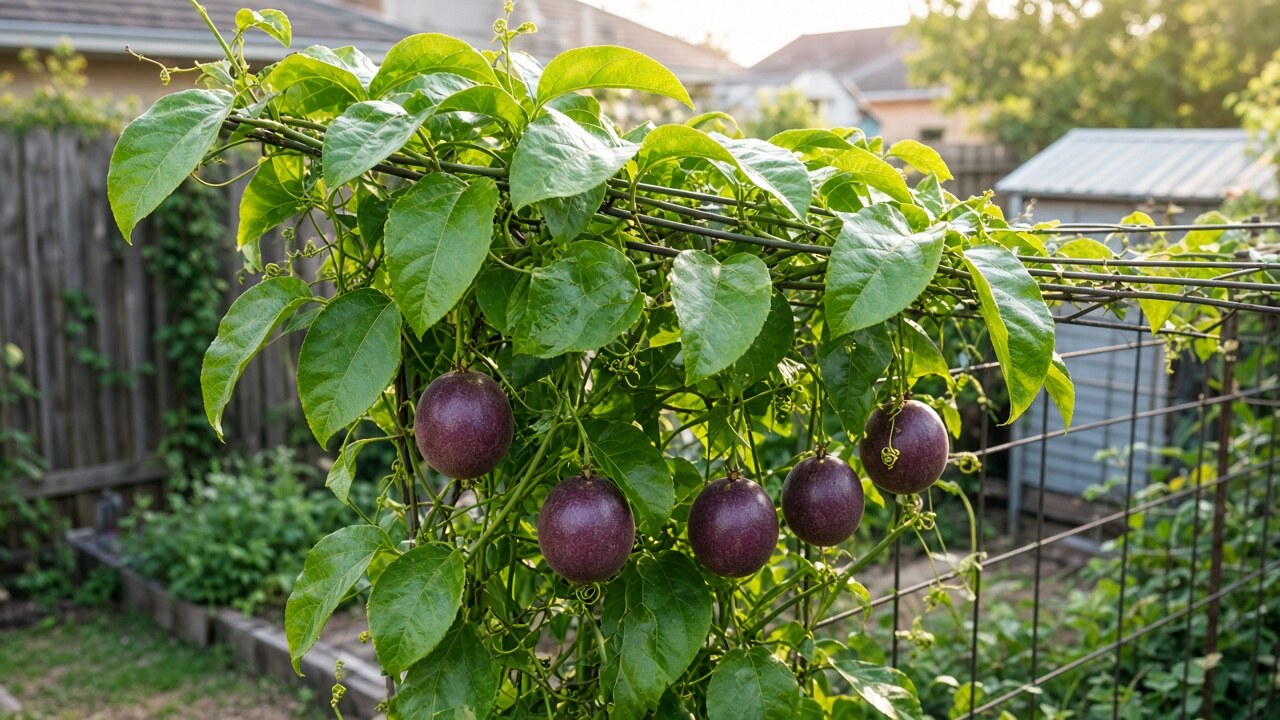
Passionfruit vines are one of the most rewarding edible plants you can grow in an Australian home garden. With the right support, regular watering, and minimal fuss, a single vine will produce hundreds of fragrant, tangy fruit over many months. Whether you’re growing the common purple passionfruit or the hardier Panama Gold variety, this guide covers everything you need to know to grow thriving passionfruit vines in Australia.
Choosing the Right Passionfruit Variety
Australia has two main passionfruit types, each suited to different climates and growing conditions.
Purple passionfruit (Passiflora edulis)
Climate suitability: Subtropical and warm temperate zones (Sydney, Brisbane, Perth, coastal regions). Struggles in Melbourne’s cooler climate unless planted in a warm, sheltered microclimate.
Fruit: Smaller, deep purple fruit with intensely aromatic flavour. Generally considered superior tasting to yellow varieties.
Growth: Vigorous climbing vine reaching 3-5 metres. Dies back in frost but may reshoot from roots if frost isn’t severe.
Lifespan: 5-7 years with declining production after year 4.
Best for: Coastal gardens, subtropical regions, protected sunny spots in Melbourne.
Panama Gold (yellow passionfruit, Passiflora edulis f. flavicarpa)
Climate suitability: Warmer climates (Brisbane, Darwin, northern NSW, tropical Queensland). More cold-tolerant than purple passionfruit but still frost-sensitive.
Fruit: Larger, golden-yellow fruit with slightly less intense flavour. Thicker skin, better storage.
Growth: Extremely vigorous, fast-growing. Can become invasive in tropical regions.
Lifespan: 5-8 years.
Best for: Tropical and subtropical gardens, areas with occasional frost (more resilient than purple).
Grafted passionfruit
Many garden centres now sell grafted passionfruit — typically purple passionfruit scion grafted onto more vigorous, disease-resistant rootstock. Grafted vines offer:
- Better disease resistance (especially to root rot and nematodes)
- More consistent, heavier cropping
- Longer productive lifespan (6-8 years)
- Higher initial cost ($25-40 compared to $10-15 for seedlings)
Worth it? Yes, especially if you’ve lost passionfruit vines to wilt or root issues in the past.
Where to Plant Passionfruit Vines
Sun requirements
Full sun: Passionfruit need at least 6-8 hours of direct sunlight daily for good fruiting. More sun equals more flowers and fruit.
Melbourne note: Plant against a north-facing wall or fence where the vine receives maximum warmth and sun. Reflected heat from masonry helps compensate for cooler conditions.
Soil requirements
Well-drained soil: Essential. Passionfruit are extremely sensitive to waterlogged roots. Heavy clay or poorly drained soil will cause root rot and kill the vine within months.
Soil preparation:
- Light, sandy soil: Add compost and aged manure to improve moisture retention
- Heavy clay: Build a raised bed (30-40cm high) or mound, or plant in large pots
- pH: 6.0-7.5 (slightly acidic to neutral)
Soil test tip: If water pools after rain or watering, drainage is inadequate. Improve with gypsum, compost, or plant elsewhere.
Spacing and location
- Against fence or wall: Plant 50-80cm away from the fence to allow airflow and root space
- Multiple vines: Space 2-3 metres apart
- Root competition: Avoid planting under large trees or near aggressive tree roots
- Wind protection: Passionfruit vines have shallow roots and can be damaged by strong winds. Sheltered positions are ideal.
Trellis and Support Requirements
Passionfruit are vigorous climbers that need strong, permanent support. Without adequate trellising, vines become tangled, fruit production drops, and pest problems increase.
Fence-mounted trellis
Best for: Home gardens with existing fence or wall.
How to build:
- Install horizontal wires at 30-40cm intervals up to 2 metres high
- Use 2.5-3mm galvanised wire secured to eye bolts or wire strainers
- Space wires 30-40cm apart (5-6 wires total)
- Ensure wires are taut — loose wires sag under the weight of foliage and fruit
Tip: Attach wires 10-15cm away from the fence using spacers to allow airflow and prevent fungal issues.
Freestanding trellis
Best for: Garden beds or areas without existing structures.
How to build:
- Use treated pine or hardwood posts (100mm × 100mm, 2.4m tall)
- Sink posts 60cm into ground or use post anchors
- Run horizontal wires or attach welded mesh (1.8m × 3m) between posts
- Space posts 2-3 metres apart
Alternative: Cattle panel arches or arbours make attractive passionfruit supports and create shaded seating areas.
Wire or string trellis
Lightweight option: Vertical strings from overhead wire to ground. Works for young vines but may not support mature, heavy vines long-term.
What to avoid
- Flimsy wire or netting that sags under weight
- Narrow trellises (less than 1.5m wide) — vines outgrow them quickly
- Unsupported lattice panels — they collapse under a mature vine’s weight
Planting Passionfruit Vines
When to plant
Spring: September-November is ideal. Vines establish roots before summer and may produce fruit in their first season.
Summer: December-January planting works in cooler climates but requires vigilant watering.
Avoid winter: Cold soil slows establishment and frost can kill young vines.
Planting steps
-
Dig planting hole: Dig 50cm × 50cm × 50cm. In clay soil, dig wider rather than deeper to encourage lateral root spread.
-
Improve soil: Mix removed soil with 1-2 buckets of compost, 1 bucket aged manure, and handful of complete fertiliser (e.g., blood and bone).
-
Plant at correct depth: Remove plant from pot and gently tease roots if root-bound. Plant so the top of the root ball is level with or slightly above ground level (prevents crown rot).
-
Backfill and firm: Fill hole with improved soil mix, firm gently, and create a shallow watering basin around the plant.
-
Water deeply: Soak thoroughly after planting (10-15 litres).
-
Mulch: Apply 5-7cm of organic mulch (straw, sugarcane, pea straw) around the plant, keeping mulch 10cm away from stem to prevent collar rot.
-
Initial training: Tie main stem to trellis or support stake using soft ties. Don’t let young vine flop on the ground.
Planting in pots
Passionfruit grow well in large pots if you can’t plant in-ground or have poor soil.
Pot size: Minimum 50 litres (ideally 70-100 litres). Half wine barrels work perfectly.
Potting mix: Premium potting mix with added compost. Avoid cheap mixes that compact.
Drainage: Ensure pot has large drainage holes. Raise pot on feet or bricks.
Trellis: Install trellis or attach pot to fence trellis.
Watering: Pots dry out quickly — daily watering in summer is common.
Fertiliser: Potted vines need more frequent feeding (every 4-6 weeks).
Watering Passionfruit Vines
Establishment phase (first 3-6 months)
Frequency: Water 2-3 times per week (daily in hot weather) until roots establish.
Amount: Deep watering (10-15 litres per session) is better than frequent light watering.
Established vines
Spring/autumn: Once or twice per week, depending on rainfall.
Summer: 2-3 times per week in hot, dry weather. More frequent watering during flowering and fruiting increases fruit size and prevents premature fruit drop.
Winter: Reduce to once per week or skip if rainfall is adequate.
Signs of water stress
- Wilting leaves (especially midday wilting)
- Fruit drop or shrivelled fruit
- Yellowing lower leaves
- Slow growth
Signs of overwatering
- Yellowing leaves across the whole vine
- Root rot (vine suddenly collapses)
- Fungal issues or mould on soil surface
Golden rule: Water deeply but infrequently. Let the top 5cm of soil dry between waterings. Passionfruit prefer consistent moisture, not waterlogged soil.
Fertilising Passionfruit Vines
Passionfruit are heavy feeders and respond well to regular fertilising.
At planting
Mix slow-release complete fertiliser (e.g., Osmocote, Nutricote) or organic fertiliser (blood and bone, pelletised manure) into planting hole.
Growing season (spring-autumn)
Frequency: Every 4-8 weeks.
What to use:
- Complete fertiliser: Balanced NPK like 12-12-12 or citrus/fruit tree fertiliser
- Organic option: Pelletised chicken manure, composted cow manure, or worm castings
- Liquid feed: Fortnightly liquid seaweed or fish emulsion (especially during flowering)
Application rate: Follow product instructions. For pelletised manure, 1-2 handfuls scattered around the root zone is typical.
Nutrient deficiencies
Yellow leaves with green veins: Iron or magnesium deficiency. Apply liquid iron chelate or Epsom salts (1 tablespoon dissolved in 5 litres water).
Pale, slow growth: Nitrogen deficiency. Apply high-nitrogen fertiliser or liquid fish emulsion.
Purple leaf tints: Phosphorus deficiency (less common). Apply complete fertiliser.
Potassium for fruiting
Potassium (K) improves flowering and fruit quality. Apply sulphate of potash (1 tablespoon per vine) in spring when flowers appear.
Pruning Passionfruit Vines
Pruning keeps vines productive, manageable, and encourages strong growth on the trellis.
Year 1: Establish framework
Goal: Train main stems to cover trellis evenly.
Method:
- Allow 2-3 main stems to grow up and along trellis wires
- Tie stems to wires as they grow
- Pinch out tips once stems reach desired length to encourage side branching
- Remove any growth below the first wire (bare trunk up to 50cm is fine)
Years 2-4: Maintenance pruning
When: Late winter to early spring (August-September), after fruiting finishes but before new growth starts.
What to prune:
- Remove dead, diseased, or tangled growth
- Cut back long, straggly shoots to 20-30cm to encourage compact growth
- Thin out crowded areas to improve airflow (reduces fungal issues)
- Remove old fruiting laterals — passionfruit flower and fruit on current season’s growth
How much: You can prune quite hard (remove up to 30-40% of growth). Vines regrow vigorously in spring.
Summer tip pruning
Lightly trim wayward shoots throughout growing season to keep vine tidy and contained. Don’t prune heavily in summer as you’ll remove potential fruiting wood.
Renovation pruning (older vines)
If your vine has become overgrown, unproductive, or tangled:
- Cut back hard to main framework stems in late winter
- Remove all weak or tangled growth
- Apply fertiliser and mulch after pruning
- Vine will reshoot and fruit the same season
Pollination and Flowering
Flowers
Passionfruit flowers are spectacular — large, intricate, purple-and-white blooms that appear spring through autumn. Each flower opens for just one day.
Pollination requirements
Self-fertile: Most passionfruit varieties are self-fertile and don’t need another vine for pollination.
Insect pollination: Flowers are primarily pollinated by bees (honeybees and native bees). Good bee activity = heavy fruit set.
Hand pollination: In cool, wet springs when bee activity is low, you can hand-pollinate to improve fruit set:
- Use small paintbrush or cotton bud
- Transfer pollen from anthers (hanging yellow structures) to stigmas (three-pronged structure in centre)
- Do this mid-morning when flowers are fully open
Flower drop: Some flower drop is normal, especially early in the season. Poor pollination, inadequate water, or nutrient deficiency can cause excessive flower drop.
Harvesting Passionfruit
When to harvest
Don’t pick early: Passionfruit don’t ripen after picking. Wait until fruit naturally falls from the vine or is deeply coloured and slightly wrinkled.
Purple passionfruit: Fruit turns deep purple and may begin to wrinkle. If it drops to the ground, it’s ripe. Smooth, shiny fruit is underripe.
Panama Gold: Fruit turns golden yellow. Slight wrinkling indicates peak ripeness.
Harvesting tips
- Collect fallen fruit daily
- Fruit left on the ground attracts fruit flies and ants
- Cut fruit from vine if within reach and fully coloured (leave small stem attached)
- Peak harvest: Late summer through autumn (February-May in most of Australia)
Yield
A healthy, mature vine can produce 100-200+ fruit per season. First-year vines may produce 20-50 fruit. Production peaks in years 2-4.
Storage
- Fresh: Store at room temperature for 3-5 days or refrigerate for 1-2 weeks
- Freeze pulp: Scoop out pulp, freeze in ice cube trays or small containers. Frozen pulp lasts 6-12 months.
Common Problems and Solutions
Fruit drop
Causes: Inadequate water, poor pollination, nutrient deficiency, sudden temperature changes.
Solution: Water consistently during flowering and fruiting. Ensure adequate fertiliser (especially potassium). Encourage bees by planting flowering plants nearby.
Yellowing leaves
Causes: Overwatering, poor drainage, nitrogen deficiency, root rot.
Solution: Check drainage. Reduce watering if soil is soggy. Apply nitrogen fertiliser if growth is slow and pale.
Passion vine hopper
Symptoms: Fluffy white waxy deposits on stems and leaf undersides. Causes sooty mould.
Solution: Hose off with strong water spray. Spray with eco-oil or white oil for heavy infestations.
Fungal leaf spot
Symptoms: Brown spots on leaves, especially in humid conditions.
Solution: Improve airflow by pruning. Remove affected leaves. Spray with copper fungicide if severe.
Root rot and wilt
Symptoms: Vine suddenly wilts and collapses despite adequate water. Leaves turn yellow, then brown.
Cause: Phytophthora fungus, common in poorly drained soil or overwatered vines.
Solution: No cure once infected. Remove vine and improve drainage before replanting. Use grafted vines for better resistance.
Fruit fly
Symptoms: Maggots inside fruit, premature fruit drop.
Solution: Hang fruit fly traps. Collect fallen fruit daily. Net individual fruit or whole vine if problem persists.
Growing Passionfruit in Melbourne
Melbourne’s cool-temperate climate is marginal for passionfruit, but success is possible with the right approach.
Variety selection
Purple passionfruit: Grafted vines perform better in Melbourne than seedlings. Choose cold-hardy rootstock if available.
Panama Gold: Slightly more cold-tolerant but still frost-sensitive.
Microclimate matters
Plant against north-facing brick or masonry wall where reflected heat creates a warmer microclimate. Avoid frost-prone positions.
Frost protection
Young vines need frost protection in winter. Cover with frost cloth or hessian on nights below 2°C. Mature vines may die back to ground level in severe frost but often reshoot from roots in spring.
Expect slower growth
Melbourne vines grow more slowly and produce smaller crops than vines in warmer climates. Expect first fruit in year 2-3 rather than year 1.
Final Thoughts
Passionfruit vines are fast-growing, productive, and relatively low-maintenance once established. The keys to success are full sun, well-drained soil, strong support, consistent watering, and regular feeding. In return, you’ll harvest basketfuls of fragrant, tangy fruit perfect for eating fresh, adding to desserts, or making into cordial and jam.
Purple passionfruit suits subtropical and warm temperate climates, while Panama Gold handles tropical heat better. Melbourne gardeners can succeed with grafted vines planted in warm, sheltered positions with frost protection in winter.
Start with a grafted vine if you can afford it — the improved disease resistance and productivity are worth the extra cost. Build a sturdy trellis, water consistently during establishment, and prune lightly each winter. Within two years, you’ll be harvesting armloads of passionfruit and wondering why you didn’t plant one sooner.