TifTuf Grass Australia: Pros, Cons & Care Guide
Complete guide to TifTuf bermuda couch grass in Australia. Compare TifTuf to buffalo, kikuyu, and other couch varieties. Learn about drought tolerance, shade performance, maintenance, and whether TifTuf is right for your lawn.
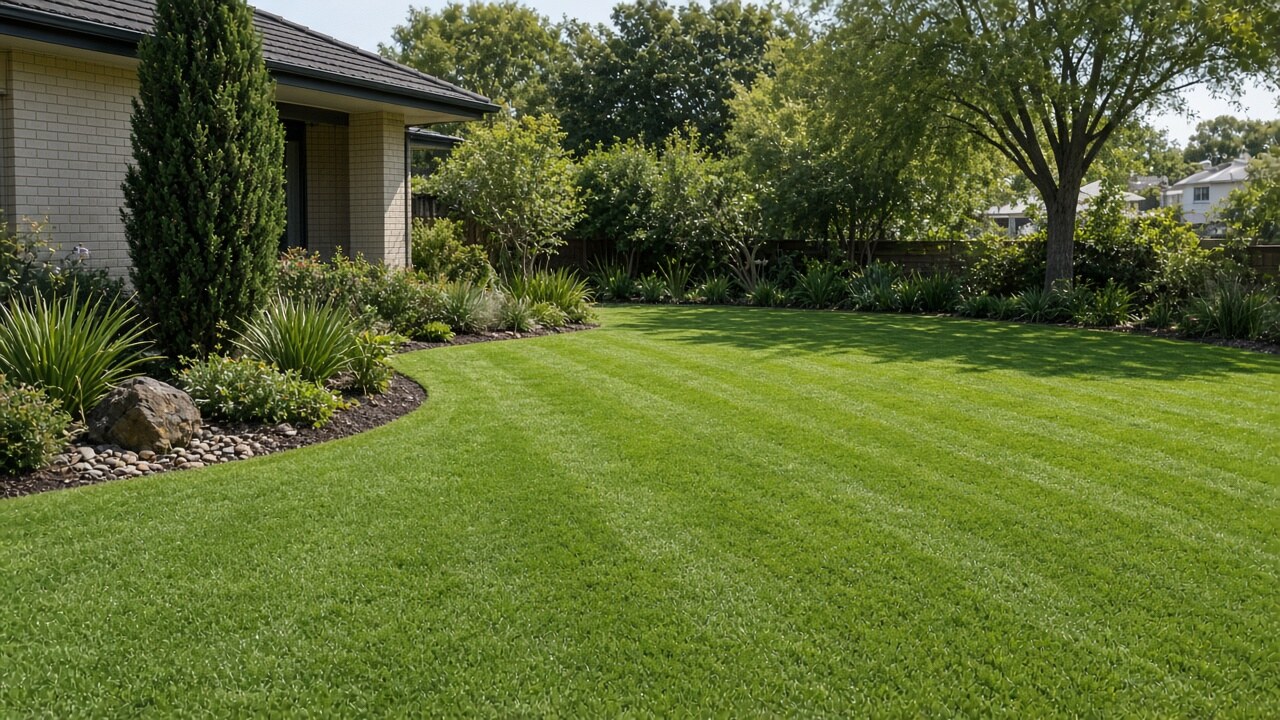
TifTuf is a premium bermuda couch grass that has gained significant attention in Australia for its exceptional drought tolerance and water efficiency. Bred by the University of Georgia and released commercially in Australia in recent years, TifTuf promises up to 38% less water use than other couch varieties while maintaining a dense, fine-textured lawn. But is TifTuf the right choice for your Australian garden, or would buffalo, kikuyu, or traditional couch serve you better? Here’s everything you need to know.
What Is TifTuf Grass?
Botanical name: Cynodon dactylon × Cynodon transvaalensis (hybrid bermuda grass, also called couch grass in Australia)
Bred by: University of Georgia, USA (released 2015, introduced to Australia around 2019-2020)
Type: Warm-season, fine-leaf couch grass
Propagation: Vegetative only (sold as turf or plugs, not seed)
Key claim: Superior drought tolerance with less water than other couch varieties, plus better winter colour
TifTuf is part of the broader couch grass family, which includes common couch, Santa Ana, Wintergreen, and other hybrid bermuda varieties. What sets TifTuf apart is its breeding specifically for water efficiency and wear tolerance.
TifTuf Grass Pros
1. Exceptional drought tolerance
TifTuf’s standout feature is its ability to stay green with significantly less water than other couch grasses or buffalo. Independent trials show TifTuf uses up to 38% less water than common couch while maintaining comparable appearance and density.
What this means: Once established, TifTuf can tolerate extended dry periods without going dormant or thinning. In water-restricted areas or regions with limited rainfall, TifTuf can reduce irrigation costs and maintain appearance when other lawns are struggling.
Real-world benefit: Less watering in summer (typically 1-2 deep waterings per week vs 2-3 for buffalo or standard couch). During drought or water restrictions, TifTuf outlasts most competitors.
2. Fine texture and dense growth
TifTuf has a fine leaf blade similar to Santa Ana or Wintergreen couch. It creates a tight, dense turf that feels pleasant underfoot and looks manicured with regular mowing.
Comparison:
- Finer than: Buffalo, kikuyu
- Similar to: Santa Ana couch, Wintergreen couch
- Coarser than: Bentgrass (used on golf greens, not common in home lawns)
3. Excellent wear tolerance
Like most couch grasses, TifTuf handles heavy foot traffic extremely well. It’s a popular choice for sports fields, dog runs, kids’ play areas, and high-traffic pathways.
Wear resistance ranking (best to worst among common Australian grasses):
- Couch (TifTuf, Santa Ana, common couch)
- Kikuyu
- Buffalo
Recovery: Even if worn patches develop, TifTuf recovers quickly through lateral growth (stolons and rhizomes).
4. Self-repairing
TifTuf spreads via both stolons (above-ground runners) and rhizomes (underground runners), allowing it to fill in bare patches and repair damage naturally. This aggressive growth habit is a pro for wear recovery but a con if you have garden beds nearby (see cons below).
5. Improved winter colour
Compared to common couch, TifTuf retains better green colour in cooler months. It won’t stay as green as buffalo varieties like Sir Walter in winter, but it typically performs better than older couch cultivars.
Winter dormancy: In southern Australia (Melbourne, Adelaide, Canberra), TifTuf will still experience some winter browning but greens up earlier in spring than common couch.
6. Low thatch buildup
Unlike buffalo, which can develop thick thatch layers requiring regular dethatching, TifTuf produces minimal thatch. This reduces maintenance and improves water and nutrient penetration.
For more on managing thatch in buffalo lawns, see our dethatching guide.
TifTuf Grass Cons
1. Poor shade tolerance
TifTuf, like all couch grasses, performs poorly in shade. It requires full sun (6-8+ hours of direct sunlight daily) to thrive.
Shade performance ranking (best to worst):
- Buffalo (tolerates 3-4 hours sun)
- Kikuyu (needs 4-5 hours sun)
- Couch/TifTuf (needs 6-8+ hours sun)
Real-world impact: If your lawn has significant shade from trees, buildings, or shade structures, TifTuf will thin out, weaken, and eventually fail. Buffalo is the better choice for shaded lawns.
2. Invasive growth habit
TifTuf spreads aggressively through stolons and rhizomes. While this is excellent for filling bare patches and self-repair, it becomes a maintenance headache if your lawn borders garden beds, driveways, or paths.
Management required:
- Regular edging (every 2-4 weeks in growing season)
- Physical barriers (root barrier strips, edging) to prevent encroachment into gardens
- Vigilance to stop runners invading paving cracks or neighbouring properties
Comparison: Buffalo is clumping and less invasive. Kikuyu is similarly aggressive.
3. Higher mowing frequency
TifTuf grows rapidly during warm weather and requires frequent mowing to maintain appearance.
Typical mowing frequency:
- Peak growing season (spring/summer): Every 5-7 days
- Cooler months: Every 10-14 days
- Comparison: Buffalo typically needs mowing every 7-14 days; kikuyu every 5-7 days
Missed mowing: If you let TifTuf grow too long and then scalp it back hard, it can suffer stress and thinning. Regular mowing is essential.
4. Scalping risk
TifTuf has a low growth habit with stolons running close to the soil surface. If you mow too low or your lawn surface is uneven (bumps and hollows), you can scalp the turf, removing all green growth and leaving brown stolons exposed.
Prevention:
- Maintain consistent mowing height (15-25mm)
- Level lawn surface before installation
- Avoid mowing when soil is soft (reduces wheel ruts)
5. Higher initial cost
TifTuf turf typically costs $12-18 per square metre, positioning it at the premium end alongside Sir Walter buffalo.
Price comparison (approximate per m²):
- Common couch: $5-8
- Kikuyu: $5-8
- Standard buffalo: $8-12
- Sir Walter buffalo: $12-16
- TifTuf couch: $12-18
Is it worth it? If drought tolerance and water savings are priorities, the higher upfront cost can pay off through reduced water bills. But if cost is a major concern, standard couch or kikuyu deliver good results at half the price.
6. Limited supplier availability
As a newer variety, TifTuf isn’t as widely available as buffalo or common couch. You may need to source it from specialised turf suppliers rather than picking it up at your local garden centre.
TifTuf vs Buffalo Grass
Choosing between TifTuf and buffalo comes down to your lawn’s sun exposure, water availability, traffic levels, and maintenance preferences.
| Factor | TifTuf Couch | Buffalo (e.g., Sir Walter) |
|---|---|---|
| Sun requirement | Full sun (6-8+ hours) | Tolerates shade (3-4 hours) |
| Drought tolerance | Exceptional | Moderate |
| Wear tolerance | Excellent | Moderate |
| Shade tolerance | Poor | Excellent |
| Mowing frequency | Every 5-7 days | Every 7-14 days |
| Invasiveness | High (needs edging) | Low (clumping) |
| Thatch buildup | Low | Moderate to high |
| Winter colour | Moderate (some browning) | Good (stays greener) |
| Texture | Fine | Soft, medium-fine |
| Cost (per m²) | $12-18 | $8-16 |
Choose TifTuf if:
- Your lawn is in full sun
- Drought tolerance is a priority (water restrictions or limited rainfall)
- You have high foot traffic (kids, dogs, sports)
- You don’t mind frequent mowing
- You want low thatch maintenance
Choose buffalo if:
- Your lawn has partial shade or less than 6 hours sun
- You prefer lower mowing frequency
- You want less invasive growth
- You value winter colour
- You want soft-leaf comfort underfoot
For a detailed comparison of buffalo varieties and other grasses, see our buffalo vs kikuyu vs couch guide.
TifTuf vs Kikuyu Grass
Both TifTuf and kikuyu are vigorous, fast-growing, full-sun grasses. Here’s how they compare:
| Factor | TifTuf Couch | Kikuyu |
|---|---|---|
| Drought tolerance | Exceptional | Moderate |
| Wear tolerance | Excellent | Excellent |
| Growth rate | Fast | Very fast |
| Invasiveness | High | Very high |
| Shade tolerance | Poor | Poor to moderate (4-5 hours sun) |
| Mowing frequency | Every 5-7 days | Every 5-7 days (often more) |
| Texture | Fine | Coarse |
| Winter dormancy | Moderate browning | Significant browning |
| Cost (per m²) | $12-18 | $5-8 |
Choose TifTuf if:
- You want superior drought tolerance
- You prefer finer texture and denser turf
- You value better winter colour
Choose kikuyu if:
- Budget is a major concern (kikuyu is half the price)
- You want the absolute fastest wear recovery
- You’re comfortable with very aggressive growth and frequent mowing
TifTuf vs Other Couch Varieties
TifTuf competes with other premium couch varieties like Santa Ana and Wintergreen.
TifTuf vs Santa Ana couch
Similarities: Both are fine-textured, drought-tolerant, full-sun couch grasses.
Key differences:
- TifTuf uses 38% less water than Santa Ana (according to breeding trials)
- TifTuf has better winter colour
- Santa Ana is slightly more widely available
- Both cost similarly ($12-18/m²)
Verdict: TifTuf is the superior choice if water efficiency and winter colour are priorities.
TifTuf vs Wintergreen couch
Wintergreen: A couch variety bred for improved cold tolerance and winter colour (hence the name).
Key differences:
- Wintergreen has better winter colour than TifTuf in southern climates
- TifTuf has superior drought tolerance
- Wintergreen is better suited to cooler regions (southern Victoria, Tasmania, southern SA)
- Both handle wear well
Verdict: Choose Wintergreen if you’re in Melbourne or further south and want the best winter colour. Choose TifTuf if drought tolerance matters more.
TifTuf vs common couch
Common couch: The basic, widely available couch often sold as seed or cheap turf.
Key differences:
- TifTuf uses far less water
- TifTuf has finer texture and denser growth
- TifTuf has better winter colour
- Common couch is 40-50% cheaper
Verdict: TifTuf is worth the premium if you value water efficiency, appearance, and lower maintenance. Common couch works for budget-conscious projects where performance isn’t critical.
For more on Australian lawn types, see our comprehensive grass comparison guide.
TifTuf Grass Care and Maintenance
Watering
Establishment (first 2-4 weeks): Water daily to keep soil moist until roots establish.
Established lawn:
- Summer: 1-2 deep waterings per week (10-15mm per session)
- Spring/autumn: Once per week or as needed
- Winter: Minimal to none (rainfall usually sufficient)
Deep watering tip: Water deeply and infrequently rather than shallow, frequent watering. Encourages deeper root growth and improves drought tolerance.
Signs you’re underwatering: Footprints remain visible on lawn (turf isn’t springing back), leaf blades folding or curling, blue-grey colour.
Signs you’re overwatering: Shallow roots, fungal issues, spongy feel underfoot.
Mowing
Height: 15-25mm for home lawns. Lower heights (10-15mm) create a golf-course look but require more frequent mowing and increase scalping risk.
Frequency: Every 5-7 days during growing season.
Mowing tips:
- Never remove more than one-third of leaf height in a single mow
- Keep mower blades sharp (dull blades tear grass and cause browning)
- Alternate mowing direction each session for upright growth
- Mulch clippings (returns nitrogen) or collect if clippings are excessive
Fertilising
TifTuf is a moderate to heavy feeder and responds well to regular fertilisation.
Frequency: 3-4 times per year (spring, early summer, mid-summer, autumn).
What to use: Complete lawn fertiliser with high nitrogen (e.g., 20-5-10 or 25-5-5). Slow-release formulations reduce application frequency.
Application rate: 30-50g per square metre (follow product label).
Timing:
- Spring (September-October): Full rate for green-up
- Summer (December-January): Full rate for peak growth
- Autumn (April): Moderate rate for winter hardiness
- Winter: Skip unless in subtropical/tropical regions
For detailed fertiliser guidance, see our lawn fertiliser guide.
Aerating
Core aeration once per year (spring or autumn) improves water penetration, reduces compaction, and encourages deeper root growth.
Signs your lawn needs aeration:
- Water pools or runs off instead of soaking in
- Hard, compacted soil
- Thinning turf despite adequate care
- Heavy clay soil
For step-by-step instructions, see our lawn aeration guide.
Top dressing
Top dressing with sand/compost mix improves soil structure, levels uneven surfaces, and adds organic matter.
Frequency: Every 1-2 years for TifTuf lawns (optional but beneficial).
Material: 70% coarse sand, 30% compost or quality top dressing blend.
Application: 5-10mm layer spread evenly and worked into turf with back of rake.
For full top dressing instructions, see our lawn top dressing guide.
Edging
TifTuf spreads aggressively. Regular edging prevents it from invading garden beds and paths.
Frequency: Every 2-4 weeks during growing season.
Tools: Half-moon edger, spade, or mechanical edger.
Weed control
Dense, healthy TifTuf naturally resists weeds. However, selective herbicides can control broadleaf weeds (bindii, clover, dandelions) and sedge weeds like nutgrass.
Bindii control: See our bindii control guide.
Nutgrass control: See our nutgrass control guide.
General lawn weeds: See our lawn weeds guide.
Pest and disease
TifTuf has good resistance to common lawn pests and diseases. However, watch for:
- Armyworm: Caterpillars that chew grass blades in patches (treat with lawn insecticide)
- Lawn grubs: Beetle larvae that eat roots (treat with grub killer in spring/summer)
- Dollar spot: Fungal disease causing small brown patches (improve air circulation, reduce nitrogen)
Is TifTuf Right for Your Lawn?
TifTuf is an excellent choice if:
- Your lawn receives full sun (6-8+ hours daily)
- Drought tolerance is a priority (water restrictions, low rainfall, or you want to reduce water bills)
- You have high foot traffic (kids, dogs, sports)
- You’re willing to mow frequently (every 5-7 days)
- You can manage its invasive growth with regular edging
TifTuf is not ideal if:
- Your lawn has significant shade (less than 6 hours sun) — choose buffalo instead
- You want minimal mowing — buffalo requires less frequent cutting
- You’re on a tight budget — common couch or kikuyu cost half as much
- You dislike invasive grasses — buffalo is less aggressive
Professional TifTuf Installation and Maintenance
Installing turf correctly ensures rapid establishment and long-term performance. Professional installation includes soil preparation, levelling, turf laying, and initial watering schedules.
Similarly, professional lawn care services offer seasonal fertilisation, aeration, pest control, and customised maintenance programs to keep TifTuf lawns healthy and lush year-round.
Mowing Magic provides professional lawn care services across Australia, including TifTuf installation, maintenance programs, and expert advice tailored to couch, buffalo, and kikuyu lawns. Their lawn specialists understand the unique needs of TifTuf and can design a maintenance schedule that maximises its drought tolerance, wear resistance, and year-round appearance.
Final Thoughts
TifTuf is one of the most water-efficient lawn grasses available in Australia. Its exceptional drought tolerance, dense growth, and excellent wear resistance make it ideal for full-sun lawns in water-restricted areas or regions with low rainfall. While it requires frequent mowing and aggressive edging, these trade-offs are worthwhile for homeowners prioritising water savings, durability, and a fine-textured, golf-course-style lawn.
For shade-tolerant lawns, buffalo remains the better option. For budget-conscious projects, common couch or kikuyu perform adequately at half the cost. But if you have full sun, value water efficiency, and want a premium lawn that handles heavy use, TifTuf delivers outstanding results.
Choose TifTuf for its drought toughness and self-repairing nature, pair it with consistent mowing and fertilising, and you’ll enjoy a resilient, green lawn that thrives even when water is scarce.