Cactus Care Tips for Beginners: Light, Soil, and Watering
Master cactus care with this beginner-friendly guide. Learn proper light, soil, and watering techniques to keep your cacti healthy and thriving indoors or out.
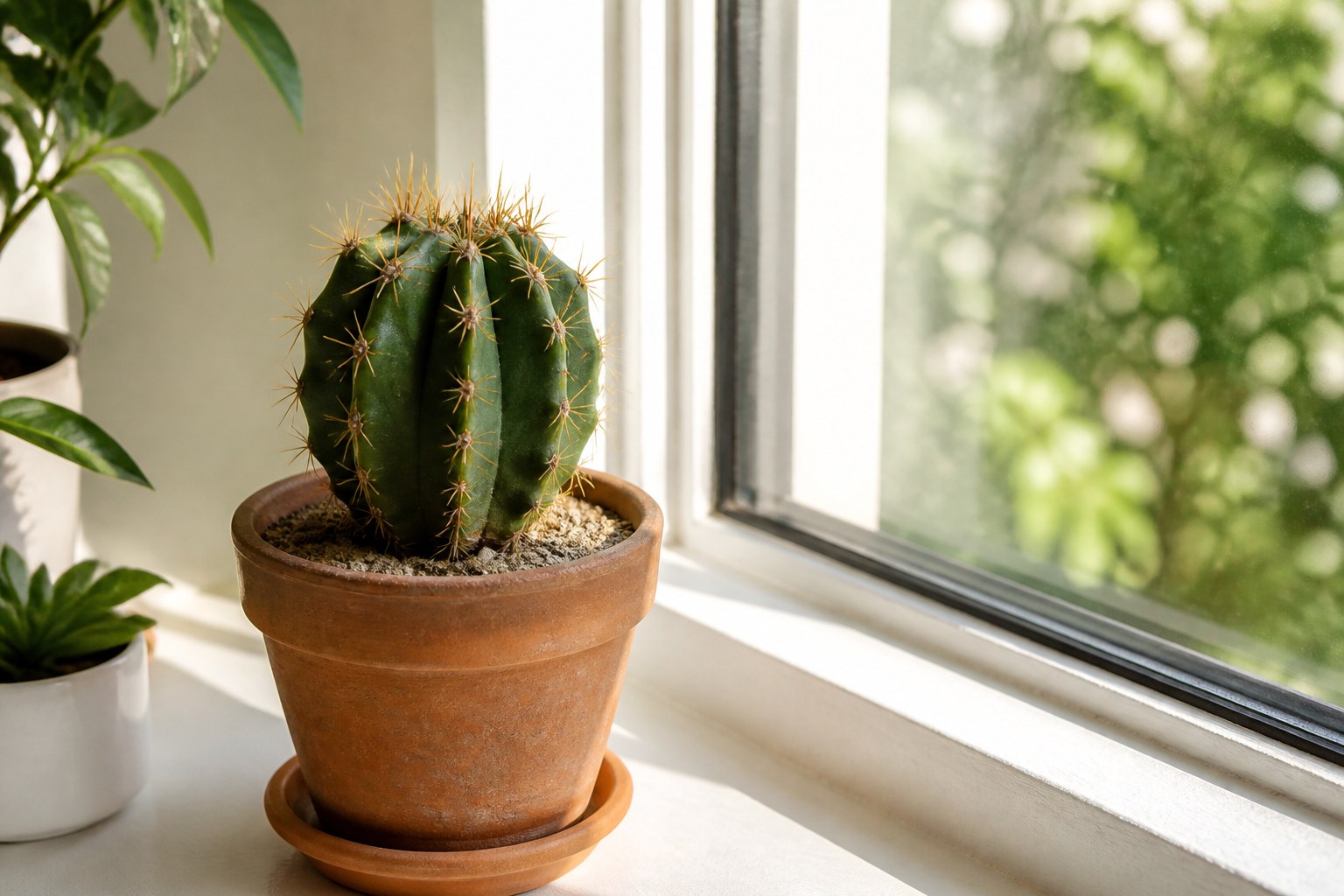
Cacti seem indestructible, yet many beginners kill them with kindness. These desert survivors need neglect more than attention — the key is understanding their unique needs. Here’s everything beginners need to know about light, soil, watering, and general cactus care.
Understanding Cacti
Cacti evolved in harsh desert environments where water is scarce, sun is intense, and soil drains instantly. Successful cactus care means replicating these conditions.
What makes cacti different:
- Store water in stems, roots, or pads
- Waxy coating prevents water loss
- Spines provide shade and protection
- Shallow, widespread root systems capture brief rains
- Slow metabolism conserves resources
Common beginner mistake: Treating cacti like typical houseplants. They need opposite care — less water, more light, and fast-draining soil.
Light Requirements
Light is the most critical factor for healthy cacti. Most species need intense, direct sunlight to thrive.
Outdoor Cacti
Ideal conditions:
- Full sun (6-8+ hours daily)
- South or west-facing location
- Protection from excessive rain in humid climates
Growing season (spring-fall):
- Maximum sun exposure
- Can tolerate extreme heat
Winter:
- Most desert cacti tolerate light frost (brief dips to 28-32°F)
- Protect tropical cacti (Christmas cactus, dragonfruit) from any frost
- Reduce water when temperatures drop
Indoor Cacti
Best locations:
- South-facing window (Northern Hemisphere)
- West-facing window (second choice)
- Windowsill with 4-6+ hours direct sun
Signs of adequate light:
- Compact growth
- Normal color (green, blue-green, or natural hue)
- Spines develop properly
Signs of insufficient light:
- Etiolation (stretching, thinning growth)
- Pale or yellowing color
- Leaning toward light source
- Weak, thin new growth
- Few or no spines
Fixing light problems:
Add supplemental light:
- LED grow lights (full spectrum)
- Position 6-12 inches above plants
- Run 12-14 hours daily
Move closer to window:
- Place directly on windowsill
- Remove curtains or blinds
- Rotate pot weekly for even exposure
Acclimation to bright light:
When moving cacti to brighter conditions, increase exposure gradually over 2-3 weeks to prevent sunburn. Yes, even cacti can burn if exposure changes too quickly.
Soil Requirements
Desert soil drains instantly — water disappears in seconds. Cactus soil must replicate this.
Why Regular Potting Soil Fails
Standard potting mix:
- Retains moisture too long
- Stays soggy for days
- Causes root rot
- Compacts over time
Result: Dead cactus from overwatering or root rot.
Perfect Cactus Soil Recipe
Basic formula: 50% drainage material + 50% organic matter
Drainage materials (choose 1-2):
- Perlite (white volcanic glass)
- Pumice (porous volcanic rock) — best choice
- Coarse sand (not fine/beach sand)
- Gravel (⅛-¼ inch size)
- Chicken grit
Organic matter (choose 1-2):
- Cactus potting mix (commercial base)
- Regular potting soil
- Coconut coir
- Compost (small amount)
DIY Cactus Soil Mix
Basic recipe (budget-friendly):
- 50% regular potting soil
- 25% perlite
- 25% coarse sand
Premium recipe (best performance):
- 40% potting soil or cactus mix
- 40% pumice
- 20% perlite or coarse sand
Desert cactus mix (for golden barrel, prickly pear):
- 30% potting soil
- 50% pumice
- 20% coarse sand
Forest cactus mix (for Christmas cactus, Easter cactus):
- 60% potting soil
- 30% perlite
- 10% orchid bark
Testing Drainage
The pour test:
- Water soil thoroughly in pot
- Observe how fast water drains
- Ideal: Water exits bottom in 5-10 seconds
- If water pools on surface or drains slowly → Add more drainage material
Where to Buy Ingredients
Pumice: Home improvement stores, Amazon, bonsai suppliers ($8-15 per bag)
Perlite: Garden centers ($5-10 per bag)
Coarse sand: Pool supply stores, landscaping yards ($5-10 per bag)
Avoid: Fine sand, beach sand, play sand — these compact and block drainage
Watering: The #1 Killer
More cacti die from overwatering than all other causes combined. When in doubt, skip watering.
How Often to Water
Growing season (spring and summer):
Outdoor cacti: Every 7-10 days in hot, dry weather; every 10-14 days in moderate weather
Indoor cacti: Every 10-14 days
Dormant season (fall and winter):
Outdoor cacti: Monthly or not at all (if dormant)
Indoor cacti: Every 3-4 weeks
Overrides: Always check soil moisture before watering (see below). These are starting guidelines, not rigid rules.
The Correct Way to Water
Soak and dry method (only correct method):
- Wait until soil is completely dry
- Water thoroughly until water runs from drainage holes
- Let pot drain completely
- Don’t water again until soil fully dries
Never:
- Water on a schedule regardless of soil moisture
- Give small sips daily
- Let pots sit in water-filled saucers
- Water if soil is still moist
Checking Soil Moisture
Finger test:
- Insert finger 1-2 inches into soil
- If any moisture remains → Don’t water
- If completely dry → Water thoroughly
Chopstick method:
- Insert wooden chopstick to pot bottom
- Leave 5 minutes
- Remove and check for moisture
- Dry chopstick → Time to water
- Damp/dark chopstick → Wait
Moisture meter: Available at garden centers ($10-15). Insert probe and read gauge.
Signs of Overwatering
Early signs:
- Soft, mushy base
- Yellow or translucent appearance
- Wrinkled despite watering
- Foul smell from soil
Advanced signs:
- Black or brown mushy spots
- Sections falling off
- Visible rot at soil line
Action: Stop watering immediately. Unpot, inspect roots, cut away rot, repot in fresh dry soil.
Signs of Underwatering
Early signs:
- Wrinkled, shriveled appearance
- Slight softness (not mushy)
- Dull color
Action: Water thoroughly. Cactus should plump up within 24-48 hours.
Note: Underwatering is much easier to fix than overwatering. When unsure, underwater.
Container Selection
Pot choice impacts watering needs and root health.
Best pots for cacti:
Terra cotta (unglazed clay):
- Breathes (allows moisture evaporation through walls)
- Dries soil faster
- Prevents overwatering
- Affordable
- Best choice for beginners
Ceramic with drainage:
- Attractive
- Holds moisture longer (requires less frequent watering)
- Good for experienced growers
Plastic:
- Lightweight
- Inexpensive
- Retains moisture longest (easier to overwater)
- Acceptable if you’re careful with watering
Avoid:
- Pots without drainage holes
- Glass containers (unless planted as dry terrariums)
- Deep pots (cacti have shallow roots)
Size: Choose pot 1-2 inches wider than cactus base. Too-large pots hold excess water.
Repotting Cacti
When to repot:
- Every 2-3 years
- When rootbound
- After purchasing (often in poor soil)
- If soil stays wet too long
Best time: Early spring before active growth begins
Method:
- Protect your hands: Use thick gloves, folded newspaper, or carpet scraps to handle cactus
- Remove from pot: Tap bottom; gently work cactus out
- Inspect roots: Cut away dead or rotted roots with sterile scissors
- Let callous (if roots were cut): Allow cut areas to dry 3-5 days before planting
- Use fresh soil: Don’t reuse old soil
- Plant at same depth: Don’t bury deeper than before
- Wait to water: Don’t water for 5-7 days after repotting
Temperature Needs
Optimal growing temperatures:
- Day: 70-85°F
- Night: 50-60°F (cooler nights trigger flowering)
Winter dormancy (for desert species):
- Cool period encourages flowering
- Ideal: 45-55°F at night
- Reduce watering during dormancy
Frost tolerance:
- Most desert cacti: Brief light frost okay
- Tropical cacti: No frost tolerance (bring indoors)
Fertilizing
Cacti are light feeders. Over-fertilizing causes problems.
Fertilizer type: Balanced (10-10-10) or low-nitrogen cactus formula
Frequency:
- Growing season: Monthly at ¼ strength, or
- Growing season: Every 2-3 months at half strength
- Winter: Don’t fertilize
Signs of overfertilizing:
- Weak, watery growth
- Salt crust on soil surface
When to skip fertilizer:
- Newly planted or repotted cacti (wait 2-3 months)
- Stressed or damaged plants
Common Beginner Mistakes
1. Overwatering → Kills more cacti than anything else. When in doubt, wait.
2. Insufficient light → Causes weak, stretched growth. Give maximum light possible.
3. Using regular potting soil → Stays too wet. Always use cactus-specific mix or make your own.
4. Pots without drainage → Recipe for root rot. Always use containers with holes.
5. Watering on schedule → Check soil moisture instead.
Pest Problems
Common pests:
Mealybugs: White cottony masses in crevices
- Remove with cotton swab dipped in rubbing alcohol
Scale: Brown bumps on surface
- Scrape off or treat with horticultural oil
Spider mites: Fine webbing, stippled appearance
- Spray with water or insecticidal soap
For comprehensive pest control strategies, see our garden pest identification guide.
Choosing Your First Cactus
Easiest species for beginners:
Golden Barrel (Echinocactus grusonii):
- Classic round shape
- Tolerates neglect
- Indoor or outdoor
Bunny Ears (Opuntia microdasys):
- Cute pad-shaped segments
- Fast-growing
- Handle with care (glochids stick to skin)
Old Man Cactus (Cephalocereus senilis):
- Covered in white “hair”
- Slow-growing
- Forgiving
Christmas Cactus (Schlumbergera):
- Not a true cactus (forest succulent)
- Tolerates lower light
- Needs more water than desert cacti
- Blooms reliably
Avoid as first cactus:
- Grafted moon cacti (short lifespan)
- Tiny seedlings (challenging)
- Rare/expensive species
Quick Start Guide
Day 1:
- Choose south-facing window
- Buy or make cactus soil
- Select pot with drainage (terra cotta best)
- Plant cactus
Week 1-2:
- Don’t water (let settle)
- Monitor light (rotate if leaning)
- Check for pests
Week 3+:
- Water when soil completely dry
- Continue monitoring light
Month 2-6:
- Establish watering routine based on soil drying
- Fertilize lightly monthly (growing season)
- Watch for signs of problems
Troubleshooting
Shriveling → Underwater (check soil; if dry, water thoroughly)
Soft/mushy → Overwatered (stop watering; may need repotting)
Stretching/pale → Insufficient light (move to brighter spot)
Not growing → Normal (cacti grow slowly); or dormant season; or needs fertilizer
Brown patches → Sunburn (acclimate to bright light gradually)
The Bottom Line
Cactus care is simple once you reverse typical houseplant thinking: less is more. Bright light, fast-draining soil, and infrequent deep watering are the three non-negotiables.
Start with an easy species, use proper soil, place in your brightest window, and water only when completely dry. Resist the urge to fuss over them — cacti thrive on neglect.
Give your cactus these basics, and you’ll enjoy a low-maintenance plant that lives for decades with minimal care.