How to Get Rid of Fungus Gnats in Houseplants Soil
Eliminate fungus gnats from your indoor plants with these proven natural methods. Learn prevention, identification, and effective control strategies.
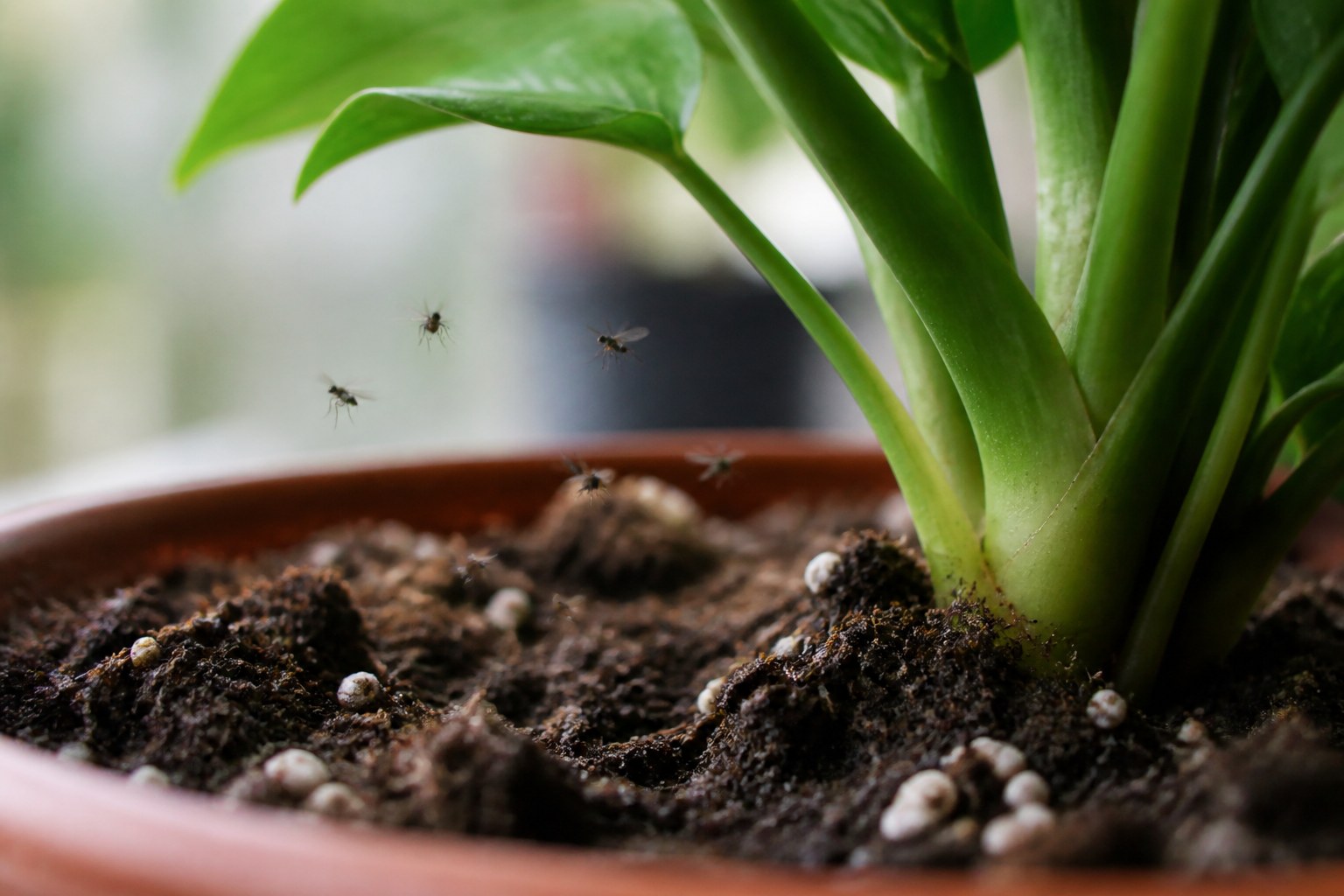
Fungus gnats are one of the most annoying houseplant pests — tiny flying insects that swarm around your plants and make you question your indoor gardening skills. The good news? They’re easier to control than you think.
What Are Fungus Gnats?
Fungus gnats are small black flies (1-3mm long) that look like tiny mosquitoes. Adult gnats are mostly harmless, but their larvae live in moist potting soil and feed on organic matter, fungi, and plant roots.
How to identify them:
- Small dark flies hovering around plants
- Particularly active when you water
- Larvae are tiny translucent worms in the soil
- Plants may show stunted growth if infestation is severe
Why they appear:
- Overwatered soil (their favorite breeding ground)
- Organic matter decomposing in potting mix
- New plants brought home from nurseries
- Open windows near houseplants
The Life Cycle Problem
Understanding their life cycle helps you eliminate them effectively:
- Eggs: Laid in moist soil (up to 200 per female)
- Larvae: Hatch in 4-6 days, feed on roots for 2 weeks
- Pupae: Transform in soil for 3-4 days
- Adults: Emerge, live 7-10 days, repeat cycle
Breaking the cycle is key — you need to kill both larvae in the soil and adults in the air.
Solution 1: Let Soil Dry Out
The simplest and most effective long-term solution.
Why it works: Fungus gnat larvae need consistently moist soil to survive. Drying out the top 2 inches kills eggs and larvae.
How to do it:
- Allow soil to dry thoroughly between waterings
- Only water when top 2 inches are completely dry (stick your finger in)
- Water deeply but infrequently
- Remove any standing water from saucers
Best for: Mild infestations and long-term prevention
Timeline: 2-3 weeks to break the cycle
Solution 2: Yellow Sticky Traps
Capture adult gnats before they can lay more eggs.
Why it works: Adult fungus gnats are attracted to the color yellow. Sticky traps catch them before reproduction.
How to use them:
- Place yellow sticky cards near affected plants
- Position at soil level (where gnats emerge)
- Replace every 2-3 weeks or when covered
- Combine with other methods for best results
Best for: Monitoring infestation levels and catching adults
Limitation: Traps don’t kill larvae in soil — they only catch adults
Solution 3: Hydrogen Peroxide Soil Drench
Kill larvae directly in the soil with a safe chemical reaction.
Why it works: Hydrogen peroxide kills larvae and eggs on contact, then breaks down into water and oxygen.
Recipe:
- 1 part 3% hydrogen peroxide
- 4 parts water
How to apply:
- Allow soil to dry slightly
- Mix solution fresh (don’t store)
- Water plants thoroughly with mixture
- Expect foaming and fizzing (normal)
- Repeat every 5-7 days for 3 weeks
Best for: Moderate to severe infestations
Safety: Safe for plants when properly diluted
Solution 4: Diatomaceous Earth
Create a physical barrier that kills larvae and adults.
Why it works: Food-grade diatomaceous earth consists of microscopic sharp edges that damage soft-bodied insects.
How to use it:
- Sprinkle a thin layer (1/4 inch) on top of soil
- Reapply after watering (it only works when dry)
- Avoid inhaling dust during application
- Use food-grade only (not pool-grade)
Best for: Prevention and mild infestations
Limitation: Less effective in constantly moist soil
Solution 5: Mosquito Bits or Dunks
Biological control that targets larvae specifically.
Why it works: Contains Bacillus thuringiensis israelensis (Bti), a bacteria that kills fungus gnat larvae but is harmless to plants, people, and pets.
How to use:
- Mosquito Bits: Sprinkle on soil surface or soak in water before watering
- Mosquito Dunks: Break into pieces and let soak in watering can
Application:
- Soak 1 tablespoon Bits per 4 cups water for 30 minutes
- Strain and use solution to water plants
- Repeat every 5-7 days for 2-3 weeks
Best for: Safe, effective larvae control without chemicals
Solution 6: Bottom Watering
Change your watering method to make soil less hospitable.
Why it works: Keeps soil surface dry while hydrating roots. Fungus gnats prefer moist topsoil.
How to do it:
- Place plant (with drainage holes) in shallow water
- Let soil absorb water from bottom for 10-20 minutes
- Remove from water and let drain
- Top inch of soil stays dry, deterring egg-laying
Best for: Long-term prevention after infestation is controlled
Solution 7: Replace Top Layer of Soil
Remove the breeding ground directly.
How to do it:
- Remove top 1-2 inches of potting soil
- Discard in sealed bag (don’t compost)
- Replace with fresh potting mix
- Top with sand or perlite to deter egg-laying
Best for: Severe infestations in valuable plants
Bonus: Sand or perlite layer makes it difficult for gnats to access soil
Prevention Strategies
Once you’ve eliminated fungus gnats, keep them from returning:
Watering practices:
- Let soil dry between waterings
- Avoid overwatering (main cause)
- Remove water from saucers immediately
Soil management:
- Use well-draining potting mix
- Add perlite or sand to improve drainage
- Avoid mulch or organic matter on soil surface
New plants:
- Quarantine new plants for 2-3 weeks
- Inspect soil before bringing plants home
- Consider repotting with fresh soil immediately
Air circulation:
- Use fans to improve airflow
- Don’t crowd plants together
- Good ventilation makes conditions less favorable
The Complete Elimination Plan
For a serious infestation, combine methods:
Week 1-2:
- Let soil dry out significantly
- Water with hydrogen peroxide solution (1:4)
- Place yellow sticky traps around plants
- Remove and replace top layer of soil
Week 3-4:
- Start mosquito bits treatment
- Switch to bottom watering
- Continue sticky traps
- Monitor for new adult gnats
Week 5+:
- Maintain proper watering schedule
- Keep soil surface dry
- Replace sticky traps as needed
- Celebrate your gnat-free plants!
When to Worry About Root Damage
Fungus gnat larvae rarely kill healthy plants, but heavy infestations can cause problems:
Warning signs:
- Yellowing leaves despite proper care
- Wilting even when soil is moist
- Stunted growth in new plants or seedlings
- Visible root damage when checking soil
Most vulnerable: Seedlings, cuttings, and plants with sensitive root systems
Healthy adult plants usually tolerate larvae without significant damage.
Common Mistakes to Avoid
Overwatering while treating: Defeats the purpose of drying out soil
Using only sticky traps: Doesn’t address larvae in soil
Expecting instant results: Breaking the life cycle takes 2-3 weeks
Treating only affected plants: Gnats easily spread to nearby plants — treat all houseplants
Not addressing root cause: If you don’t fix overwatering habits, gnats will return
What About Chemical Pesticides?
Systemic insecticides work but aren’t necessary. Natural methods are safer, cheaper, and equally effective when used consistently.
If you choose pesticides:
- Read labels carefully
- Follow safety instructions
- Keep away from pets and children
- Consider as last resort only
For comprehensive pest management strategies, check out our Common Garden Pests: Identification and Natural Control Methods guide.
The Bottom Line
Fungus gnats are annoying but manageable. The key is consistency: dry out the soil, kill larvae with hydrogen peroxide or mosquito bits, trap adults with sticky traps, and change your watering habits.
Most importantly, don’t panic. Every houseplant owner deals with fungus gnats eventually. With the right approach, you’ll eliminate them in 2-3 weeks and keep them from coming back.
Your plants (and your sanity) will thank you.