How to Get Rid of Tomato Hornworm Caterpillars: 3 Proven Methods
Stop tomato hornworms from destroying your plants with these effective control methods. Learn identification, prevention, and organic solutions.
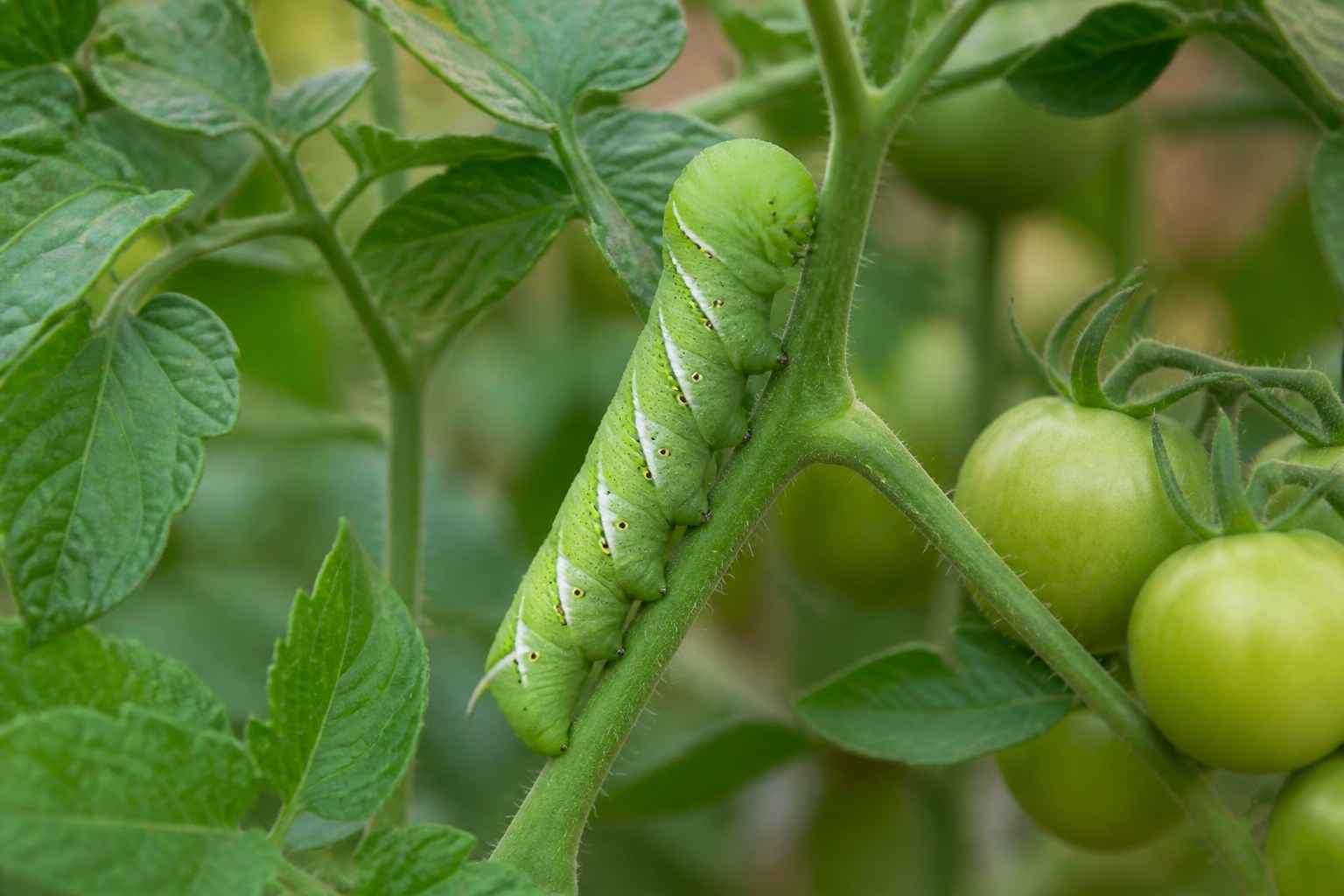
You check your tomato plants in the morning and everything looks fine. By evening, entire branches are stripped bare. Meet the tomato hornworm — one of the most destructive garden pests that’s surprisingly difficult to spot.
Identifying Tomato Hornworms
What they look like:
- Massive green caterpillars (3-5 inches long)
- White diagonal stripes along the body
- Black or red horn on the rear end
- Excellent camouflage — blend perfectly with foliage
Two common species:
- Tomato hornworm: Green with white V-shaped markings
- Tobacco hornworm: Green with white diagonal lines and red horn
Both cause identical damage and are controlled the same way.
Signs of hornworm damage:
- Rapidly disappearing leaves (often overnight)
- Branches stripped to bare stems
- Large dark green or black droppings (frass) on leaves
- Fruit with large chewed areas
- Entire sections of plant defoliated
Where to find them: Look on the underside of leaves and along stems. Check in early morning or evening when they’re most active.
The Hornworm Life Cycle
Understanding their development helps you control them effectively:
- Eggs: Laid on leaf undersides by hawk moths (1mm, pale green)
- Larvae: Hatch in 1 week, feed for 4 weeks, grow enormous
- Pupae: Burrow 3-4 inches underground, overwinter in soil
- Adults: Emerge as large gray moths (3-5 inch wingspan) in spring
Key insight: They pupate in soil near where they fed. Tilling disrupts this cycle.
Method 1: Hand-Picking (Most Effective)
The best control method is surprisingly low-tech.
Why it works: Hornworms are large, slow-moving, and there are rarely more than a few per plant. Physical removal is immediate and 100% effective.
How to hand-pick:
- Look for droppings first: Fresh black or green pellets indicate active feeding nearby
- Follow the trail up: Hornworms are usually directly above their droppings
- Check thoroughly: Inspect undersides of leaves and along stems
- Hunt morning or evening: They’re most visible during these times
- Use a flashlight at dusk: Makes them easier to spot
Disposal methods:
- Drop in bucket of soapy water
- Cut in half with scissors
- Feed to chickens (they love them)
- Leave for birds to find
Best for: Small to medium gardens where daily inspection is feasible
Important exception: If you see white cocoons on a hornworm’s back, leave it alone (see Method 3).
Method 2: Bt Spray (Organic Biological Control)
Safe, targeted, and highly effective against caterpillars.
What is Bt? Bacillus thuringiensis (Bt) is a naturally occurring soil bacteria that produces proteins toxic to caterpillars but harmless to humans, pets, and beneficial insects.
Why it works: When caterpillars eat Bt-treated leaves, the bacteria paralyze their digestive system. They stop feeding within hours and die in 2-3 days.
How to apply:
- Timing: Apply in late afternoon or evening (UV light degrades Bt)
- Coverage: Spray all leaf surfaces, especially undersides
- Frequency: Reapply after rain or every 7-10 days
- Early application: Most effective on small hornworms
Product recommendations:
- Bonide Thuricide
- Monterey Bt
- Safer Caterpillar Killer
Application tips:
- Mix fresh each time (doesn’t store well once diluted)
- Add a few drops of dish soap to help solution stick
- Target areas with recent damage or droppings
- Apply preventively if you’ve had problems before
Best for: Larger gardens or when hornworms are small and hard to spot
Limitations:
- Only kills caterpillars that eat treated leaves
- Degrades in sunlight (short residual)
- Must be reapplied regularly
Method 3: Encourage Parasitic Wasps (Free Natural Control)
Nature’s solution is elegant and self-sustaining.
How it works: Tiny parasitic wasps (Cotesia congregata) lay eggs inside hornworms. Larvae develop inside the caterpillar, then emerge and spin white cocoons on its back.
Recognizing parasitized hornworms:
- White rice-like cocoons covering the caterpillar’s body
- Hornworm moving slowly or not at all
- Often found on exposed surfaces
What to do: Leave them alone. Each parasitized hornworm produces dozens of new wasps that will hunt more hornworms.
Attracting parasitic wasps:
- Plant nectar-rich flowers: yarrow, alyssum, dill, fennel
- Avoid broad-spectrum pesticides
- Leave small areas of garden semi-wild
- Plant diverse flowering plants throughout garden
Other beneficial predators:
- Braconid wasps: Also parasitize hornworms
- Paper wasps: Hunt caterpillars to feed their young
- Ground beetles: Eat hornworm eggs
- Birds: Many species eat large caterpillars
Best for: Long-term sustainable control with minimal intervention
Prevention Strategies
Stop hornworms before they become a problem.
Crop Rotation
Why it works: Pupae overwinter in soil where caterpillars fed. Moving tomatoes to new locations breaks the cycle.
How to do it:
- Don’t plant tomatoes, peppers, or eggplants in same spot for 3 years
- Keep records of where you plant nightshade crops
- Use different garden beds or containers each season
Tilling in Fall and Spring
Why it works: Exposes pupae to cold, predators, and damage from disruption.
When to till:
- Fall: After harvesting tomatoes
- Early spring: Before planting
How deep: Till 4-6 inches to reach buried pupae
Floating Row Covers
Why it works: Excludes adult moths so they can’t lay eggs.
How to use:
- Install immediately after transplanting
- Secure edges completely (moths will find gaps)
- Remove when plants flower (or hand-pollinate)
- Reapply if moth activity is high
Best for: Early season protection
Limitation: Must be removed for pollination unless you hand-pollinate
Companion Planting
Plants that may deter hornworms:
- Marigolds: Strong scent may repel moths
- Basil: Traditional companion for tomatoes
- Borage: Attracts beneficial insects
- Dill: Attracts parasitic wasps
Evidence: Mostly anecdotal, but these plants support beneficial insects regardless.
Regular Inspection
Weekly checks prevent infestations:
- Look for droppings on leaves and ground
- Inspect undersides of leaves
- Watch for sudden defoliation
- Check plants thoroughly every 3-4 days in peak season (July-August)
Early detection is key: Small hornworms are easier to control and cause less damage.
What About Chemical Pesticides?
Synthetic pesticides work but kill beneficial insects too. Given how effective hand-picking and Bt are, chemicals are rarely necessary.
If you choose pesticides:
- Spinosad (organic, low toxicity to beneficials)
- Pyrethrin (broad-spectrum, kills all insects)
- Carbaryl/Sevin (highly toxic to bees and beneficials)
Better approach: Use targeted methods that preserve beneficial insects and maintain garden ecosystem balance.
Dealing With Heavy Infestations
If you have many hornworms or can’t check plants daily:
Immediate action:
- Hand-pick as many as possible
- Apply Bt spray thoroughly to all plants
- Inspect neighboring tomato plants immediately
- Check peppers and eggplants (hornworms eat them too)
Follow-up:
- Reapply Bt every 5-7 days
- Daily inspections for droppings
- Remove any new hornworms immediately
- Document dates and locations for next season
Next season prevention:
- Till deeply in fall and spring
- Rotate planting locations
- Start inspections earlier in season
- Consider preventive Bt applications
Other Plants Hornworms Attack
While called “tomato” hornworms, they also feed on:
- Peppers
- Eggplant
- Potatoes
- Tobacco
- Petunias
Check all nightshade family plants if you find hornworms on tomatoes.
The Moth Connection
Adult hornworms are large sphinx or hawk moths — impressive pollinators with 3-5 inch wingspans.
Moths appear: May to June in most regions
What they do: Feed on flower nectar at dusk, lay eggs on nightshade plants
Control at adult stage:
- Difficult to catch
- Focus on caterpillar stage instead
- Using lights or traps isn’t practical
For more comprehensive tomato growing information, including other common pests and problems, read our How to Grow Perfect Tomatoes: A Beginner’s Guide.
The Bottom Line
Tomato hornworms can defoliate plants rapidly, but they’re easy to control with consistent monitoring and simple methods:
- Check plants every few days for droppings and damage
- Hand-pick hornworms when you find them (most effective)
- Use Bt spray for broader coverage or when caterpillars are small
- Preserve parasitized hornworms to build beneficial insect populations
- Till in fall and spring to destroy overwintering pupae
The key is vigilance. Regular inspection catches problems before they become disasters. A few minutes every few days checking your plants prevents hours of frustration and stripped tomato vines.
Don’t let their intimidating size fool you — hornworms are slower and easier to control than tiny pests like aphids. Stay alert, act quickly, and enjoy your hornworm-free tomato harvest.