4 Methods to Get Rid of Mealybugs in Your Houseplants
Discover effective natural methods to eliminate mealybugs from indoor plants. Learn identification, treatment, and prevention strategies to protect your houseplants.
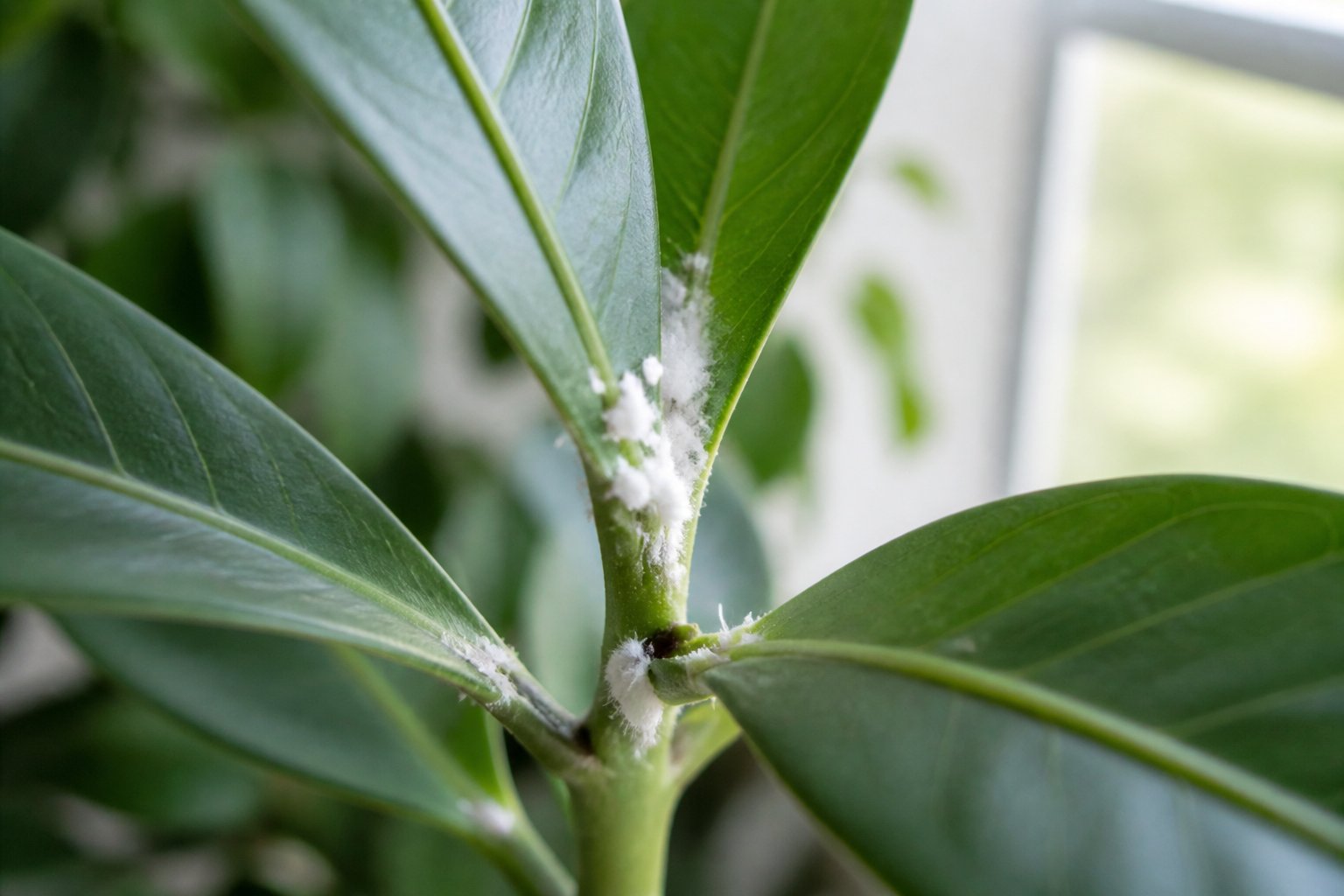
Finding white cottony clusters on your favorite houseplant is alarming — you’ve discovered mealybugs. These soft-bodied insects hide in leaf joints and stems, slowly draining your plant’s vitality while multiplying rapidly. Here’s how to eliminate them and keep them from returning.
What Are Mealybugs?
Mealybugs are small sap-sucking insects covered in white, waxy coating that resembles cotton or flour. They congregate in protected plant areas and feed on plant juices.
Identifying mealybugs:
- White fuzzy or cottony appearance (3-5mm long)
- Cluster in leaf joints, stem crevices, and undersides of leaves
- Leave sticky honeydew residue on leaves and surfaces
- Move slowly (unlike faster-moving whiteflies)
- Can attract ants (drawn to honeydew)
Damage they cause:
- Stunted growth and yellowing leaves
- Distorted new growth
- Leaf drop in severe infestations
- Sooty mold fungus (grows on honeydew)
- Plant death if left untreated
Where they come from:
- New plants from nurseries or stores
- Contaminated potting soil
- Houseplants that spent summer outdoors
- Cut flowers or produce from garden
- Spread from neighboring infested plants
Why Mealybugs Are So Persistent
Life cycle challenges:
- Eggs: Laid in cottony sacs (100-200 per female)
- Crawlers: Mobile young disperse to new feeding sites
- Adults: Settle and feed for weeks, continuously reproducing
- Overlapping generations: All life stages present simultaneously
What makes them difficult:
- Waxy coating protects them from sprays
- Hide in hard-to-reach plant crevices
- Reproduce rapidly (new generation every 4-6 weeks)
- Can infest roots as well as foliage
- Resistant to many synthetic pesticides
The key to elimination: Persistence and multi-method approach
Method 1: Rubbing Alcohol Treatment
The fastest way to kill mealybugs on contact.
Why it works: Isopropyl alcohol dissolves the waxy coating and dehydrates mealybugs instantly.
What you need:
- 70% isopropyl rubbing alcohol
- Cotton swabs or small spray bottle
- Cotton pads (for larger areas)
How to apply:
For spot treatment:
- Dip cotton swab in rubbing alcohol
- Dab directly onto visible mealybugs
- Watch them turn brown/black immediately (they’re dead)
- Check all leaf joints, stem nodes, and undersides
- Inspect soil surface and drainage holes
- Repeat every 3-4 days for 2-3 weeks
For spray application:
- Fill spray bottle with 70% rubbing alcohol
- Test on one leaf first (wait 24 hours for damage)
- Spray entire plant, especially hidden areas
- Let sit 10-15 minutes, then rinse with water
- Move plant away from direct sun while drying
Best for: Small infestations, spot treatments, immediate knockdown
Caution: Can damage sensitive plants (ferns, succulents). Always test first.
Method 2: Insecticidal Soap Spray
Safe, effective control that breaks down the protective coating.
Why it works: Soap penetrates waxy covering, disrupts cell membranes, and kills on contact.
Recipe for DIY insecticidal soap:
- 1 teaspoon pure liquid castile soap or mild dish soap
- 1 liter (4 cups) water
- Mix gently (avoid creating foam)
Application instructions:
- Prepare plant: Move to sink, shower, or outdoors
- Spray thoroughly: Cover all plant surfaces, especially undersides and crevices
- Let sit: Allow soap solution to work for 10-15 minutes
- Rinse well: Wash soap off with clean water (prevents leaf damage)
- Dry properly: Let plant drain, keep out of direct sun while wet
Treatment schedule:
- Week 1: Spray every 2-3 days
- Week 2-3: Spray once weekly
- Week 4: Monitor and spot-treat if needed
Combination method: For small plants, wash entire plant with soap solution, scrubbing gently with soft brush or cloth. This physically removes mealybugs while treating with soap.
Best for: Moderate infestations, gentle treatment, safe for most plants
Method 3: Neem Oil Solution
Long-lasting natural insecticide with residual protection.
Why it works: Neem oil suffocates mealybugs, disrupts reproduction, and prevents larvae from developing. Provides 7-14 days of residual protection.
Active ingredient: Azadirachtin (from neem tree seeds)
How to prepare neem spray:
- 2 teaspoons pure neem oil
- 1 teaspoon mild liquid soap (helps oil mix with water)
- 1 liter water (room temperature)
- Shake well before each use
Application steps:
- Apply in evening or early morning (avoid hot sun)
- Spray all plant surfaces until dripping
- Pay special attention to undersides and crevices
- Ensure soil surface is treated (kills crawlers)
- Reapply every 7 days for 3-4 weeks
Additional benefits:
- Prevents new infestations
- Controls other pests (aphids, spider mites, scale)
- Systemic action (some absorption by plant)
- Safe for beneficial insects when dry
Best for: Severe infestations, ongoing prevention, organic pest control
Important notes:
- May smell strong (dissipates in 24-48 hours)
- Can damage ferns and some sensitive plants (test first)
- Keep away from pets until dry
- Store in cool, dark place (neem degrades in light/heat)
Method 4: Horticultural Oil or Systemic Treatment
Heavy-duty options for persistent infestations.
Horticultural oil:
Similar to neem but refined petroleum or plant-based oils.
How to use:
- Purchase ready-to-use horticultural oil spray
- Follow label directions (typically 2-4 tablespoons per liter)
- Spray entire plant, coating thoroughly
- Reapply every 7-10 days
Benefits: More refined than neem, often less odor, effective coverage
Systemic insecticides (last resort):
Granules or liquid applied to soil; plant absorbs chemical through roots.
When to consider:
- Severe infestations that won’t respond to natural methods
- Root mealybugs (difficult to reach with sprays)
- Valuable plants you can’t afford to lose
- Multiple treatment rounds have failed
Common active ingredients: Imidacloprid, dinotefuran
Application: Follow package directions carefully (typically watered into soil)
Caution: Not organic, can harm beneficial insects, avoid on edible plants
Best for: Stubborn infestations, root mealybugs, when other methods fail
The Complete Elimination Strategy
Combine methods for fastest, most thorough control:
Week 1:
- Isolate affected plant(s) immediately
- Use rubbing alcohol to kill visible mealybugs (day 1)
- Spray entire plant with insecticidal soap (day 2)
- Apply neem oil solution (day 4)
- Inspect daily, spot-treat with alcohol
Week 2-3:
- Continue neem oil weekly
- Spot-treat any visible mealybugs with alcohol
- Check neighboring plants for spread
- Consider repotting if infestation is severe
Week 4+:
- Monitor closely for 4-6 weeks
- Treat any new appearances immediately
- Continue preventive neem every 2 weeks
Root Mealybugs: The Hidden Threat
Some mealybug species live in soil and feed on roots.
Signs of root infestation:
- Plant declining despite no visible pests
- White cottony masses in drainage holes
- Stunted growth and yellowing
- White coating on roots when unpotted
Treatment:
- Unpot plant carefully
- Rinse soil off roots under running water
- Treat roots with rubbing alcohol or neem solution
- Dip entire root ball in insecticidal soap solution
- Repot in fresh, sterile potting mix
- Discard old soil in sealed bag
- Sanitize pot with 10% bleach solution
Prevention: Keeping Mealybugs Away
New plant protocol:
- Quarantine all new plants for 2-3 weeks
- Inspect thoroughly (especially hidden areas)
- Consider preventive neem treatment
- Keep separate from other houseplants initially
Regular maintenance:
- Inspect plants weekly during watering
- Check undersides of leaves and stem joints
- Remove dead leaves and debris (hiding spots)
- Maintain good air circulation
- Avoid over-fertilizing (attracts pests)
Healthy plant practices:
- Proper watering (not too much, not too little)
- Adequate light for plant species
- Appropriate humidity levels
- Use sterile potting soil
- Clean pots and tools between uses
Monthly prevention:
- Spray diluted neem oil (1 tsp per liter) monthly
- Wipe leaves with damp cloth (removes dust and eggs)
- Rotate and inspect all sides of plants
Plants Most Susceptible to Mealybugs
High-risk houseplants:
- Orchids
- African violets
- Jade plants and succulents
- Ferns
- Coleus
- Citrus trees
- Cacti
- Hibiscus
Why they’re targeted: Soft growth, numerous hiding spots, or high sap content
When to Discard a Plant
Sometimes elimination isn’t practical:
Consider discarding if:
- Infestation is severe and spreading to other plants
- Multiple treatment attempts (4+ weeks) have failed
- Plant is weakened and unlikely to recover
- It’s a low-value plant and not worth the effort
- Infestation includes root mealybugs throughout soil
How to dispose:
- Seal plant in garbage bag
- Don’t compost (spreads pests)
- Sanitize pot before reusing (10% bleach solution)
- Monitor nearby plants for 6-8 weeks
Common Mistakes
Treating only visible mealybugs: Hidden ones in crevices and roots will re-infest
Stopping treatment too soon: Need 3-4 weeks minimum to break life cycle
Not isolating affected plants: Mealybugs crawl to neighboring plants
Using too much soap/oil: Can damage leaves; follow dilution rates
Treating in direct sun: Heat + oil/alcohol = leaf burn
Not checking new plants: Most common source of infestations
For comprehensive indoor plant pest management, see our guide on fungus gnats in houseplants.
The Bottom Line
Mealybugs are frustrating but conquerable. Start treatment immediately, use multiple methods, and persist for at least 3-4 weeks. Rubbing alcohol provides quick knockdown, insecticidal soap offers safe control, and neem oil delivers lasting protection.
The key is consistency. Check plants daily, treat thoroughly, and don’t give up after one attempt. Most infestations can be eliminated in 4-6 weeks with diligent care.
Inspect new plants before bringing them home, quarantine additions to your collection, and monitor regularly. Prevention is far easier than treatment — but when mealybugs do appear, you now have the tools to eliminate them completely.