Get Rid of Whiteflies & Save Your Indoor Plants
Eliminate whiteflies from indoor plants with proven control methods. Learn identification, natural treatments, and prevention to protect your houseplants.
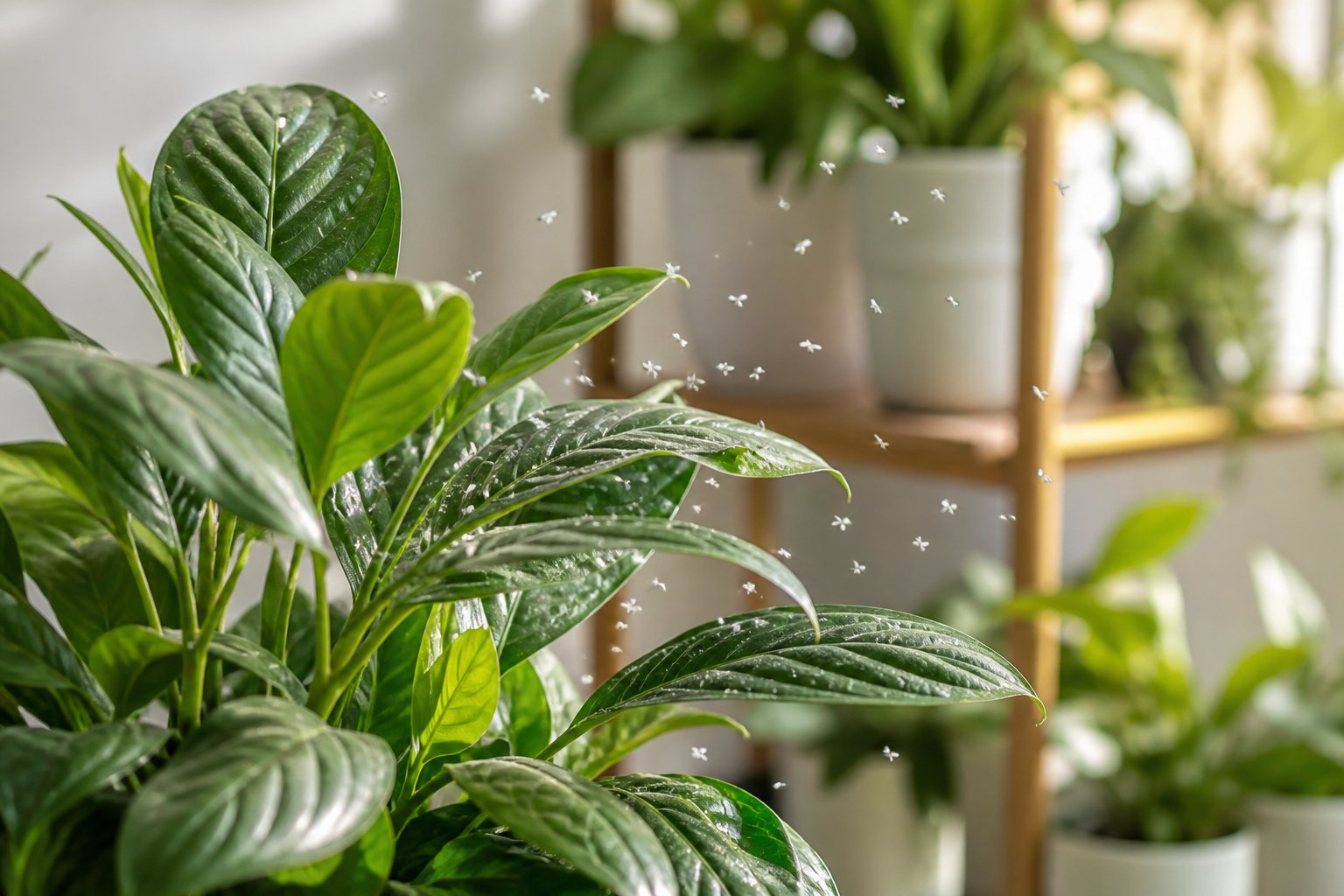
Those tiny white flying insects that swarm up when you water your houseplants — whiteflies. They’re sap-sucking pests that weaken plants, spread disease, and multiply rapidly indoors where they have no natural predators. Here’s how to eliminate them and keep your indoor plants healthy.
What Are Whiteflies?
Whiteflies are not true flies — they’re tiny sap-sucking insects related to aphids and mealybugs, covered in white waxy powder.
Identifying whiteflies:
- Very small (1-2mm long), moth-like appearance
- White, triangular shape when at rest
- Flutter up in cloud when plant is disturbed
- Found on undersides of leaves (often in groups)
- Most active during daytime
- Adults fly, but weakly (short distances)
Life stages present:
- Eggs (barely visible, laid on leaf undersides)
- Nymphs/crawlers (1st stage, mobile briefly then settle)
- Pupae (stationary, scale-like, on leaves)
- Adults (white, flying)
All stages feed on plants simultaneously — this is why whiteflies are difficult to control completely.
Damage they cause:
Direct damage:
- Suck plant sap (phloem) causing yellowing leaves
- Stunted growth and weakened plants
- Leaf drop in heavy infestations
- Distorted new growth
Indirect damage:
- Produce sticky honeydew (excreted sap)
- Honeydew attracts ants
- Sooty mold grows on honeydew (black fungus)
- Can transmit plant viruses
- Make plants unsightly and unhealthy
How they arrive:
- New plants from stores/nurseries (most common)
- Plants that spent summer outdoors
- Open windows near infested outdoor plants
- Cut flowers from garden
- Spread from neighboring houseplants
Why Whiteflies Thrive Indoors
Indoor environments are ideal for whiteflies.
Perfect conditions:
- Warm, consistent temperature year-round
- No natural predators (ladybugs, lacewings, parasitic wasps)
- No rain to knock them off plants
- No wind to disperse them
- Close proximity of plants (easy spread)
- Protected from weather extremes
Rapid reproduction:
- Female lays 200-400 eggs in lifetime
- Egg to adult in 25-30 days (faster in warmth)
- Multiple overlapping generations
- Population explodes quickly if not controlled
Plants most susceptible:
- Hibiscus (whitefly favorite)
- Fuchsia
- Poinsettias
- Tomatoes (indoor grown)
- Begonias
- Coleus
- Lantana
- Impatiens
- Citrus trees
Method 1: Yellow Sticky Traps
The first line of defense — capture adults before they reproduce.
Why yellow traps work: Whiteflies are strongly attracted to bright yellow color (resembles dying leaves, their preferred feeding sites)
What they do:
- Catch adult whiteflies
- Reduce egg-laying adults
- Monitor infestation levels
- Supplement other treatments
- Non-toxic and safe
How to use sticky traps:
- Choose right type: Purchase yellow sticky cards (specifically for whiteflies)
- Position strategically:
- Hang or stake near affected plants
- Just above foliage level (where adults fly)
- Place on multiple sides if plant is large
- One trap per medium plant, 2-3 for large plants
- Check regularly: Inspect every few days
- Replace when covered: Every 2-3 weeks or when completely full
- Continue long-term: Keep traps up for months (catches newly emerged adults)
Benefits:
- Immediate action (catches adults today)
- Safe for all plants
- Works 24/7 without effort
- Helps monitor treatment effectiveness (fewer flies = it’s working)
Limitation: Only catches adults, doesn’t kill eggs/nymphs/pupae on leaves
Best for: Light to moderate infestations, monitoring, as part of comprehensive treatment
Method 2: Water Spray and Physical Removal
Knock whiteflies off plants with simple water spray.
Why it works: Whiteflies are weak fliers; water dislodges them from leaves and many drown or can’t return
How to do it:
- Move plant to sink, shower, or outdoors
- Use strong spray: Handheld sprayer or hose with spray nozzle
- Target undersides of leaves: Where most whiteflies cluster
- Spray thoroughly: Every leaf, especially new growth
- Repeat frequently: Every 2-3 days for 2 weeks, then weekly
Best practices:
- Morning spraying (plant dries by evening, reduces disease risk)
- Support leaves with hand while spraying (prevents damage)
- Let plant drain thoroughly
- Remove standing water from saucers
For small plants:
- Submerge foliage in lukewarm water briefly
- Swish gently
- Shake off excess water
Combination approach: Spray first to dislodge whiteflies, then wipe leaves with damp cloth to remove eggs and nymphs
Best for: Immediate reduction, organic approach, low-cost solution
Limitation: Doesn’t kill eggs; requires frequent repetition
Method 3: Insecticidal Soap Spray
Safe, effective control that kills whiteflies on contact.
Why soap works: Breaks down protective waxy coating, penetrates soft bodies, disrupts cell membranes
DIY insecticidal soap recipe:
- 1 teaspoon pure liquid castile soap or mild dish soap
- 1 liter (4 cups) water
- Optional: 1 teaspoon vegetable or canola oil (helps soap stick)
Important: Use real soap (not detergent). Avoid soaps with degreasers, fragrances, or antibacterial agents.
Commercial options: Ready-to-use insecticidal soap (Safer Brand, etc.)
Application method:
- Test first: Spray one leaf, wait 24 hours for damage
- Prepare plant: Move to area where dripping is okay
- Spray thoroughly:
- Completely coat undersides of ALL leaves
- Top surfaces too
- Stems and new growth
- Use pump sprayer for good coverage
- Let sit: Allow soap to work for 10-15 minutes
- Rinse gently: Wash soap off with clean water (prevents leaf damage from residue)
- Let dry: Keep out of direct sun while wet
Treatment schedule:
- Week 1: Spray every 2-3 days (kills adults and some nymphs)
- Week 2-3: Spray every 4-5 days (kills newly emerged adults)
- Week 4+: Spray weekly until no whiteflies for 2 weeks
Why repeated applications are necessary: Soap only kills what it contacts. Eggs and some pupae survive, then hatch/emerge. Need to catch next generation before they reproduce.
Best for: Moderate to severe infestations, safe organic control, most houseplants
Sensitive plants (test carefully first):
- Ferns, palms, succulents
- African violets
- Ivy
- Some flowering plants
Method 4: Neem Oil Solution
Long-lasting botanical insecticide with systemic action.
Why neem works:
- Kills adults, nymphs, and some eggs on contact
- Disrupts insect growth and reproduction
- Provides residual protection (7-14 days)
- Some systemic action (absorbed by plant)
- Controls multiple pests simultaneously
Active ingredient: Azadirachtin (from neem tree seeds)
Neem oil spray recipe:
- 2 teaspoons pure neem oil (cold-pressed)
- 1 teaspoon mild liquid soap (emulsifier)
- 1 liter water (room temperature)
- Mix thoroughly, shake before each use
Application instructions:
- Timing is critical: Apply in evening or early morning (never in hot sun or temperatures above 85°F / 29°C)
- Shake bottle frequently: Oil separates from water
- Spray all surfaces:
- Drench undersides of leaves
- Top surfaces
- Stems, petioles
- Soil surface (kills crawlers)
- Let dry naturally: Don’t rinse (need residual action)
- Ensure good ventilation: Neem has strong odor (fades in 24-48 hours)
Treatment schedule:
- Apply every 7 days for first month
- Then every 14 days for 2 months
- Monthly as preventive afterward
Why neem is superior for whiteflies:
- Longer-lasting than soap
- Affects reproduction (surviving adults can’t reproduce normally)
- Kills more life stages
- Provides ongoing protection
- Less frequent applications needed
Best for: Persistent infestations, ongoing prevention, multiple pest problems
Important notes:
- Strong smell (temporary)
- Can damage some plants (ferns, some succulents) — test first
- Keep away from pets until dry
- Neem degrades in heat and light — store properly
- May temporarily give leaves shiny appearance
Method 5: Vacuum Removal (Immediate Reduction)
Surprisingly effective for quick adult removal.
Why it works: Physically removes flying adults immediately
How to vacuum whiteflies:
- Use handheld vacuum: Small, portable works best
- Morning is best: Whiteflies less active when cool
- Shake plant gently: Disturb whiteflies to make them fly
- Vacuum swarming flies: Move nozzle through cloud
- Vacuum leaf undersides: Get stationary ones too
- Do daily: For one week, then every few days
- Dispose of bag: Immediately (flies may escape)
Improvised trap vacuum method:
- Put knee-high stocking over vacuum nozzle
- Secure with rubber band
- Whiteflies caught in stocking, not vacuum bag
- Seal stocking and freeze overnight (kills flies)
- Reuse stocking
Best for: Immediate reduction, non-toxic method, supplement to other treatments
Limitation: Only removes adults; eggs and nymphs remain on leaves
Method 6: Horticultural Oil Spray
Suffocates whiteflies in all life stages.
How it works: Coats insects with oil film, blocking spiracles (breathing pores)
Types of horticultural oil:
- Refined petroleum oil (most common)
- Neem oil (described above, is a horticultural oil)
- Other plant-based oils (soybean, canola, etc.)
Application:
- Use ready-to-use product OR
- Mix according to label (typically 1-2 tablespoons per quart water)
- Add drop of dish soap as emulsifier
- Spray entire plant, especially undersides
- Apply when temperatures below 85°F (29°C)
- Don’t apply to stressed or drought-stressed plants
Effectiveness: Kills whiteflies on contact, including eggs and pupae (which soap doesn’t kill as well)
Best for: Heavy infestations, when multiple life stages present
The Complete Elimination Strategy
Combine methods for fastest, most thorough control.
Week 1 — Immediate knockdown:
- Day 1: Hang yellow sticky traps around all affected plants
- Day 1: Vacuum or spray off as many adults as possible
- Day 2: Spray with insecticidal soap OR neem oil (choose one)
- Day 4-5: Repeat spray treatment
- Day 7: Third spray treatment
- Monitor daily, vacuum any adults you see
Week 2-3 — Kill next generation:
- Continue spray treatments every 5-7 days
- Keep sticky traps in place (replace as needed)
- Vacuum any adult flies
- Watch for reduction in numbers (should decline noticeably)
Week 4-8 — Ensure complete elimination:
- Continue weekly treatments even if flies seem gone
- Monitor sticky traps (a few catches are normal, dozens mean problem persists)
- Inspect leaf undersides for eggs/nymphs/pupae
- Gradually extend treatment interval if no flies for 2+ weeks
Month 3+ — Prevention:
- Spray preventively with neem every 2-4 weeks
- Keep sticky traps up permanently (monitoring)
- Inspect plants weekly
- Maintain plant health
Isolation and Quarantine
Critical to prevent spread to other houseplants.
Immediately upon discovery:
- Move affected plant(s): Isolate from other houseplants
- Check neighboring plants: Inspect thoroughly, isolate if whiteflies present
- Treat isolated plants: Begin treatment immediately
- Monitor quarantine: Keep separate until 4-6 weeks after last whitefly seen
Quarantine area:
- Separate room if possible
- At minimum, 6-10 feet from other plants
- Avoid air circulation that blows toward clean plants
- Place sticky traps around clean plants (early warning)
Prevention: Keeping Whiteflies Away
New plant protocol (essential):
- Inspect before purchase: Check undersides of leaves, look for adults flying
- Quarantine ALL new plants: 3-4 weeks minimum, separate from collection
- Inspect quarantined plants every 2-3 days: Hang sticky trap nearby
- Consider preventive treatment: Neem spray 2-3 times during quarantine
- Only integrate after clearing quarantine: No whiteflies seen entire period
Regular maintenance:
- Wipe leaves monthly (removes eggs, reduces populations)
- Good air circulation (use fans)
- Don’t overcrowd plants
- Remove yellowing/dead leaves (whitefly favorites)
- Bottom watering (reduces humidity on leaves)
Plants summering outdoors:
- Spray thoroughly before bringing inside (fall)
- Quarantine 3-4 weeks after bringing in
- Check daily during transition period
Monitor continuously:
- Weekly plant inspection
- Yellow sticky traps as early warning
- Act immediately at first sign
When to Discard a Plant
Sometimes elimination isn’t worth the effort.
Consider discarding if:
- Very heavily infested (more insects than leaves)
- Inexpensive, easily replaced plant
- Repeated treatment failures (3+ months)
- Infestation spreading despite isolation and treatment
- Plant severely weakened, unlikely to recover
How to dispose safely:
- Seal entire plant in garbage bag
- Discard in trash (not compost)
- Clean area where plant sat (vacuum, wipe surfaces)
- Monitor nearby plants intensively for 6-8 weeks
- Consider preventive treatment on nearby plants
Common Mistakes
Treating only once or twice: Need 4-6 weeks minimum (multiple generations)
Not treating undersides of leaves: That’s where most whiteflies are
Not isolating affected plants: They spread rapidly to nearby plants
Stopping treatment when adults disappear: Eggs and nymphs still on leaves, will soon emerge
Not using sticky traps: Miss opportunity for monitoring and adult reduction
Skipping quarantine on new plants: Most common source of infestations
Treating only affected plants: Check ALL nearby plants — likely some have whiteflies
Not improving growing conditions: Stressed plants more susceptible to pests
For related sap-sucking pest control, see our guide on fungus gnats in houseplants.
The Bottom Line
Whiteflies multiply rapidly indoors where they have no natural enemies, but consistent treatment eliminates them. Start with yellow sticky traps to catch adults, then spray with insecticidal soap or neem oil every 5-7 days for at least a month. Vacuum visible adults for immediate reduction.
The key is persistence — you must treat for the entire whitefly life cycle (4-6 weeks minimum) to catch all emerging generations. Stop too soon and the infestation rebounds.
Most importantly, quarantine all new plants for 3-4 weeks before adding to your collection. Catching whiteflies at introduction is far easier than eliminating an established infestation.
Isolate affected plants immediately, treat thoroughly and frequently, and continue for weeks after the last whitefly is seen. With diligence, your indoor plants will be whitefly-free and thriving again.