Tomato Blight: How to Identify and Treat Early and Late Blight
Learn to identify and manage tomato blight in Australian gardens. Distinguish early vs late blight, prevent infection with cultural practices, and know when treatment helps or removal is necessary.
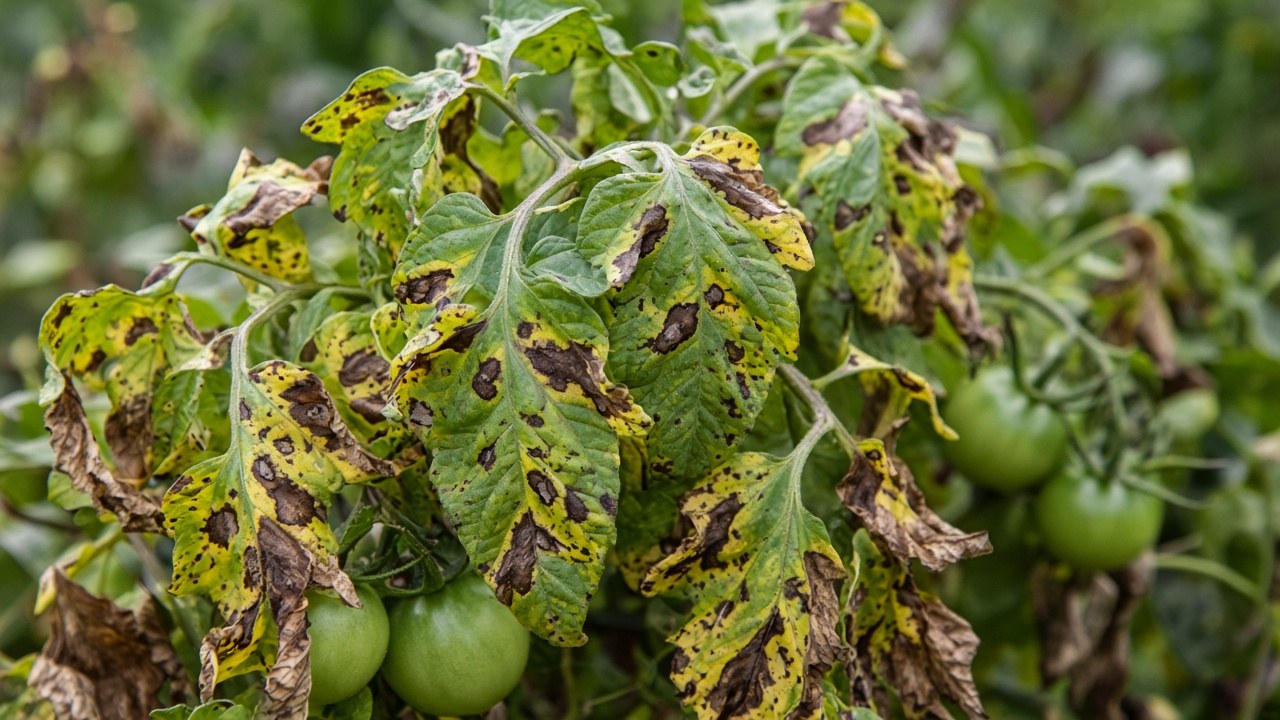
Tomato blight is the heartbreak of the vegetable garden — one day your plants are thriving, the next week they’re covered in brown spots, yellowing leaves, and dying fruit. Understanding blight, catching it early, and knowing when prevention matters more than treatment can save your tomato harvest.
What Is Tomato Blight?
“Tomato blight” refers to two distinct fungal diseases: early blight and late blight. Both attack tomato plants (and other solanaceous crops like potatoes, eggplants, and capsicums), but they’re caused by different pathogens, appear at different times, and require different responses.
Common confusion: “Blight” is often used generically for any tomato leaf problem. True blight is specific fungal disease. Other issues (nutrient deficiency, bacterial spot, septoria leaf spot) can look similar but aren’t blight.
Early Blight vs Late Blight: Key Differences
| Feature | Early Blight | Late Blight |
|---|---|---|
| Pathogen | Alternaria solani (fungus) | Phytophthora infestans (water mould/oomycete) |
| Timing | Mid-late season (mature plants) | Any time, often cooler periods |
| Speed | Slow progression (weeks) | Extremely fast (days to week) |
| Leaf symptoms | Target-spot pattern (concentric rings), lower leaves first | Irregular brown-black blotches, white mould on undersides, any part of plant |
| Fruit symptoms | Dark leathery spots near stem end | Greasy brown blotches, firm rot |
| Weather | Warm + humid (20-30°C) | Cool + wet (10-25°C, high humidity) |
| Severity | Manageable, rarely kills plant | Catastrophic, can destroy entire crop in days |
| Australia | Common, especially humid climates | Rare but devastating when it occurs |
Identifying Early Blight
Leaf symptoms
Classic early blight pattern:
- Target spots: Dark brown lesions with concentric rings (bullseye pattern)
- Yellow halo: Yellowing tissue surrounding spots
- Lower leaves first: Starts on oldest, lowest leaves and moves up
- Progressive defoliation: Leaves yellow, brown, die, and drop off over weeks
Progression:
- Small dark spots appear on lower leaves
- Spots enlarge, develop target-ring pattern
- Entire leaves yellow and die
- Disease moves up plant (bottom to top)
- Severe cases: Most foliage lost, fruit exposed to sun scald
Stem symptoms
Stem lesions: Elongated dark brown cankers on stems and branches (less common than leaf symptoms)
Fruit symptoms
Stem-end rot: Dark, leathery, sunken spots near stem attachment. Fruit remains firm. Often develops during ripening or after harvest.
When early blight appears
Timing: Mid to late growing season (January-March in temperate Australia)
Conditions favouring early blight:
- Warm temperatures (20-30°C)
- High humidity or frequent wetting (rain, overhead watering, heavy dew)
- Mature plants (more susceptible than seedlings)
- Stressed plants (drought, nutrient deficiency, heavy fruit load)
Identifying Late Blight
Leaf symptoms
Classic late blight pattern:
- Irregular blotches: Large brown-black lesions without target rings
- White mould: Fuzzy white growth on undersides of leaves (especially in humid conditions)
- Rapid spread: Entire leaves blacken and collapse within days
- Any location: Affects leaves throughout plant (not just lower leaves)
Progression:
- Water-soaked spots appear on leaves (any part of plant)
- Spots rapidly enlarge, turn brown-black
- White mould visible on undersides (high humidity)
- Entire leaves blacken and die within days
- Entire plant can collapse in a week
Stem symptoms
Stem rot: Dark brown-black lesions on stems. Stems may collapse above lesion.
Fruit symptoms
Greasy rot: Firm, brown, greasy-looking blotches on green or ripe fruit. Rot progresses rapidly. Fruit becomes inedible.
When late blight appears
Timing: Cool, wet periods. In temperate Australia: late winter/early spring for early plantings, or autumn for late crops. Rare in hot, dry summers.
Conditions favouring late blight:
- Cool temperatures (10-25°C)
- Persistent wetness (rain, fog, heavy dew)
- High humidity (90%+)
- Potato crops nearby (common late blight host)
Australian context: Late blight is less common in Australia than Europe/North America due to our generally drier, hotter summers. Most common in Tasmania, cool highland areas, and during unusually wet, cool summers elsewhere.
Blight Lookalikes: What Else Could It Be?
Don’t assume every brown spot is blight. Other common tomato problems:
Septoria leaf spot
Symptoms: Tiny dark spots with grey centers, yellow halo, lower leaves first
Difference from early blight: Much smaller spots (1-3mm), no target rings, spots more numerous
Control: Similar to early blight (cultural practices, fungicides)
Bacterial spot
Symptoms: Small dark spots with yellow halo, irregular edges, rapid spread
Difference from blight: Smaller spots, no target rings or white mould, spots on leaves and fruit
Control: Copper sprays (bactericide, not fungicide), remove infected plants
Nutrient deficiency
Symptoms: Yellowing leaves starting from bottom (nitrogen) or between veins (magnesium)
Difference from blight: Uniform yellowing or interveinal patterns, no brown lesions or spots
Control: Fertilise appropriately, improve soil
Fusarium or Verticillium wilt
Symptoms: Yellowing and wilting of lower leaves, browning of vascular tissue in stems
Difference from blight: Wilting prominent, no leaf spots, vascular browning visible if you cut stem
Control: None once infected. Choose resistant varieties (look for VFN resistance codes)
Key diagnostic: If you see target rings = early blight. If you see white mould on leaf undersides + rapid blackening = late blight. If you see neither, probably something else.
Preventing Tomato Blight
Prevention is far more effective than treatment. Most blight control focuses on cultural practices that reduce infection risk.
1. Plant spacing and airflow
Why it matters: Good airflow dries foliage quickly. Wet leaves for extended periods = fungal paradise.
Best practices:
- Space plants 60-90cm apart (don’t crowd)
- Stake or cage plants (keep foliage off ground)
- Prune lower branches (improve airflow, reduce splash-up)
- Remove some interior growth if very dense (allows air movement)
2. Watering technique
Why it matters: Overhead watering wets foliage. Wet foliage = blight invitation.
Best practices:
- Water at soil level (drip irrigation, soaker hose, or hand-water at base)
- Never overhead sprinkle tomatoes (if unavoidable, do it early morning so foliage dries quickly)
- Water deeply but infrequently (encourages deep roots, reduces surface moisture)
3. Mulching
Why it matters: Mulch prevents soil splash-up onto lower leaves. Soil carries fungal spores.
Best practices:
- Apply 5-7cm layer of organic mulch (straw, sugar cane, lucerne)
- Keep mulch 5cm away from stem (prevents stem rot)
- Replenish mulch as it breaks down
4. Remove lower leaves
Why it matters: Lower leaves closest to soil are first infection point (splash-up). Removing them reduces initial infection risk and improves airflow.
Best practice:
- Once plants are 30-40cm tall, remove lowest 15-20cm of foliage
- Continue removing yellowing lower leaves throughout season
- Disinfect pruners between plants (wipe with dilute bleach or alcohol)
5. Crop rotation
Why it matters: Early blight survives in soil and plant debris. Planting tomatoes in same spot every year increases disease pressure.
Best practice:
- Rotate tomatoes (and all solanaceous crops — potatoes, capsicum, eggplant) to different beds each year
- Ideally 3-4 year rotation
- If rotation impossible: Remove all plant debris thoroughly at season end, add fresh compost to bed
6. Clean up plant debris
Why it matters: Fungal spores overwinter on dead plant material and soil.
Best practices:
- Remove all tomato plant debris at end of season (don’t leave stems, leaves, or dropped fruit)
- Do NOT compost diseased material (spores may survive). Bin it or burn it.
- Rake and remove any dropped leaves during growing season
7. Choose resistant varieties
Why it matters: Some tomato varieties have genetic resistance or tolerance to blight.
What to look for:
- Seed packets or descriptions noting “early blight resistance” or “late blight resistance”
- No tomato is completely immune, but resistant varieties develop disease slower and less severely
Recommended varieties (available in Australia):
- ‘Legend’ (late blight resistant)
- ‘Iron Lady’ (late blight resistant)
- ‘Jasper’ (early blight tolerance)
- ‘Mountain Merit’ (early blight tolerance)
Reality check: Most heirloom varieties have no disease resistance. Trade-off: amazing flavour vs disease susceptibility.
For comprehensive tomato growing guidance including variety selection, see our beginner’s tomato growing guide.
8. Timing and climate awareness
In humid climates (Brisbane, Sydney coast, northern NSW):
- Plant tomatoes to mature before peak humid season (late summer)
- Or plant later for autumn/winter crop when humidity lower
- Increase spacing and airflow practices
In temperate climates (Melbourne, Adelaide, Perth):
- Main season tomatoes usually avoid worst blight pressure (hot, dry summer)
- Watch spring/autumn crops (cooler, wetter conditions)
In cool climates (Tasmania, highlands):
- Late blight risk higher due to cooler, wetter summers
- Plant in warmest, most protected spots
- Use resistant varieties
- Consider greenhouse growing
Treating Early Blight
Once early blight appears, you cannot cure infected leaves. Goals: slow progression, protect uninfected tissue, keep plant productive.
Cultural response (always do this)
- Remove infected leaves immediately: Cut off and bin (don’t compost). This removes spore source.
- Improve airflow: Prune to open up plant canopy.
- Stop overhead watering: Switch to soil-level watering only.
- Mulch if you haven’t already: Prevent further splash-up.
- Reduce stress: Water consistently, avoid over-fertilising or under-fertilising.
Fungicide treatment (optional, moderate effectiveness)
When to consider: If infection severe and significant harvest remains.
Organic options:
Copper-based fungicides (copper hydroxide, copper oxychloride):
- Broad-spectrum fungicide safe for edibles
- Protects uninfected tissue (doesn’t cure infected leaves)
- Apply weekly
- Stops 3-7 days before harvest (check product label)
- Can cause leaf burn in hot weather (apply late afternoon)
Baking soda spray (potassium bicarbonate):
- Mild fungicide, alters leaf surface pH
- Recipe: 1 tablespoon baking soda + 1 litre water + 1 teaspoon oil + drop of soap
- Spray weekly
- Limited effectiveness but safe and cheap
- Best for very early stages or mild infections
Reality check on fungicides: Fungicides for early blight provide modest benefit if applied early and consistently. They don’t cure disease — they slow progression. If infection is severe and spreading despite treatment, removal may be better choice (see below).
Fertiliser (support remaining foliage)
Stressed plants succumb faster. Light feeding with balanced fertiliser supports remaining healthy foliage. Avoid excess nitrogen (soft growth more susceptible).
Treating Late Blight
Late blight is a completely different beast. It spreads so fast that once you see symptoms, the plant is usually doomed.
Immediate action (do within hours)
Remove infected plants entirely:
- Carefully bag entire plant (don’t shake — spreads spores)
- Cut at soil level, remove all above-ground material
- Bin immediately (do NOT compost)
- Wash hands and tools with bleach solution
- Monitor neighbouring plants daily
Why remove, not treat? Late blight spreads explosively. One infected plant can infect an entire garden (and neighbours’ gardens) in days. Removal protects remaining plants.
Fungicide treatment (limited window)
Preventive only: If late blight is reported in your area but your plants aren’t infected yet, preventive fungicide sprays might provide some protection. Once symptoms appear, too late.
Options: Copper fungicides (organic) or synthetic fungicides labelled for late blight (Mancozeb). Must be applied before infection and reapplied frequently (every 5-7 days in disease-favourable conditions).
Australian context: Since late blight is rare in most of Australia, routine preventive spraying isn’t practical. Reserve for high-risk situations (cool, wet summer; disease reported nearby; susceptible heirloom varieties).
After late blight removal
Do NOT replant tomatoes or related crops (potato, eggplant, capsicum) in affected bed until next season. Late blight spores don’t survive long in soil (unlike early blight), but better safe than sorry.
Clean up thoroughly: Remove all tomato debris from affected bed. Wash tools and gloves.
When to Remove Plants Rather Than Treat
Sometimes removal is the best choice:
Remove if:
- Late blight confirmed: Always remove immediately
- Early blight severe (over 50% defoliation): Little productive capacity left, plant is spore factory
- End of season approaching: Not worth treatment effort if only weeks of harvest remain
- Other plants at risk: Heavily infected plant threatens healthy plants nearby
Keep treating if:
- Early stages (few infected leaves, plenty of healthy growth): Removal + cultural practices often enough
- Peak harvest time: Plant still producing, worth trying to extend life
- Isolated infection: Only one plant affected, others healthy
Honest assessment: Don’t cling to a dying plant out of sentimentality. Sometimes removal is the kindest, most practical choice for garden health.
Blight and Different Tomato Types
Heirloom tomatoes
Blight susceptibility: High (most have no disease resistance)
Recommendation: Accept some losses, focus heavily on cultural prevention, enjoy amazing flavour when you succeed
Hybrid tomatoes
Blight susceptibility: Variable (check variety descriptions)
Recommendation: Choose hybrids with resistance if blight is persistent problem in your area
Cherry tomatoes
Blight susceptibility: Variable, but many cherry types seem slightly more tolerant
Observation: Faster fruit set means you get harvest before disease peaks
Determinate vs indeterminate
Determinate (bush types): Compact growth can mean less airflow. Space well, prune lower leaves.
Indeterminate (vining types): Easier to stake/cage vertically, improving airflow. Requires consistent pruning.
Blight in Different Australian Climates
Temperate zones (Sydney, Melbourne, Adelaide, Perth)
Early blight risk: Moderate (late summer if humid)
Late blight risk: Low (too hot and dry in peak summer)
Strategy: Standard cultural practices usually sufficient. Monitor during humid periods.
Subtropical zones (Brisbane, Gold Coast, northern NSW)
Early blight risk: High (warm, humid summers)
Late blight risk: Moderate (occasional cool, wet spells)
Strategy: Emphasise spacing, airflow, soil-level watering. Consider resistant varieties. Plant timing to avoid peak humidity.
Tropical zones (Darwin, far north QLD)
Early blight risk: Very high (hot, humid, wet season)
Late blight risk: Low (too hot)
Strategy: Grow tomatoes in dry season (winter) to avoid worst disease pressure. Wet season tomato growing is challenging.
Cool temperate (Tasmania, highlands)
Early blight risk: Moderate
Late blight risk: High (cool, wet summers ideal for late blight)
Strategy: Use resistant varieties, preventive fungicides in high-risk periods, greenhouse growing, close monitoring.
Related Vegetable Garden Issues
Managing blight is part of broader vegetable garden health:
Starting your vegetable garden: For comprehensive guidance on planning, planting, and maintaining a productive vegetable garden, see our beginner’s vegetable garden guide.
Soil health and disease suppression: Healthy, biologically active soil suppresses some diseases naturally. Build soil with compost and organic matter. See our composting guide.
Other tomato pests: Beyond blight, watch for tomato hornworms (large green caterpillars that devour foliage). See our tomato hornworm control guide.
Final Thoughts
Tomato blight is frustrating but manageable if you focus on prevention. Good cultural practices — proper spacing, soil-level watering, mulching, removing lower leaves, and cleaning up debris — prevent most blight problems before they start.
When blight does appear, identify it correctly (early vs late), remove infected material promptly, and make honest decisions about whether treatment or removal makes sense. Not every plant is worth saving, and removing one diseased plant can protect an entire crop.
With these practices, you’ll grow healthier tomato plants, harvest more fruit, and worry less about blight destroying your season.